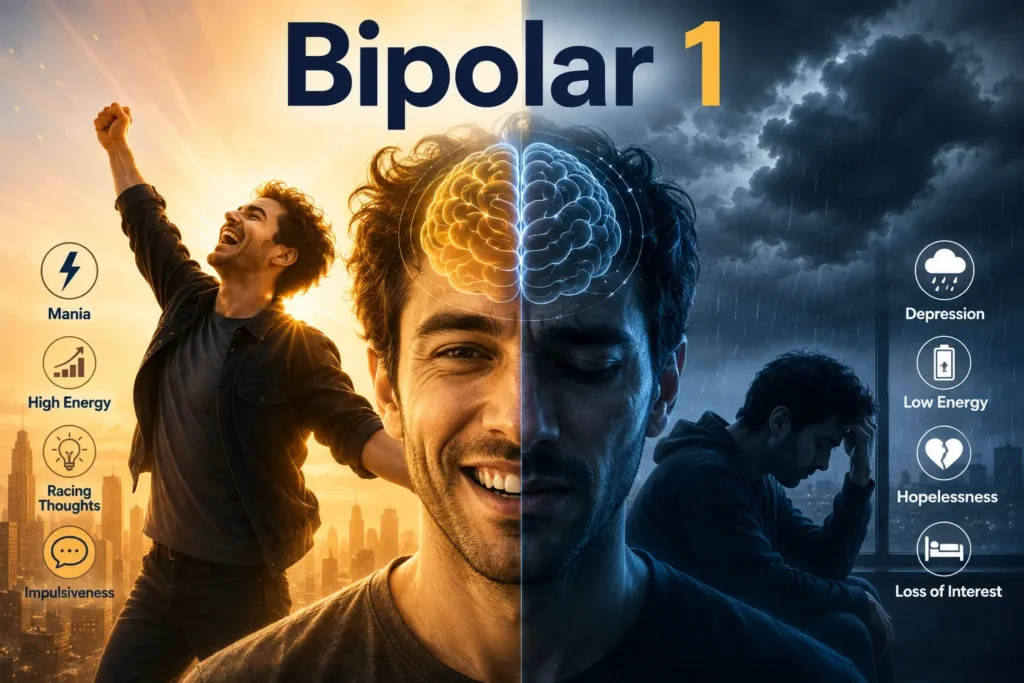
Bipolar 1 disorder is a mental health condition defined by at least one full manic episode — a period of abnormally high energy, elevated or irritable mood, and reduced need for sleep that lasts at least seven days or requires hospitalization. Depressive episodes usually happen too, but they aren’t required for a Bipolar 1 diagnosis. This is the key thing that separates it from Bipolar 2, where the highs never reach full mania.
Table of Contents
Key Takeaways
- Bipolar 1 requires at least one manic episode lasting seven days or more, or severe enough to need hospital care.
- Depression often occurs alongside mania, but it isn’t a requirement for diagnosis.
- Mania in Bipolar 1 can include psychosis — losing touch with reality — which is not part of Bipolar 2.
- Bipolar 1 affects roughly 1% of adults at some point in their life, according to research summarized by the National Institute of Mental Health.
- Lifelong treatment, usually combining medication and therapy, gives most people a good chance at stability.
- A manic episode with psychosis, or thoughts of self-harm during depression, is a medical emergency.
What Is Bipolar 1 Disorder?
Bipolar 1 disorder is one of the three main types of bipolar disorder recognized in the DSM-5, the diagnostic manual used by psychiatrists in the United States. It’s considered the more intense end of the bipolar spectrum because it’s built around full mania — not just an elevated mood, but a state where a person’s thinking, judgment, and behavior can change dramatically for a week or longer.
Think of mood as a dial rather than a switch. Most people’s moods move up and down a little each day. In Bipolar 1, that dial can swing all the way to a manic high, then later drop into a deep depressive low. Some people cycle between these states several times a year. Others go long stretches — months or years — without an episode.
It’s easy to confuse Bipolar 1 with “just being moody” or having big personality swings. It isn’t that. Mania is a distinct clinical state with specific criteria, and it typically disrupts work, relationships, sleep, and sometimes physical safety. For a broader overview of how all bipolar types relate to each other, see our guide on what bipolar disorder actually is.
Bipolar 1 vs. Other Types: Where It Fits
There are several recognized forms of bipolar disorder, and people often search for how they compare. We cover the full breakdown in our guide to types of bipolar disorder, but here’s a quick snapshot:
| Type | Defining Feature | Mania Level |
| Bipolar 1 | At least one full manic episode | Full mania (can include psychosis) |
| Bipolar 2 | Hypomania + major depression | Hypomania only (milder, no psychosis) |
| Cyclothymia | Chronic mood swings, milder and longer-lasting | Below the threshold for hypomania or major depression |
If you’re trying to figure out which category fits your experience — or someone else’s — our detailed comparison of Bipolar 1 vs Bipolar 2 differences and our side-by-side symptom breakdown go much deeper than this article can. We also have a visual comparison chart, a simple explanation for beginners, and a short self-assessment quiz if you want a starting point before talking to a professional.
Symptoms of Bipolar 1
Bipolar 1 is defined by mania, but most people also experience depressive episodes at some point. We go into full detail — including subtle early warning signs — in our dedicated guide to bipolar disorder symptoms. Here’s the short version.
Manic Episode Symptoms
A manic episode involves an abnormally elevated, expansive, or irritable mood lasting at least one week (or any length of time if hospitalization is needed), plus at least three of the following:
| Symptom | What It Looks Like |
| Inflated self-esteem | Grandiose beliefs about one’s abilities, importance, or plans |
| Decreased need for sleep | Feeling rested after 2–3 hours, or not sleeping at all |
| Pressured speech | Talking rapidly, loudly, and often hard to interrupt |
| Racing thoughts | Ideas jumping quickly from one to the next |
| Distractibility | Attention pulled easily by unimportant things |
| Increased goal-directed activity | Sudden bursts of projects, socializing, or sexual activity |
| Risky behavior | Impulsive spending, risky driving, business decisions, or sexual choices |
In severe cases, mania can include psychosis — hallucinations or delusions. This is one of the clearest lines between Bipolar 1 and Bipolar 2, since hypomania in Bipolar 2 never reaches psychosis.
Depressive Episode Symptoms
Depressive episodes in Bipolar 1 look similar to major depressive disorder: persistent sadness or emptiness, loss of interest in activities, fatigue, sleep and appetite changes, feelings of worthlessness, and sometimes thoughts of death or suicide. These episodes can be just as disabling as the manic ones, sometimes more so.
Mixed Features
Some episodes combine manic and depressive symptoms at the same time — for example, racing thoughts and high energy paired with hopelessness or suicidal thinking. This combination carries a higher risk and needs prompt clinical attention.
What Causes Bipolar 1 Disorder?
There isn’t one single cause. Research points to a mix of genetic, neurological, and environmental factors working together. We cover this in depth in our guide to bipolar disorder causes, but the main contributors include:
- Genetics — Having a parent or sibling with bipolar disorder meaningfully raises the risk, though it isn’t a guarantee.
- Brain structure and chemistry — Differences in circuits that regulate mood, reward, and impulse control have been observed in imaging studies.
- Stress and life events — Major stress, trauma, or significant sleep disruption can trigger a first episode or a relapse in someone already vulnerable.
- Substance use — Alcohol and certain drugs can trigger manic or depressive episodes, especially in people already predisposed.
None of these factors alone “causes” Bipolar 1. It’s more accurate to think of them as pieces that raise or lower a person’s overall risk.
Risk Factors
Certain factors are linked to a higher chance of developing Bipolar 1, though having one or more doesn’t mean a diagnosis is certain:
| Risk Factor | Why It Matters |
| Family history | First-degree relatives with bipolar disorder increase genetic risk |
| Age of onset | Most first episodes appear in the late teens to early 20s |
| High-stress life events | Can act as a trigger in genetically vulnerable people |
| Substance use | Can trigger episodes or worsen the course of the illness |
| Sleep disruption | Irregular sleep is both a symptom and a known trigger of mania |
How Bipolar 1 Is Diagnosed
There’s no blood test or brain scan that confirms Bipolar 1. Diagnosis relies on a clinical evaluation — usually by a psychiatrist or psychologist — built around DSM-5 criteria, a detailed history of mood episodes, and ruling out other conditions like thyroid disorders, substance-induced mood changes, or other psychiatric conditions with overlapping symptoms.
Our full guide to bipolar disorder diagnosis walks through what an evaluation actually involves, and we compare the diagnostic path for Bipolar 1 vs Bipolar 2 diagnosis specifically, since clinicians look for different thresholds of mania in each. If you’re wondering whether a formal assessment is worth pursuing, our page on Bipolar 1 vs 2 testing explains what tools clinicians actually use (spoiler: self-report quizzes are a starting point, not a diagnosis).
A key diagnostic detail: because mania can include grandiosity or poor insight, people in a manic episode often don’t believe anything is wrong. Family members or close friends frequently play an important role in getting someone evaluated.
Treatment for Bipolar 1
Bipolar 1 is a lifelong condition, but it’s very manageable with the right treatment plan. Our comprehensive guide to bipolar disorder treatment covers this in full detail, including how treatment differs by episode type. Here’s a summary of the core components.
Medications
Medication is typically the foundation of treatment, especially for preventing future manic episodes.
| Medication Class | Example Medications | Primary Role |
| Mood stabilizers | Lithium, valproate, lamotrigine | Prevent and treat manic/depressive episodes |
| Atypical antipsychotics | Quetiapine, olanzapine, risperidone | Treat acute mania, sometimes depression |
| Antidepressants | SSRIs (used cautiously, usually with a mood stabilizer) | Treat depressive episodes, rarely used alone |
Lithium remains one of the most well-studied treatments for Bipolar 1 and has strong evidence for reducing suicide risk over the long term. Antidepressants are used carefully in Bipolar 1 because, without a mood stabilizer alongside them, they can sometimes trigger a manic episode.
Therapy
Medication treats the biological side of the illness; therapy helps with the rest — recognizing early warning signs, managing stress, repairing relationships, and building routines that support stability. Common approaches include cognitive behavioral therapy (CBT), family-focused therapy, and interpersonal and social rhythm therapy, which specifically targets sleep and daily routine consistency.
Hospitalization
Severe manic episodes, especially those involving psychosis or danger to oneself or others, sometimes require inpatient psychiatric care to ensure safety while medication takes effect.
Lifestyle Strategies That Support Stability
Medication and therapy are the foundation, but daily habits matter too:
- Protect your sleep schedule. Irregular sleep is one of the most common mania triggers.
- Track your mood. A simple daily log helps you and your clinician spot early warning signs before a full episode develops.
- Limit alcohol and recreational drugs. Both can destabilize mood and interact badly with medications.
- Build a support network. Family and friends who understand the illness can help you recognize early signs you might miss yourself.
- Stick with treatment, even when you feel well. Stopping medication during a stable period is one of the most common causes of relapse.
Myths vs. Facts About Bipolar 1
| Myth | Fact |
| “Bipolar 1 just means mood swings.” | Bipolar 1 requires a clinically defined manic episode, not ordinary mood changes. |
| “People with Bipolar 1 are always visibly unwell.” | Many people are stable for long stretches with proper treatment. |
| “Bipolar 1 is the same as Bipolar 2, just a different name.” | They differ by the presence and severity of mania — see our Bipolar 1 vs 2 breakdown. |
| “Medication changes your personality.” | Properly managed treatment aims to reduce extreme episodes, not suppress someone’s personality. |
| “Bipolar disorder can be willed away with positive thinking.” | It’s a biological condition that requires medical treatment, not just mindset changes. |
For a deeper look at widespread misconceptions, see our full article on bipolar disorder myths.
Complications of Untreated Bipolar 1
Left untreated or poorly managed, Bipolar 1 can lead to serious complications: job loss, relationship breakdown, financial problems from impulsive spending during mania, substance use disorders, and a significantly elevated risk of suicide. Our dedicated guide to bipolar disorder complications covers this in more depth, including how early, consistent treatment lowers these risks substantially.
Prognosis: What to Expect Long-Term
With consistent treatment, many people with Bipolar 1 lead full, stable lives — working, maintaining relationships, and going long periods between episodes. Prognosis tends to be better with early diagnosis, medication adherence, and strong social support, and worse with untreated substance use or long gaps between episodes and treatment. Our full guide on bipolar disorder prognosis covers the factors that most influence long-term outcomes.
Bipolar 1 in Men and Women
Research suggests men and women experience Bipolar 1 at similar overall rates, though patterns can differ — for example, women tend to report more depressive episodes and mixed features over their lifetime, while men more often report classic manic episodes as their first presentation. Hormonal changes, including pregnancy and postpartum periods, can also influence episode timing in women. Our detailed comparison of Bipolar 1 vs 2 in men and women explores these differences further.
Can Bipolar 2 Turn Into Bipolar 1?
This is a common question, and the honest answer is: sometimes, but it’s not typical. A small number of people initially diagnosed with Bipolar 2 later experience a full manic episode, which would update their diagnosis to Bipolar 1. This isn’t the disorder “progressing” so much as new information appearing over time. We answer this question fully, with more nuance, in our article on whether Bipolar 2 can become Bipolar 1.
Bipolar 1 vs. Bipolar 2 vs. Cyclothymia
People often search for how all three conditions stack up side by side:
| Feature | Bipolar 1 | Bipolar 2 | Cyclothymia |
| Mania | Full mania required | Never (only hypomania) | Never |
| Depression | Common, not required | Major depressive episodes required | Milder depressive symptoms |
| Psychosis possible | Yes | No | No |
| Episode duration | Mania ≥ 7 days | Hypomania ≥ 4 days | Chronic, lower-grade swings ≥ 2 years |
| Hospitalization risk | Higher | Lower | Rare |
For the full picture, including how depression specifically differs between the two main types, see our guides on Bipolar 1 vs 2 vs cyclothymia and Bipolar 1 vs 2 depression. If you’re still unsure which category applies, our Bipolar 1 vs 2 which-is-worse article tackles that question directly and honestly — the answer is more nuanced than a simple ranking.
Warning Signs of an Emerging Episode
Recognizing early signs before a full episode develops can make treatment much more effective:
- Sleeping noticeably less without feeling tired
- Talking faster, jumping between topics, or feeling like thoughts are racing
- Sudden bursts of ambitious plans or spending
- Increasing irritability or agitation
- Withdrawing socially, feeling persistently low, or losing interest in things once enjoyed
When to Get Emergency Help
Some situations require immediate action rather than a routine appointment:
- Signs of psychosis — hallucinations, delusions, or disorganized thinking
- Any thoughts of suicide or self-harm
- Behavior that puts the person or others in immediate danger
- A manic episode escalating rapidly with no signs of slowing
If you or someone you know is in crisis, contact local emergency services, or in the US, call or text 988 to reach the Suicide & Crisis Lifeline. This is a sensitive topic, and if you’re personally struggling right now, please reach out to a crisis line or trusted professional — you don’t have to manage this alone.
Frequently Asked Questions
Is Bipolar 1 the most severe type of bipolar disorder? It’s generally considered the type with the most intense manic episodes, including the possibility of psychosis, but severity still varies a lot between individuals.
Can Bipolar 1 go away on its own? No. It’s a chronic condition that typically requires ongoing management, though the frequency and intensity of episodes can decrease significantly with treatment.
Do all people with Bipolar 1 experience depression? No. A Bipolar 1 diagnosis only requires one manic episode. Many people do experience depressive episodes too, but it isn’t a requirement.
What triggers a manic episode? Common triggers include sleep disruption, high stress, substance use, and sometimes stopping medication. Some episodes appear without an identifiable trigger.
Is Bipolar 1 genetic? Genetics play a significant role, but they aren’t the only factor. Having a close relative with bipolar disorder raises risk but doesn’t guarantee a diagnosis.
How is Bipolar 1 different from schizophrenia? Both can involve psychosis, but Bipolar 1’s psychosis appears specifically during mood episodes, while schizophrenia involves persistent psychotic symptoms independent of mood state.
Can someone with Bipolar 1 live a normal life? Yes. With consistent treatment — medication, therapy, and healthy routines — many people manage the condition well and maintain careers, relationships, and stability.
Related Reading
For terms used throughout this guide, see our bipolar disorder glossary. If you want data on how common Bipolar 1 and related conditions actually are, our bipolar disorder statistics page breaks it down by prevalence, age of onset, and more. And if you still have questions after this guide, our full Bipolar 1 vs 2 FAQ collection covers dozens of specific comparisons in one place.
Summary
Bipolar 1 is defined by at least one full manic episode — a distinct, disruptive state that goes well beyond ordinary mood changes. Depression often comes along with it, but the manic episode is what sets the diagnosis apart from Bipolar 2 and cyclothymia. The good news is that Bipolar 1 responds well to treatment. A combination of mood-stabilizing medication, therapy, and steady daily routines gives most people the tools to manage the condition and build a stable, full life. If you recognize these patterns in yourself or someone close to you, the right next step is a conversation with a psychiatrist or mental health professional — not guesswork.
This article is for educational purposes and is not a substitute for professional medical advice. If you’re concerned about symptoms of Bipolar 1, please consult a qualified healthcare provider.