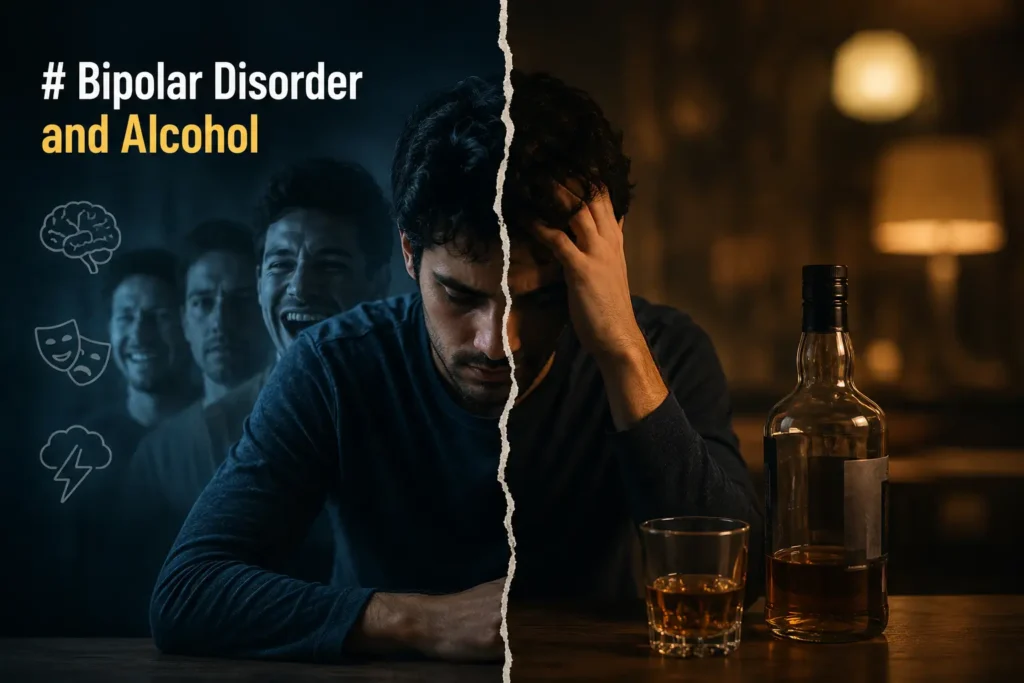
Alcohol and bipolar disorder are a particularly bad match. Drinking can trigger manic or depressive episodes, interfere with mood-stabilizing medications, and raise the risk of impulsive behavior, self-harm, and suicide. Research consistently finds that people with bipolar disorder develop alcohol use disorder far more often than the general population — and when the two conditions overlap, both tend to get worse. The safest approach, according to most psychiatrists, is to avoid alcohol altogether, but if you do drink, understanding the specific risks can help you make more informed decisions and know when to seek help.
Table of Contents
Introduction
If you have bipolar disorder, you’ve probably heard some version of the advice “you probably shouldn’t drink.” It’s easy to brush off, especially if a few beers or a glass of wine has never seemed to cause an obvious problem. But the relationship between alcohol and bipolar disorder isn’t really about willpower or moderation the way it might be for someone without a mood disorder. It’s about how alcohol interacts with an already unstable mood-regulation system, and how that interaction can quietly build over months or years.
This guide breaks down what actually happens when someone with bipolar disorder drinks — physiologically, psychologically, and in terms of long-term outcomes. It also covers how alcohol interacts with common bipolar medications, how to recognize when drinking has become a bigger issue, and what treatment for co-occurring bipolar disorder and alcohol use disorder actually looks like. If you’re newer to the diagnosis itself, it may help to start with an overview of what bipolar disorder is before diving into this topic.
Key Takeaways
- People with bipolar disorder have some of the highest rates of alcohol use disorder of any psychiatric condition — well above the general population.
- Alcohol can trigger both manic and depressive episodes, and it tends to make mood cycling faster and more severe.
- Mixing alcohol with lithium, valproate, or other bipolar medications can reduce their effectiveness and increase side effects, including toxicity risk.
- The combination substantially raises the risk of suicidal thinking and suicide attempts.
- Effective treatment addresses bipolar disorder and alcohol use at the same time, not one after the other.
Why Bipolar Disorder and Alcohol Use Disorder Occur Together So Often
Bipolar disorder has one of the highest rates of co-occurring substance use of any major mental health condition. A large meta-analysis covering more than 200,000 people with bipolar disorder put the lifetime prevalence of any substance use disorder at around 33 percent, and of an alcohol use disorder specifically at around 24 percent. Older but widely cited data from the Epidemiologic Catchment Area study found even higher figures, with lifetime alcohol abuse or dependence rates of 46.2% in bipolar I and 39.2% in bipolar II, compared with a general population rate of roughly 14%. Estimates vary across studies, but lifetime comorbidity is consistently reported in the range of 40 to 70 percent for both bipolar I and bipolar II disorder.
Several factors help explain this overlap:
- Self-medication during mood episodes. Some people drink to slow down racing thoughts during mania or hypomania, or to numb the emotional pain of a depressive episode.
- Shared biology. Both conditions involve overlapping brain circuits related to impulse control, reward, and dopamine regulation, and there’s some evidence of shared genetic vulnerability.
- Impulsivity during mania. Elevated or irritable mood episodes often come with poor judgment and increased risk-taking, which can include heavier drinking.
- Social and environmental factors. Sleep disruption, stress, and social situations that accompany mood episodes can all increase drinking opportunities.
Men with bipolar disorder appear to be affected more often than women. One analysis found the lifetime prevalence of alcohol use disorder was 35% in men with bipolar disorder versus 17% in women with bipolar disorder. For a broader look at how the condition itself differs by sex, see bipolar disorder in men and bipolar disorder in women.
If you’re trying to understand why this vulnerability exists in the first place, it connects closely to the underlying causes of bipolar disorder, including genetics and neurochemical imbalances that also influence substance use risk.
How Alcohol Affects the Bipolar Brain
Alcohol is a central nervous system depressant, but its effects on someone with bipolar disorder are more complicated than simple sedation. Mood stability in bipolar disorder depends on a delicate balance of neurotransmitters like serotonin, dopamine, and GABA — the same systems alcohol disrupts.
In the short term, alcohol can:
- Temporarily lift mood or reduce anxiety, which is part of what makes it appealing during a depressive or anxious phase.
- Impair judgment and increase impulsivity, amplifying the risk-taking that often already occurs during mania or hypomania.
- Disrupt sleep architecture, even when it initially seems to help someone fall asleep faster. Since disrupted sleep is one of the most reliable triggers for manic episodes, this is a significant concern — see our guide on bipolar disorder and sleep.
In the longer term, repeated alcohol use appears to destabilize mood regulation itself. Comorbidity with alcohol use disorders is associated with more severe illness outcomes in bipolar disorder, including increased impulsive risk-taking, more severe mood episodes, cognitive deficits, decreased quality of life, and a higher risk for suicide. Put simply: it’s not just that people with unstable moods are more likely to drink — drinking appears to actively feed back into greater mood instability.
Effects of Alcohol on Manic, Depressive, and Mixed Episodes
Alcohol doesn’t affect every phase of bipolar disorder the same way. Understanding these differences can help you or a loved one recognize warning signs earlier.
| Episode Type | Common Effect of Alcohol | Why It Happens |
| Mania / Hypomania | Increases impulsivity, risky decisions, and irritability; can prolong or intensify the episode | Alcohol lowers inhibition on top of an already disinhibited state, and disrupts the sleep that helps regulate mood |
| Depression | Deepens low mood, hopelessness, and fatigue after the initial effect wears off | Alcohol is a depressant; it may briefly numb emotional pain but worsens depressive symptoms as it’s metabolized |
| Mixed episodes | Heightens emotional volatility and increases suicide risk | Combines the impulsivity of mania with the despair of depression, and alcohol can intensify both simultaneously |
| Rapid cycling | May shorten the time between mood shifts | Alcohol disrupts circadian rhythm and sleep, both closely tied to cycling frequency |
If you’re unfamiliar with how these episode types differ diagnostically, our guide to bipolar disorder symptoms covers each in more detail, and mania vs. hypomania explains the distinction between bipolar I and bipolar II presentations.
Alcohol and Bipolar Medications: A Serious Interaction Risk
One of the most underdiscussed dangers of drinking with bipolar disorder is how alcohol interacts with the medications used to treat it. This is a major reason most psychiatrists recommend avoiding alcohol entirely rather than trying to “manage” it around a prescription.
| Medication Type | Example | Risk When Combined With Alcohol |
| Mood stabilizers (lithium) | Lithium | Can worsen sedation and drowsiness, and in severe cases lead to dehydration and lithium toxicity; alcohol may also reduce lithium’s effectiveness |
| Anticonvulsant mood stabilizers | Valproate/Depakote | Increases the risk of liver toxicity and can worsen drowsiness and dizziness |
| Atypical antipsychotics | Quetiapine, olanzapine, risperidone | Can worsen dizziness, memory impairment, confusion, poor judgment, and increase the risk of falls or accidents |
| Antidepressants (used cautiously in bipolar disorder) | Bupropion | Alcohol should be minimized or avoided due to increased risk of seizures, hallucinations, and mood or behavioral changes |
Beyond the specific drug interactions, alcohol use can also make it harder to take medication consistently, and it can mask early warning signs of a mood episode, delaying treatment. If you’re currently on a treatment plan, it’s worth reviewing your specific prescriptions with your psychiatrist rather than assuming any amount of alcohol is safe. Our bipolar medications guide and medication side effects page go into more depth on this topic, and mood stabilizers for bipolar disorder explains how these drugs work.
Warning Signs Alcohol Is Making Bipolar Disorder Worse
It isn’t always obvious when drinking has crossed from “occasional” into “actively destabilizing.” Watch for these patterns:
- Mood episodes becoming more frequent or more severe since drinking increased
- Drinking specifically to manage mania, anxiety, or depressive symptoms
- Missing medication doses after drinking, or skipping doses to drink
- Blackouts, risky decisions, or behavior you regret during drinking episodes
- Increased conflict with family, partners, or coworkers tied to drinking
- Needing more alcohol over time to get the same calming or numbing effect
- Withdrawal symptoms (shakiness, anxiety, nausea) when not drinking
If several of these sound familiar, it’s worth discussing with a healthcare provider rather than waiting for things to escalate further. This is also relevant to the broader picture of bipolar disorder complications, which tend to compound when a substance use disorder is layered on top of the underlying condition.
Suicide Risk: The Most Serious Consequence
This is the single most important reason clinicians take alcohol use so seriously in bipolar disorder. Alcohol use disorder comorbidity is linked to increased impulsive risk-taking, more severe mood episodes, and a higher risk for suicide in people with bipolar disorder. Alcohol lowers inhibition, intensifies despair during depressive or mixed episodes, and impairs the judgment needed to reach out for help in a crisis.
If you or someone you know is having thoughts of suicide or self-harm, this is a medical emergency. In the United States, you can call or text 988 to reach the Suicide & Crisis Lifeline, available 24/7. If there is immediate danger, call 911 or go to the nearest emergency room. Outside the US, contact your local emergency services or a crisis line in your country.
Diagnosis: Untangling Bipolar Disorder From Alcohol’s Effects
Diagnosing bipolar disorder when alcohol use is also present is genuinely difficult, and misdiagnosis happens often in both directions. Heavy alcohol use can produce mood swings that look like bipolar disorder — irritability, euphoria, depression, even psychotic symptoms during withdrawal — without an underlying mood disorder actually being present. On the other hand, some people with real bipolar disorder go undiagnosed for years because their mood symptoms are attributed entirely to drinking.
A thorough psychiatric evaluation typically involves:
- A detailed history of mood symptoms, including whether they occurred during periods of sobriety
- Family psychiatric history, since bipolar disorder has a strong genetic component
- Screening tools alongside structured clinical interviews, since self-report questionnaires alone can be unreliable in people who also use substances
- A period of monitored abstinence, when possible, to see whether mood symptoms persist without alcohol
Getting an accurate diagnosis matters because treatment approaches for bipolar disorder and for alcohol-induced mood symptoms are different. For a full explanation of the diagnostic process, see how bipolar disorder is diagnosed and bipolar disorder diagnosis.
Treatment: Addressing Both Conditions Together
The most effective approach treats bipolar disorder and alcohol use disorder as a single, connected problem rather than two separate ones tackled one after another. This is often called integrated or dual-diagnosis treatment.
What Integrated Treatment Typically Includes
| Component | Purpose |
| Medical detox (if needed) | Safely manage alcohol withdrawal under supervision, since stopping heavy drinking abruptly can be medically dangerous |
| Mood-stabilizing medication | Manage bipolar symptoms; some medications (such as valproate) have also shown modest benefit for drinking outcomes in comorbid patients |
| Psychotherapy | Address triggers, coping skills, and the thought patterns that connect mood episodes and drinking |
| Peer or group support | Programs addressing both mental health and substance use, rather than substance-only groups |
| Relapse prevention planning | Identify early warning signs for both mood episodes and drinking urges |
Some studies have evaluated the effects of valproate, lithium, and naltrexone, as well as psychosocial interventions, in treating people with co-occurring bipolar disorder and alcohol use, but researchers note that more study is still needed to establish clear best practices. This is an active and evolving area of psychiatric research, which is one reason working with a psychiatrist experienced in dual diagnosis matters more than trying to self-manage this combination.
For more on therapy approaches specifically, see cognitive behavioral therapy for bipolar disorder, and for what to expect from medication overall, see bipolar disorder treatment. In some cases, particularly during a severe manic or depressive episode complicated by alcohol use, hospitalization may be necessary to ensure safety.
Myths vs. Facts
| Myth | Fact |
| “A drink or two won’t affect my mood stability.” | Research suggests even small amounts of alcohol, such as one to four drinks per week, can lead to more manic or depressive episodes in some people with bipolar disorder. |
| “Drinking helps me sleep, so it helps my bipolar disorder.” | Alcohol disrupts deep sleep cycles even when it makes falling asleep easier, and poor sleep is a well-established trigger for mood episodes. |
| “I can drink normally as long as I take my medication.” | Alcohol can interfere with how medications like lithium and valproate work and increases the risk of side effects and toxicity. |
| “If I don’t binge drink, it’s not a problem.” | Regular moderate drinking can still worsen mood cycling and interact with medication over time — quantity isn’t the only factor that matters. |
| “Bipolar disorder and alcohol problems need to be treated separately, one at a time.” | Most current guidance favors integrated treatment that addresses both conditions simultaneously. |
For a broader look at other misconceptions about the condition, see our bipolar disorder myths page.
Practical Steps If You’re Rethinking Your Drinking
If you have bipolar disorder and want to change your relationship with alcohol, a few starting points:
- Talk to your prescriber first. Don’t stop or start drinking suddenly without discussing it, especially if you’re on lithium or other medications with narrow safety margins. Sudden changes in habits (including hydration and sleep) can affect medication levels.
- Track your patterns. Note when you drink and how your mood behaves in the days afterward. Patterns often become clear only in hindsight.
- Build a relapse-prevention plan that covers both drinking triggers and early mood-episode warning signs, since they often overlap. See bipolar relapse prevention for a fuller framework.
- Prioritize sleep and routine. Consistent sleep and daily structure reduce both drinking urges and mood episode risk. Our bipolar self-care and bipolar daily routine guides offer concrete strategies.
- Loop in your support system. Family and close friends often notice mood shifts before you do. For guidance on involving them constructively, see how to help someone with bipolar disorder and support for bipolar disorder.
- Ask about dual-diagnosis programs if drinking has become difficult to control on your own. These programs are built specifically for the overlap this article describes, rather than treating substance use as a separate issue.
Complications of Long-Term Alcohol Use in Bipolar Disorder
Beyond mood instability, sustained heavy drinking alongside bipolar disorder is linked to a range of additional problems, including liver disease, increased cognitive difficulties, higher rates of hospitalization, greater relationship and occupational strain, and a generally more severe long-term illness course. These risks compound the complications already associated with bipolar disorder on its own, which is part of why clinicians treat this combination as a priority rather than a lifestyle detail. It’s also linked to a less favorable long-term prognosis when left unaddressed.
Frequently Asked Questions
Is it ever safe to drink alcohol if you have bipolar disorder? Most psychiatrists recommend avoiding alcohol entirely, since even small amounts can affect mood stability and interact with medications. If you choose to drink, it should only be after an honest conversation with your prescriber about your specific medications and mood history.
Can alcohol cause bipolar disorder? Alcohol doesn’t cause bipolar disorder, which has a strong genetic and neurobiological basis. However, heavy alcohol use can produce mood symptoms that closely resemble bipolar disorder, and it can also trigger or worsen episodes in someone who already has the underlying condition.
Why do people with bipolar disorder drink so much? Common reasons include trying to calm racing thoughts during mania, numbing emotional pain during depression, increased impulsivity during mood episodes, and shared biological vulnerabilities that affect both mood regulation and susceptibility to alcohol use disorder.
Does alcohol make bipolar medication less effective? It can. Alcohol may reduce the effectiveness of mood stabilizers like lithium while also increasing side effects such as sedation, dizziness, and in some cases toxicity risk.
What’s the difference between social drinking and a real problem for someone with bipolar disorder? Because bipolar disorder lowers the threshold for alcohol to cause harm, the usual “how many drinks per week” guidelines may not apply the same way. Warning signs matter more than quantity: mood episodes worsening, medication non-adherence tied to drinking, or drinking specifically to manage symptoms are stronger indicators of a problem than the number of drinks alone.
Can you treat bipolar disorder and alcohol use disorder at the same time? Yes, and most current clinical guidance recommends this integrated approach over treating the conditions sequentially, since each one strongly influences the course of the other.
Is bipolar disorder with alcohol use considered a dual diagnosis? Yes. When someone has both bipolar disorder and alcohol use disorder (or another substance use disorder) at the same time, this is referred to as a dual diagnosis, and it typically calls for coordinated, integrated treatment rather than care from separate, unconnected providers.
Summary
Alcohol and bipolar disorder interact in ways that go well beyond typical drinking advice. The overlap between the two conditions is common, the biological and behavioral reasons for that overlap are well documented, and the consequences — from worsened mood cycling to medication interactions to elevated suicide risk — are serious enough that most psychiatrists recommend avoiding alcohol altogether. If drinking has become part of how you manage mood symptoms, or if it’s creating friction with your treatment plan, that’s worth raising with your care team directly rather than managing alone. Integrated treatment that addresses both bipolar disorder and alcohol use together offers the best chance at long-term stability.
If you’re building a broader understanding of the condition, related guides on bipolar disorder statistics, types of bipolar disorder, and the bipolar disorder glossary can help fill in the surrounding context.
This article is for educational purposes and is not a substitute for professional medical advice. If you have concerns about your mental health or alcohol use, speak with a qualified healthcare provider. If you are experiencing a mental health crisis, contact 988 (US) or your local emergency services.