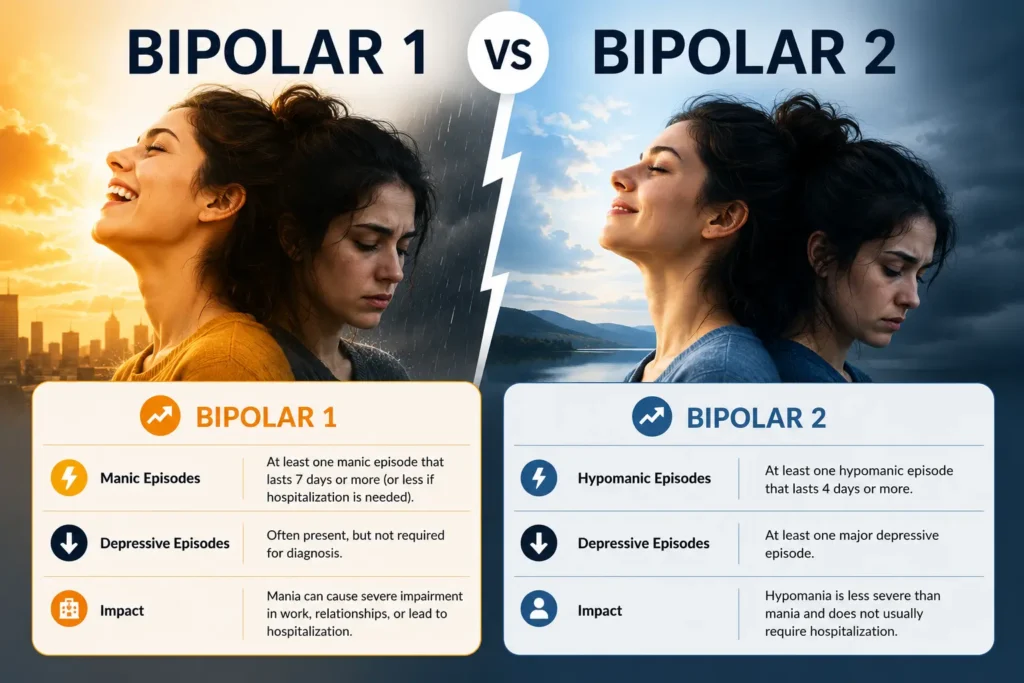
Bipolar 1 and bipolar 2 are both mood disorders that cause dramatic shifts between high-energy states and depression, but they are defined by one key clinical line: bipolar 1 requires at least one full manic episode, while bipolar 2 requires at least one hypomanic episode (a milder version of mania) plus at least one major depressive episode. A person with bipolar 2 has never had a full manic episode — if they ever do, the diagnosis changes to bipolar 1. Bipolar 1 is often associated with more dramatic, disruptive highs, sometimes involving psychosis or hospitalization. Bipolar 2 tends to involve longer, heavier depressive periods, which is why some clinicians describe it as harder to live with day to day, even though it isn’t considered “milder” overall. Neither type is objectively worse — they are different patterns of the same underlying illness, and both require proper diagnosis and treatment.
Key Takeaways
- The core difference is mania vs. hypomania. Mania is severe enough to disrupt work, relationships, or safety, and can include psychosis. Hypomania is a noticeably elevated mood/energy state that doesn’t reach that level of severity.
- Bipolar 2 always includes major depression. A bipolar 2 diagnosis requires at least one major depressive episode; bipolar 1 does not technically require one, though most people with bipolar 1 experience depressive episodes too.
- “Worse” depends on what you’re measuring. Bipolar 1 highs can be more dangerous in the moment. Bipolar 2 depression tends to last longer and recur more often, which can mean a heavier overall symptom burden over a lifetime.
- Hypomania can be mistaken for “just having a good week.” This is a major reason bipolar 2 is under-diagnosed or misdiagnosed as depression alone.
- Both are lifelong but manageable conditions. With the right combination of medication, therapy, and lifestyle structure, most people with either type can build stable, functional lives.
- Diagnosis takes time and a detailed history. There’s no blood test or scan for bipolar disorder — diagnosis relies on a mental health professional mapping your mood episodes over time.
Bipolar 1 vs Bipolar 2 at a Glance
| Feature | Bipolar 1 Disorder | Bipolar 2 Disorder |
| Defining episode | At least one full manic episode | At least one hypomanic episode + one major depressive episode |
| Depression required for diagnosis? | Not required (but very common) | Required |
| Episode severity | Mania can be severe, may include psychosis | Hypomania is milder, no psychosis by definition |
| Hospitalization | Sometimes needed during mania | Rare, unless during a severe depressive episode |
| Minimum duration of high episode | 7 days (or any length if hospitalized) | 4 consecutive days |
| Impact on daily functioning during “high” | Often severe — job, relationships, finances, safety | Noticeable but usually doesn’t stop daily functioning |
| Dominant long-term symptom | Varies; mania and depression both occur | Depression dominates over time |
| Risk of psychosis | Possible during mania or severe depression | Not present during hypomania; possible in depressive episodes in rare cases |
| Common misdiagnosis | Schizophrenia, ADHD, personality disorders | Major depressive disorder (unipolar depression) |
| Typical age of onset | Late teens to early 20s | Similar, sometimes slightly later |
What Bipolar Disorder Actually Is
Bipolar disorder is a brain-based mood disorder that causes people to swing between emotional and energy states that go beyond ordinary ups and downs. These aren’t mood swings in the everyday sense — they are distinct, sustained episodes lasting days, weeks, or months, each with its own set of symptoms that affect sleep, energy, judgment, and behavior.
There are several recognized forms in the DSM-5-TR, the diagnostic manual used by clinicians in the US:
- Bipolar I Disorder
- Bipolar II Disorder
- Cyclothymic Disorder (milder, longer-lasting mood instability that doesn’t meet full criteria for either type)
- Other specified and unspecified bipolar-related conditions, including substance- or medication-induced bipolar disorder
Bipolar 1 vs Bipolar 2 are the two forms people search for most, and they’re frequently confused because both involve “highs and lows.” The distinction isn’t about which type is more real or more serious in general — it’s about which specific criteria a person’s episodes meet.
Global estimates suggest bipolar spectrum disorders affect somewhere around 1–2.5% of people worldwide, with bipolar 1 and bipolar 2 each affecting roughly similar proportions of the population, though bipolar 2 is believed to be underdiagnosed because hypomania is so easy to miss or mistake for a good mood.

Mania vs. Hypomania: The Line That Separates the Two Diagnoses
Understanding bipolar 1 vs bipolar 2 really comes down to understanding this one distinction clearly.
What Is Mania?
Mania is a distinct period of abnormally elevated, expansive, or irritable mood, combined with abnormally increased energy or goal-directed activity, lasting at least one week (or any duration if it leads to hospitalization). During a manic episode, a person may experience:
- Decreased need for sleep (feeling rested after 2–3 hours)
- Racing thoughts and rapid, pressured speech
- Grandiosity or inflated self-esteem
- Impulsive or risky decisions — overspending, risky sex, reckless driving, sudden business ventures
- Distractibility and difficulty focusing
- Agitation or increased goal-directed activity
- In severe cases, psychosis: hallucinations or delusions
Mania is severe enough to cause marked impairment in work, relationships, or safety, or it requires hospitalization to prevent harm. This severity threshold is what separates mania from hypomania.

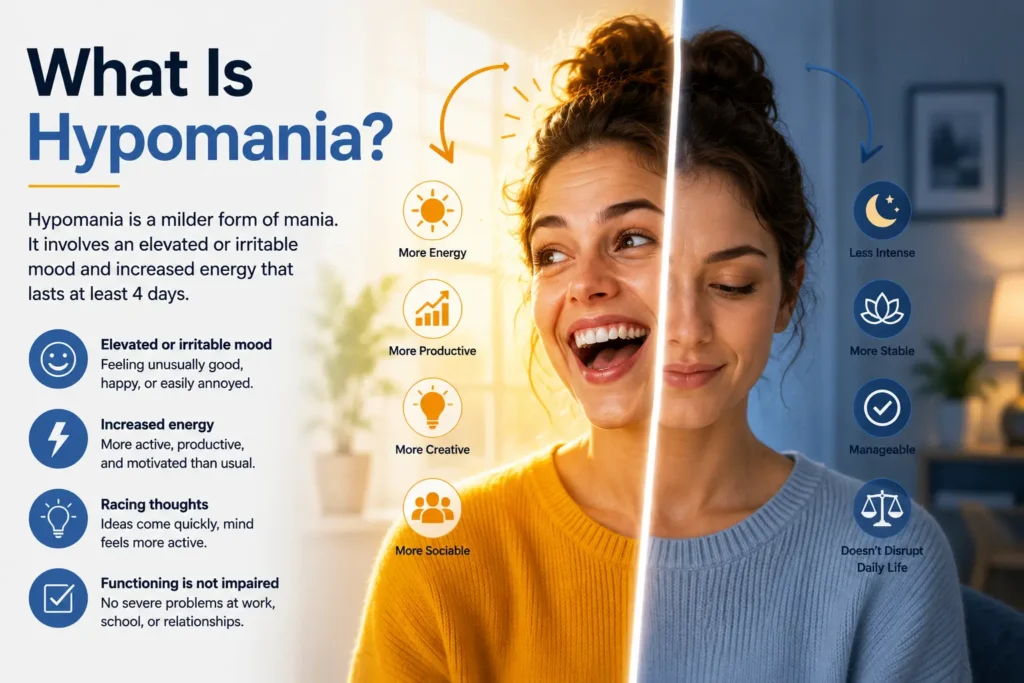
What Is Hypomania?
Hypomania shares the same core symptoms as mania — elevated mood, high energy, reduced need for sleep, fast thinking — but the episode is shorter (at least 4 consecutive days) and less disruptive. Hypomania:
- Does not include psychosis
- Does not require hospitalization
- Is noticeable to people close to the person, but usually doesn’t stop someone from going to work or managing daily responsibilities
- Can feel good — many people describe it as a burst of confidence, creativity, sociability, or productivity
This is exactly why hypomania so often goes unreported. People frequently don’t mention it to a doctor because it didn’t feel like a problem at the time — it’s the depressive episodes that eventually bring them into care.
Side-by-Side: Mania vs. Hypomania
| Symptom Area | Mania (Bipolar 1) | Hypomania (Bipolar 2) |
| Minimum duration | 7 days (or any length if hospitalized) | 4 consecutive days |
| Functional impairment | Marked — disrupts work, relationships, safety | Noticeable change, but functioning is largely maintained |
| Hospitalization | Often required | Not typically required |
| Psychosis | Can occur | Does not occur, by definition |
| Insight | Often reduced or absent | Usually retained |
| How it’s often described | “Something is seriously wrong” | “I felt amazing / unusually productive” |
Bipolar 1 Symptoms
A bipolar 1 diagnosis requires only one lifetime manic episode. In practice, most people with bipolar 1 also experience major depressive episodes and sometimes hypomanic episodes as well, creating a fuller picture across their lifetime.
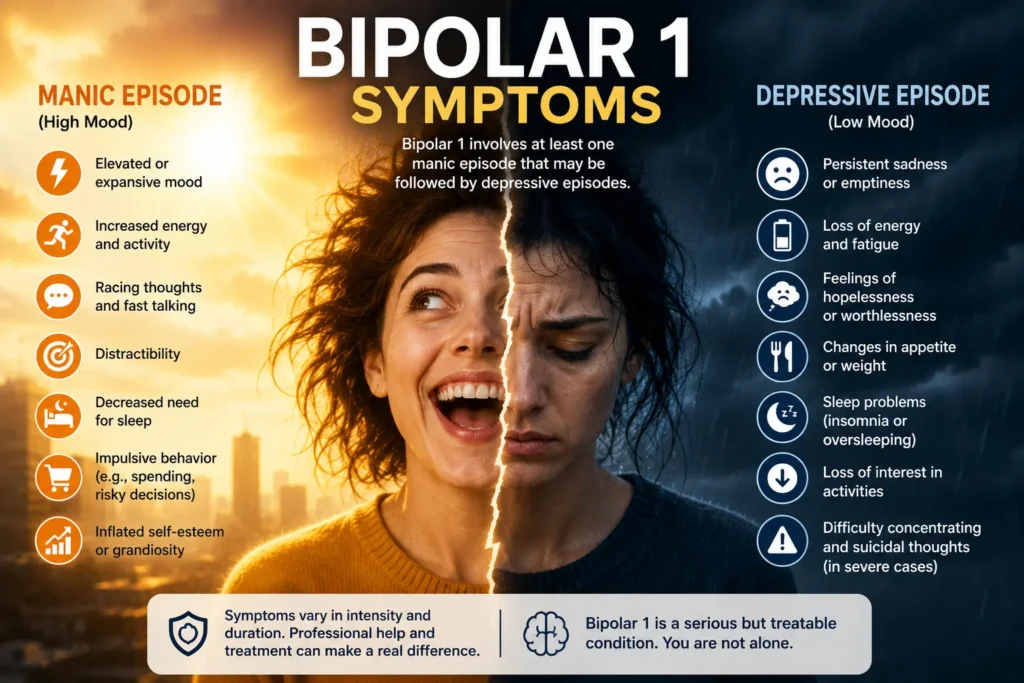
During a manic episode, common symptoms include:
- Euphoric or irritable mood that feels “too much” even to the person experiencing it
- Sleeping very little without feeling tired
- Talking quickly, jumping between topics
- Believing you have special powers, talents, or importance (grandiosity)
- Making major decisions impulsively — quitting a job, spending savings, starting risky relationships
- Increased libido or hypersexuality
- Agitation, restlessness, or increased physical activity
- In severe episodes, hallucinations or paranoid delusions
During a depressive episode (common but not required for diagnosis):
- Persistent sadness, hopelessness, or emptiness
- Loss of interest in activities once enjoyed
- Fatigue and low energy
- Sleeping too much or too little
- Difficulty concentrating
- Feelings of worthlessness or guilt
- Thoughts of death or suicide
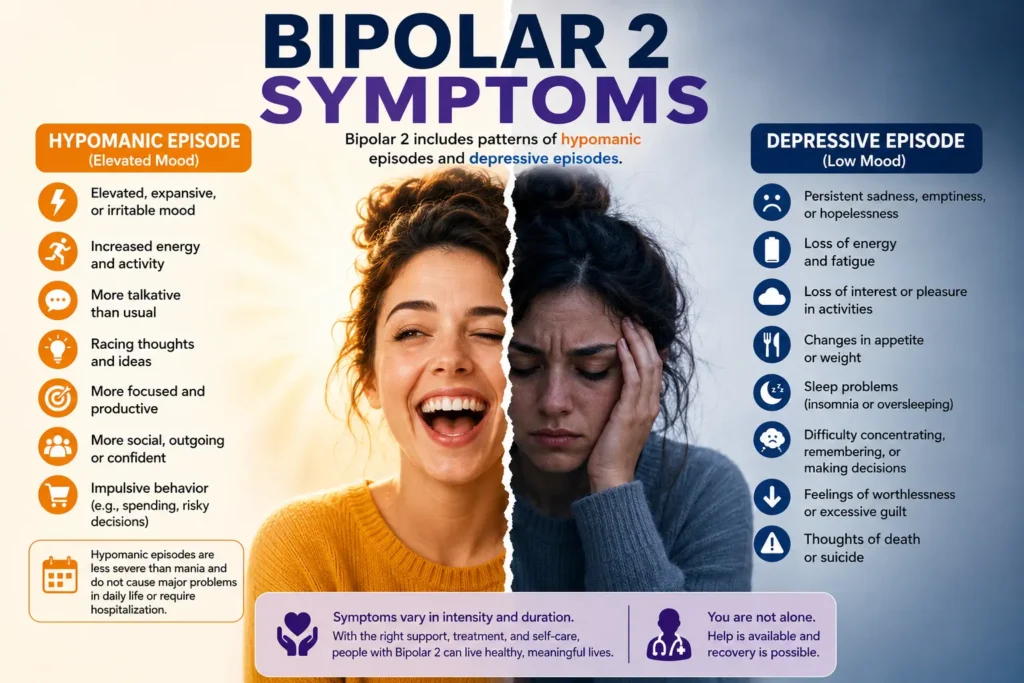
Bipolar 2 Symptoms
Bipolar 2 requires both a hypomanic episode and a major depressive episode.
During a hypomanic episode:
- Noticeably elevated, upbeat, or irritable mood
- More energy and less need for sleep than usual
- Increased talkativeness and confidence
- Racing or crowded thoughts
- Increased productivity, creativity, or sociability
- Mild impulsivity — spending a bit more, taking on more projects
- Symptoms are visible to others but don’t stop the person from functioning
During a major depressive episode, symptoms mirror those of bipolar 1 depression and often include:
- Deep, persistent low mood
- Loss of pleasure or interest in things
- Sleep and appetite changes
- Slowed thinking or movement
- Fatigue
- Difficulty concentrating or making decisions
- Feelings of guilt or worthlessness
- Suicidal thoughts
Because depressive episodes in bipolar 2 tend to be longer and more frequent than hypomanic ones, many people describe living with bipolar 2 as living with a form of depression that occasionally lifts into a noticeably “up” period rather than the reverse.
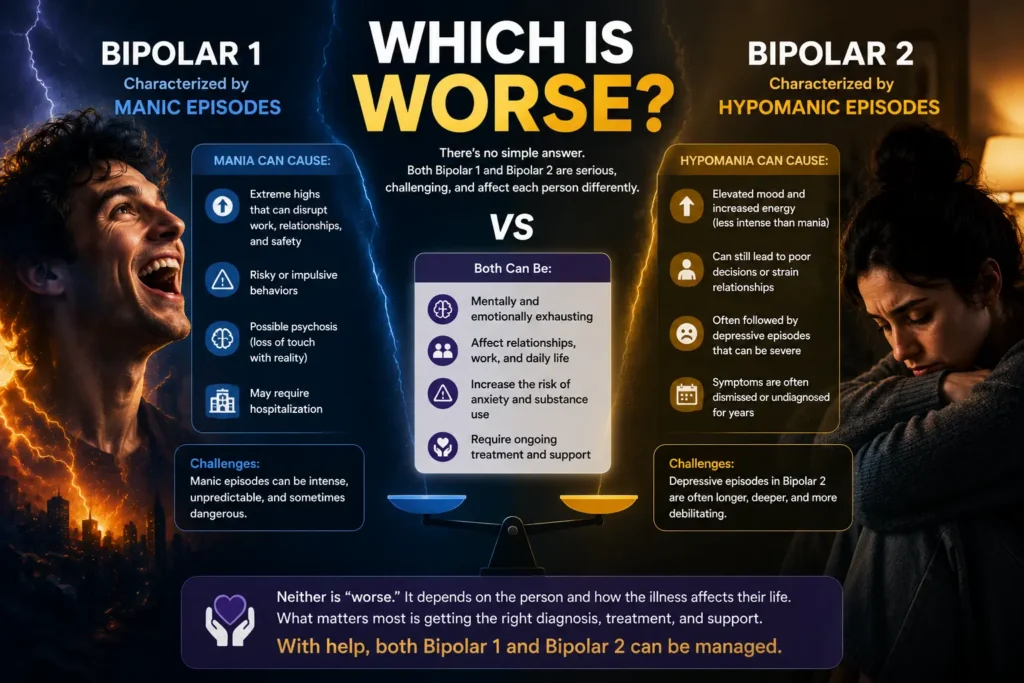
Bipolar 1 vs Bipolar 2 Symptoms: Full Comparison Table
| Symptom Category | Bipolar 1 | Bipolar 2 |
| High-energy episode type | Mania | Hypomania |
| Depression required | No (common but optional) | Yes (required) |
| Sleep during high phase | Little to no sleep needed, feels fine | Reduced sleep, still generally functional |
| Judgment/impulsivity | Severe, often reckless | Mild to moderate |
| Psychosis possible | Yes | No, by definition |
| Work/social impact during high | Often severely disrupted | Usually maintained, though noticeably different |
| Depressive episodes | Frequent, often severe | Frequent, often longer-lasting |
| Overall time spent unwell | Split between mania and depression | Dominated by depression over time |
| Suicide risk | Elevated, particularly during mixed or depressive episodes | Elevated, often higher self-reported due to prolonged depression |
Which Is Worse: Bipolar 1 or Bipolar 2?
This is one of the most searched questions about these conditions, and the honest answer is: it depends on what “worse” means to you.
The case for bipolar 1 being more severe: Manic episodes can involve psychosis, require hospitalization, and lead to dangerous decisions (financial ruin, legal trouble, risky sexual behavior) in a short window of time. The acute risk during a manic episode can be higher than during hypomania.
The case for bipolar 2 being more severe: People with bipolar 2 tend to spend more total time depressed across their lifetime than people with bipolar 1. Long, recurring depressive episodes are strongly linked to impaired quality of life, relationship strain, and suicide risk. Some research has found that people with bipolar 2 report similar or even higher rates of suicidal thinking compared to bipolar 1, largely because of how much of their life is spent in depressive episodes.
The more accurate framing: Bipolar 1 vs Bipolar 2 are not “mild” and “severe” versions of the same illness — they are two different symptom patterns, each with its own risks. Severity within each type also varies enormously from person to person. Someone with well-managed bipolar 1 can function extremely well, while someone with untreated bipolar 2 can be significantly impaired by chronic depression. What matters most for long-term outcomes isn’t which type you have — it’s how early it’s identified and how consistently it’s treated.
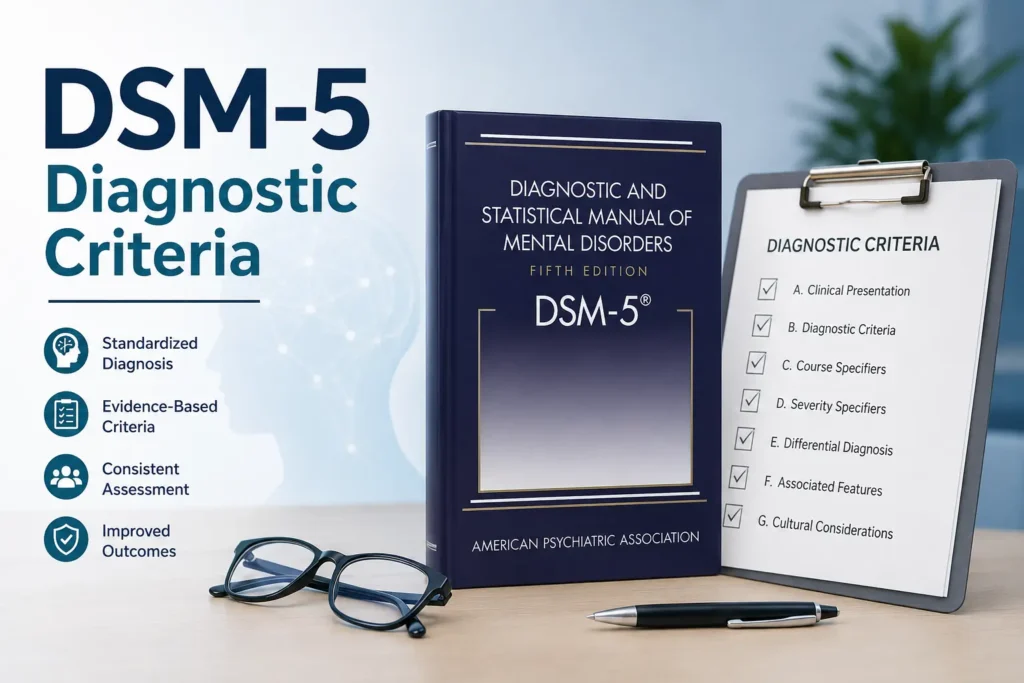
DSM-5 Diagnostic Criteria
Bipolar I Disorder — Diagnostic Criteria (Simplified)
To meet criteria for bipolar 1, a person must have experienced at least one manic episode, defined by:
- A distinct period of abnormally elevated, expansive, or irritable mood and increased energy/activity, lasting at least 1 week (or any duration if hospitalization is required)
- During this period, at least 3 of the following (4 if mood is only irritable): inflated self-esteem/grandiosity, decreased need for sleep, increased talkativeness, racing thoughts, distractibility, increased goal-directed activity or agitation, excessive involvement in risky activities
- The episode causes marked impairment in functioning, requires hospitalization, or includes psychotic features
- The episode is not attributable to substances or another medical condition
A depressive episode is common but not required for a bipolar 1 diagnosis.
Bipolar II Disorder — Diagnostic Criteria (Simplified)
To meet criteria for bipolar 2, a person must have experienced:
- At least one hypomanic episode: the same core symptoms as mania, but lasting at least 4 consecutive days, and not severe enough to cause marked impairment, require hospitalization, or involve psychosis
- At least one major depressive episode: at least 2 weeks of depressed mood or loss of interest, plus at least 4 additional symptoms (sleep, appetite, energy, concentration, guilt, psychomotor changes, suicidal thoughts)
- No lifetime history of a full manic episode — if a manic episode ever occurs, the diagnosis changes to bipolar 1
- The symptoms cause clinically significant distress or impairment
DSM-5 Criteria Comparison Table
| Criterion | Bipolar I | Bipolar II |
| Manic episode | Required (at least 1) | Never present (excludes diagnosis if it occurs) |
| Hypomanic episode | May occur, not required | Required (at least 1) |
| Major depressive episode | Not required, but common | Required (at least 1) |
| Duration of high episode | ≥ 7 days or hospitalization | ≥ 4 days |
| Psychosis | Possible | Excluded by definition |
| Functional impairment (high episode) | Marked | Present but not marked |
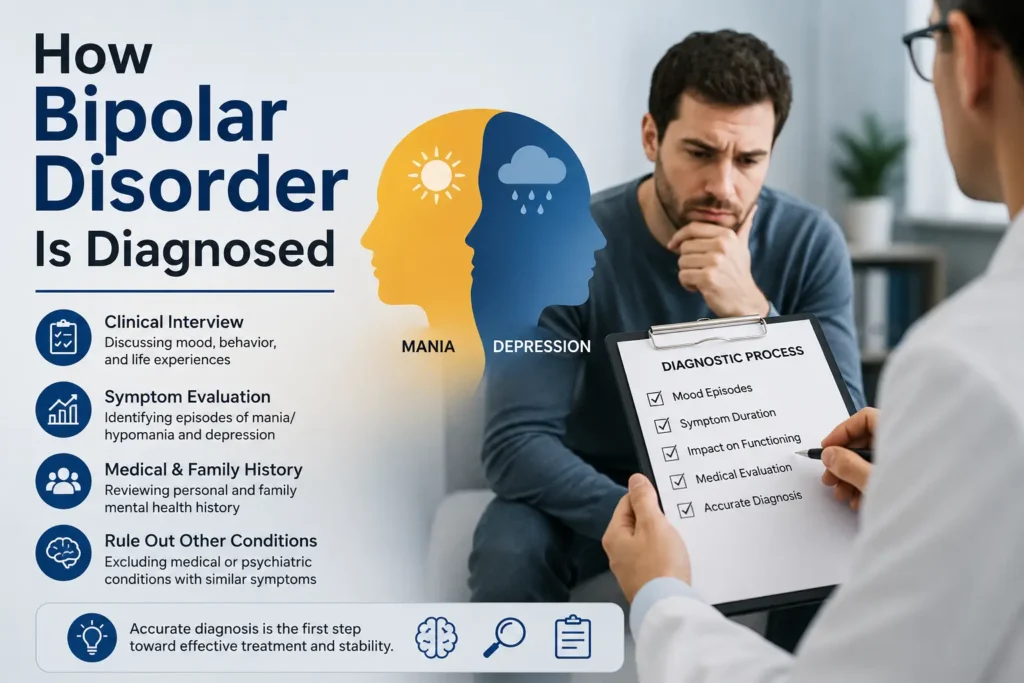
How Bipolar Disorder Is Diagnosed
There is no lab test, brain scan, or blood panel that can diagnose bipolar disorder. Diagnosis is clinical, meaning it’s based on a detailed conversation and history-taking by a psychiatrist, psychologist, or other qualified mental health professional. A thorough evaluation typically includes:
- A full history of mood episodes — how long they lasted, what symptoms occurred, and how they affected daily life
- Input from family members or close friends, since people often underreport hypomanic or manic symptoms
- Screening for other conditions that can look similar (ADHD, borderline personality disorder, anxiety disorders, thyroid problems, substance use)
- Standardized questionnaires, such as the Mood Disorder Questionnaire (MDQ), used as a screening tool rather than a diagnostic one
- Ruling out medical causes (thyroid dysfunction, neurological conditions) and substance-induced mood changes
Diagnosis Comparison Table
| Diagnostic Step | Bipolar 1 | Bipolar 2 |
| Trigger for evaluation | Often a manic episode severe enough to alarm family or require hospitalization | Often a depressive episode; hypomania is reported later or noticed retrospectively |
| Most common initial misdiagnosis | Schizophrenia or a psychotic disorder | Major depressive disorder |
| Average time to correct diagnosis | Can be faster due to visibility of mania | Often longer, sometimes years, due to subtlety of hypomania |
| Key diagnostic clue | History of at least one manic episode | History of hypomania plus major depression, with no full manic episode |
Why bipolar 2 is so often misdiagnosed as depression: Because the depressive episodes are usually what bring someone to treatment, and hypomanic periods often aren’t mentioned — either because the person didn’t see them as a problem, doesn’t remember them clearly, or genuinely enjoyed how they felt. A skilled clinician will specifically ask about past periods of unusually high energy, reduced sleep, or elevated mood, not just about depression.
Causes and Risk Factors
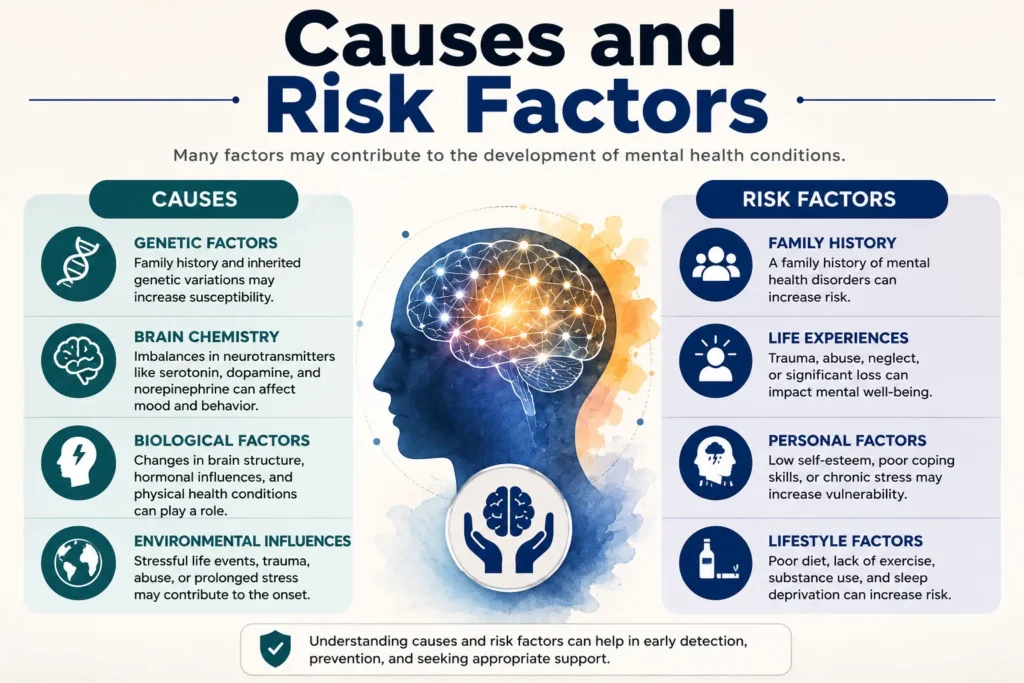
Bipolar disorder doesn’t have one single cause. Research points to a combination of genetic, biological, and environmental factors that interact over time.
Genetics: Bipolar disorder runs strongly in families. Having a parent or sibling with bipolar disorder significantly increases risk compared to the general population, though it does not guarantee someone will develop it.
Brain chemistry and structure: Differences in neurotransmitter regulation (particularly dopamine, serotonin, and norepinephrine) and in brain regions involved in emotion regulation appear to play a role.
Stress and life events: Major stressors — trauma, loss, significant life transitions, or chronic high stress — can trigger a first episode in someone who is genetically vulnerable.
Sleep disruption: Irregular sleep, especially sleep loss, is one of the most consistent triggers for manic or hypomanic episodes in people who are prone to bipolar disorder.
Substance use: Alcohol and recreational drug use can trigger mood episodes and also complicate diagnosis, since substances can independently cause manic- or depressive-like symptoms.
Risk Factors Table
| Risk Factor | Relevance to Bipolar 1 | Relevance to Bipolar 2 |
| Family history | Strong risk factor | Strong risk factor |
| High stress/trauma | Common trigger for first episode | Common trigger for first episode |
| Sleep deprivation | Frequently triggers mania | Frequently triggers hypomania |
| Substance use | Can trigger or worsen manic episodes | Can trigger or worsen mood instability |
| Postpartum period | Increased risk of manic or mixed episodes | Increased risk of depressive/hypomanic episodes |
| Age of onset | Typically late teens–early 20s | Similar, sometimes slightly later |
Warning Signs and Early Red Flags
Many people ask, “What is the first red flag of bipolar disorder?” It’s rarely a single dramatic moment — it’s usually a pattern that becomes clear only in hindsight.
Early red flags often include:
- A noticeable, out-of-character shift in energy, sleep, or mood that lasts several days
- Periods of unusually high productivity or confidence followed by a crash into depression
- Family members commenting that “something seems different” during certain periods
- A first depressive episode in the teens or early 20s that doesn’t fully respond to standard depression treatment
- Racing thoughts or difficulty slowing down mentally, even without obvious euphoria
- Impulsive decisions that feel out of character once the episode passes
A useful way to think about it: a single bad day or a single great week isn’t a red flag. A repeating pattern of distinct high and low periods, each lasting days to weeks, is what clinicians look for.
Emergency Symptoms: When to Seek Immediate Help
Some symptoms require urgent care, not routine follow-up. Seek emergency help (go to an emergency room, call emergency services, or contact a crisis line) if you or someone you know experiences:
- Thoughts of suicide or a plan to harm themselves
- Hallucinations or delusions (seeing/hearing things that aren’t there, false beliefs)
- Behavior that puts their safety or others’ safety at serious risk
- Inability to sleep for multiple consecutive days combined with escalating agitation
- Confusion, disorientation, or inability to care for basic needs
If you are in crisis or having thoughts of suicide, you can call or text 988 (Suicide & Crisis Lifeline) in the United States, available 24/7. If you’re outside the US, please contact your local emergency number or a local crisis line.
Daily Life Impact
Living with either type of bipolar disorder affects far more than mood — it touches sleep, relationships, work, and self-image.
Bipolar 1: The unpredictability of manic episodes can strain relationships and careers, especially if episodes lead to impulsive decisions that are hard to undo (job loss, damaged trust, financial consequences). Between episodes, many people function very well, but the fear of another manic episode can itself be a source of chronic stress.
Bipolar 2: Because depression tends to dominate, daily life can feel like managing chronic low energy and motivation punctuated by shorter hypomanic “good patches.” This pattern can be exhausting and is sometimes misunderstood by others as ordinary moodiness rather than a medical condition.
Shared challenges across both types:
- Maintaining stable sleep and routines, since disruption can trigger episodes
- Explaining the condition to employers, partners, or friends without stigma
- Managing medication side effects while balancing effectiveness
- Rebuilding trust or routines after a difficult episode
- Ongoing self-monitoring for early warning signs
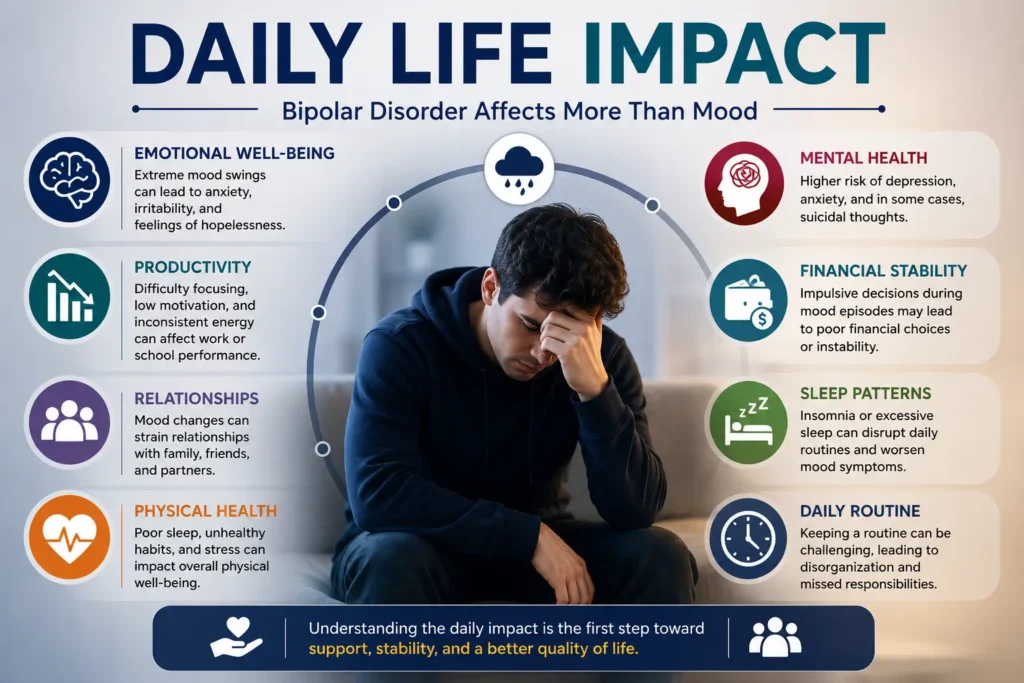
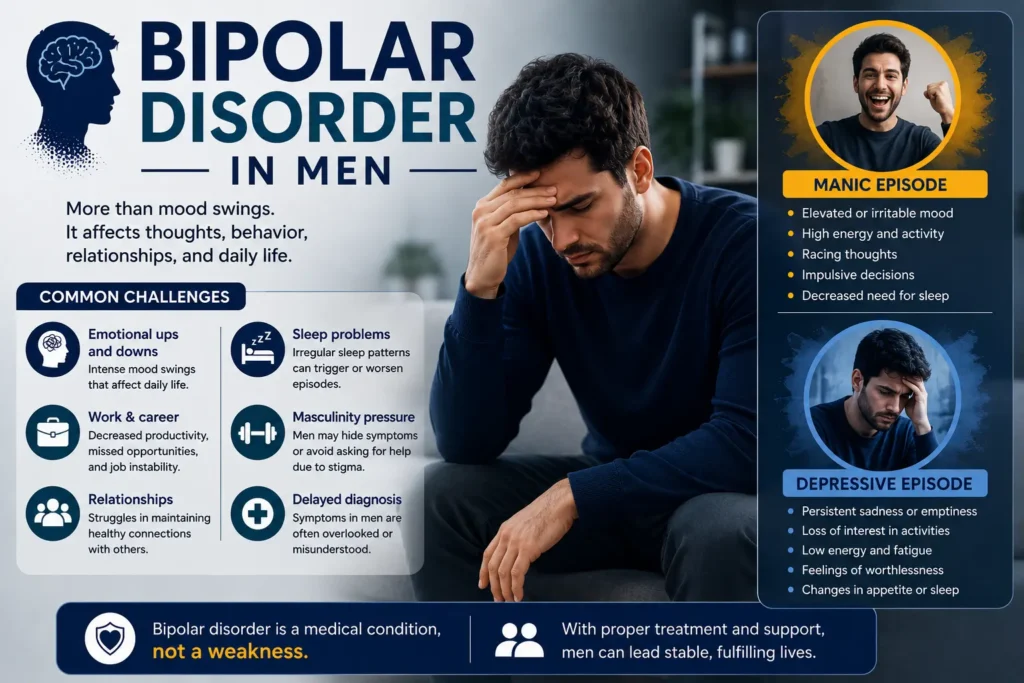
Bipolar Disorder in Men
Men with bipolar disorder are somewhat more likely to have their first episode present as mania, and are statistically more likely to also struggle with substance use, which can mask or worsen symptoms. Men may also be less likely to seek help for mood symptoms due to stigma, and irritability or anger — rather than sadness — is sometimes the more visible symptom of depressive episodes in men.
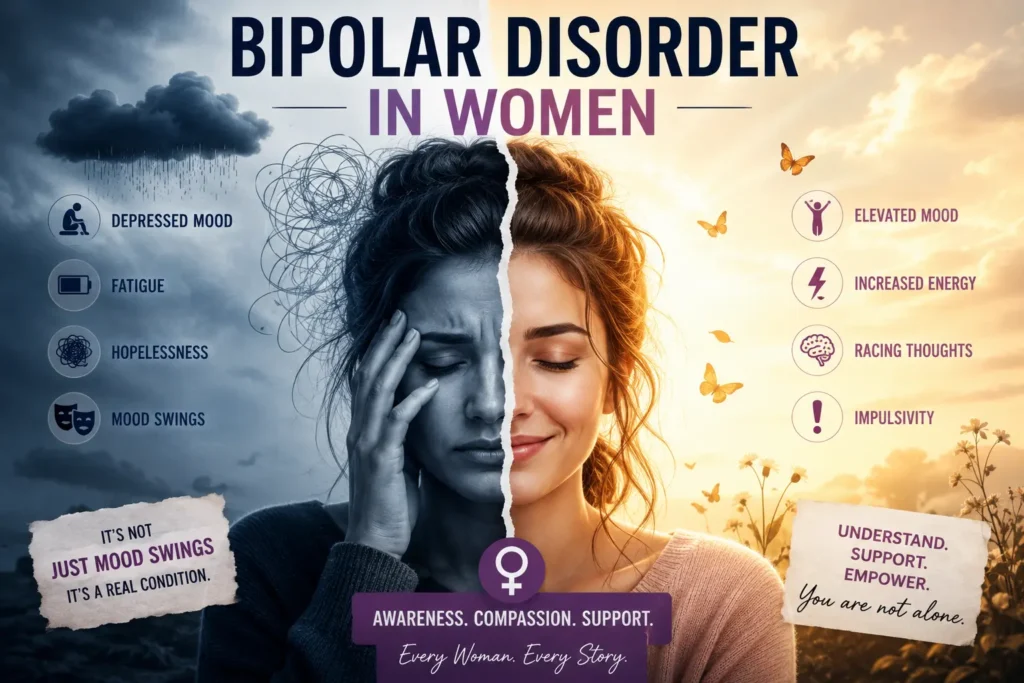
Bipolar Disorder in Women
Women are more likely to be diagnosed with bipolar 2 and tend to experience more depressive episodes over their lifetime than manic or hypomanic ones. Hormonal changes — including the menstrual cycle, pregnancy, postpartum period, and perimenopause — can influence mood stability and may trigger or worsen episodes. Women with bipolar disorder also have a higher likelihood of co-occurring anxiety and thyroid conditions, which can complicate diagnosis and treatment.
Bipolar Disorder in Teens
Bipolar disorder often first appears in the teenage years, though it can be difficult to distinguish from normal adolescent mood changes, ADHD, or depression. In teens, irritability and mood reactivity may be more prominent than classic euphoria. Warning signs include unusually reduced need for sleep without tiredness, uncharacteristic risk-taking, dramatic mood episodes lasting days rather than hours, and academic or social functioning that changes noticeably between periods. Because adolescence is naturally a period of mood variability, diagnosis in teens should always involve a specialist experienced in pediatric or adolescent mental health.
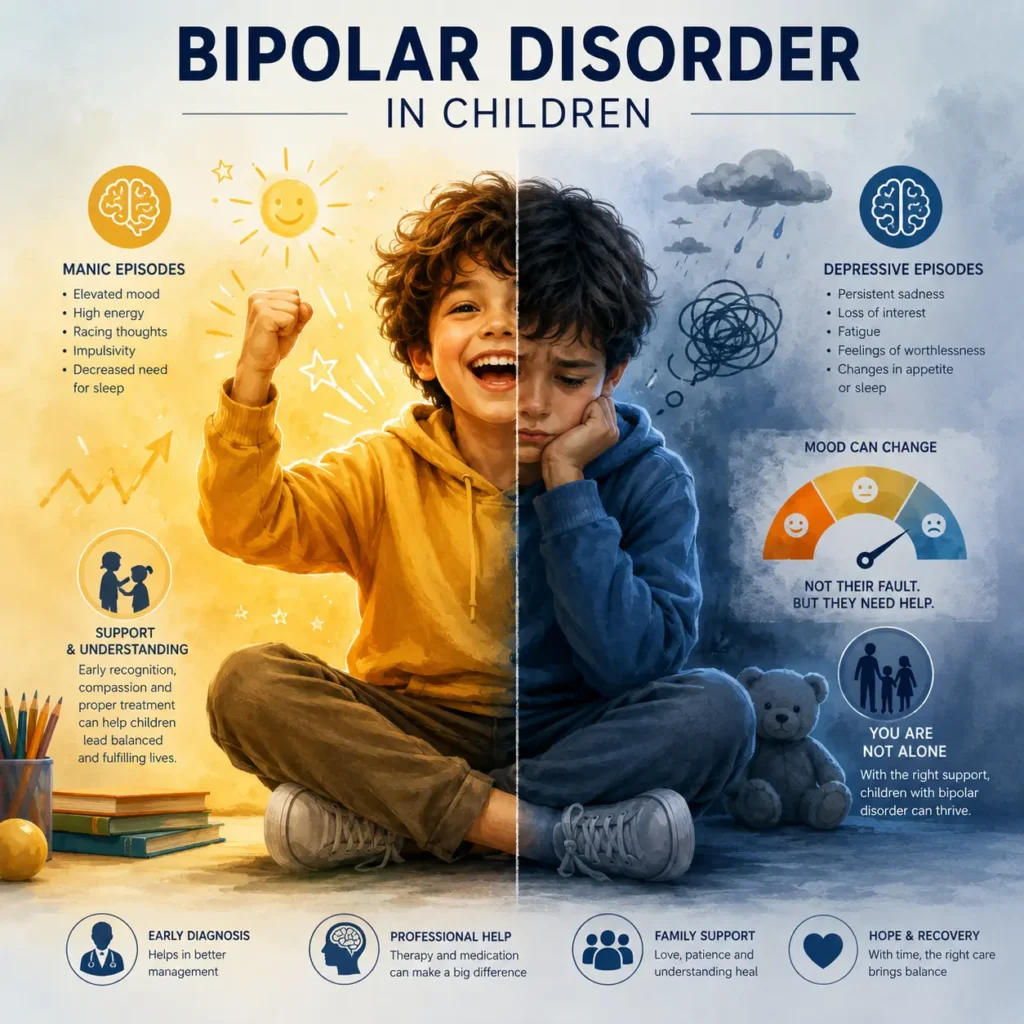
Bipolar Disorder in Children
Bipolar disorder is uncommon but possible in children, and diagnosis is more controversial and complex at this age because normal childhood behavior can overlap with mood symptoms. When it does occur, it often presents with more chronic irritability and mood instability rather than clearly episodic highs and lows. Any concerns about a child’s mood or behavior should be evaluated by a child and adolescent psychiatrist rather than diagnosed informally, since several other conditions can look similar in children.
Treatment Comparison
Bipolar 1 vs Bipolar 2 are both treated with a combination of medication, psychotherapy, and lifestyle management, though the specific medication strategy often differs based on which symptoms — mania/hypomania or depression — are more prominent.
| Treatment Approach | Bipolar 1 | Bipolar 2 |
| First-line medication focus | Mood stabilizers, often with antipsychotics for acute mania | Mood stabilizers, often with an emphasis on treating depression carefully |
| Antidepressant use | Used cautiously, usually alongside a mood stabilizer, due to mania risk | Used cautiously; can trigger hypomania if used without a stabilizer |
| Hospitalization | More common during severe manic or mixed episodes | Uncommon, except during severe depressive episodes with safety risk |
| Psychotherapy | CBT, psychoeducation, family-focused therapy | CBT, psychoeducation, often with more focus on depression management |
| Lifestyle emphasis | Sleep regulation, routine, relapse-prevention planning | Sleep and mood tracking, structure to prevent depressive slides |
Medication Comparison Table
| Medication Class | Common Examples | Primarily Used For |
| Mood stabilizers | Lithium, valproate (divalproex), lamotrigine | Both types; lithium and valproate especially for mania; lamotrigine often favored for depressive prevention in bipolar 2 |
| Atypical antipsychotics | Quetiapine, olanzapine, risperidone, lurasidone | Acute mania (bipolar 1); also used for bipolar depression in both types |
| Antidepressants | SSRIs/SNRIs (used cautiously) | Sometimes added for depressive episodes, always alongside a mood stabilizer to avoid triggering mania/hypomania |
| Anticonvulsants | Valproate, carbamazepine | Mood stabilization, particularly in bipolar 1 |
Medication choice is highly individualized. This table is educational, not a treatment recommendation — only a prescribing clinician can determine what’s appropriate for a specific person.
Psychotherapy Approaches
- Cognitive Behavioral Therapy (CBT): Helps identify and change thought patterns that worsen mood episodes, and builds coping skills for both depressive and hypomanic/manic warning signs.
- Psychoeducation: Teaches patients and families to recognize early warning signs and understand the illness, which is strongly linked to fewer relapses.
- Family-Focused Therapy: Especially useful for bipolar 1, helping families reduce conflict and support relapse prevention.
- Interpersonal and Social Rhythm Therapy (IPSRT): Focuses on stabilizing daily routines and sleep-wake cycles, which is valuable for both types but particularly helpful for preventing hypomanic episodes in bipolar 2.
Lifestyle Tips That Support Treatment
- Keep a consistent sleep schedule — sleep loss is one of the most reliable triggers for both mania and hypomania
- Track mood daily using a simple mood chart or app to catch early warning signs
- Limit alcohol and recreational drug use, which can destabilize mood and interact with medications
- Build a predictable daily routine for meals, work, and exercise
- Identify a personal “early warning sign checklist” with a therapist or psychiatrist
- Involve a trusted family member or friend who can help notice changes you might miss in yourself
Myths vs. Facts
| Myth | Fact |
| “Bipolar 2 is just a milder, less serious version of bipolar 1.” | Bipolar 2 is a distinct diagnosis, not a “lesser” version — it often involves more time spent in depression and comparable or higher suicide risk. |
| “If you haven’t been hospitalized, you don’t have bipolar disorder.” | Most people with bipolar 2, and many with bipolar 1 between episodes, are never hospitalized. Hospitalization is not required for diagnosis. |
| “Bipolar disorder means constant mood swings, day to day.” | Episodes typically last days to months, not hours. Rapid, hour-to-hour mood changes are more characteristic of other conditions, such as borderline personality disorder. |
| “People with bipolar disorder can’t hold stable jobs or relationships.” | With consistent treatment, many people with bipolar disorder build stable careers, relationships, and families. |
| “Hypomania always feels bad.” | Hypomania frequently feels good — increased energy, confidence, and productivity — which is exactly why it’s often not reported to a doctor. |
| “Antidepressants alone are the standard treatment.” | Antidepressants alone are generally avoided in bipolar disorder because they can trigger mania or hypomania; they’re used cautiously alongside mood stabilizers. |
Common Mistakes People Make
- Only describing depressive symptoms to a doctor and never mentioning past high-energy periods, which delays an accurate bipolar 2 diagnosis for years
- Stopping medication once feeling better, which is one of the most common causes of relapse
- Assuming a “good mood” can’t be a symptom, especially in bipolar 2, where hypomania can feel like a personal high point rather than a red flag
- Treating depressive episodes with antidepressants alone, without a mood stabilizer, which can risk triggering hypomania or mania
- Ignoring sleep disruption as a warning sign, when it’s often one of the earliest and most modifiable triggers
- Waiting for a crisis before seeking help, rather than treating early warning signs as reason enough to check in with a professional
Typical Timeline of Bipolar Disorder
| Stage | What Often Happens |
| Late teens–early 20s | First episode typically appears, often a depressive episode in bipolar 2, or a manic episode in bipolar 1 |
| First few years | Episodes may be missed, misattributed to stress, or misdiagnosed as unipolar depression, especially in bipolar 2 |
| Diagnosis | Usually follows a pattern of recurring episodes; average diagnostic delay from first symptoms can span several years, particularly for bipolar 2 |
| Early treatment phase | Medication and therapy are adjusted; finding the right combination can take time and some trial and error |
| Long-term management | With consistent treatment, episode frequency and severity often decrease; relapse-prevention planning becomes central |
| Later life | Some research suggests manic/hypomanic episodes may become less frequent with age, while depressive episodes can remain or become more prominent |
Research Insights
Current understanding continues to evolve, and a few consistent findings are worth knowing:
- Bipolar spectrum disorders are estimated to affect around 1–2.5% of people globally, with bipolar 1 and bipolar 2 occurring at broadly comparable rates, though exact figures vary by study and diagnostic criteria used.
- Depressive episodes generally last longer on average than manic or hypomanic episodes, which helps explain why depression tends to dominate the overall course of both bipolar 1 and bipolar 2.
- Sleep disruption is consistently identified as one of the strongest and most modifiable triggers for mood episodes, which is why sleep regulation is a core part of most treatment plans.
- Early, accurate diagnosis and consistent treatment are strongly associated with better long-term functioning, underscoring why correctly distinguishing bipolar 1 from bipolar 2 matters clinically, not just academically.
- Authoritative sources such as the National Institute of Mental Health (NIMH), the American Psychiatric Association (APA), the World Health Organization (WHO), and organizations like the Mayo Clinic and Cleveland Clinic all emphasize that bipolar disorder is a treatable, manageable condition — not a life sentence of instability.
Frequently Asked Questions
How can you tell if you’re bipolar 1 or bipolar 2?
The clearest way is a detailed clinical evaluation that maps your history of mood episodes. If you’ve ever had a period of elevated mood/energy severe enough to disrupt work, relationships, or safety — or that required hospitalization or involved psychosis — that points to bipolar 1. If your highest “up” periods were noticeable but didn’t stop you from functioning, and you’ve also had major depressive episodes, that pattern points to bipolar 2. Self-assessment can offer clues, but only a licensed mental health professional can make an accurate diagnosis.
Which is more serious, bipolar 1 or bipolar 2?
Neither is universally “more serious.” Bipolar 1 tends to involve more acute, high-risk episodes (mania, possible psychosis, hospitalization). Bipolar 2 tends to involve more cumulative time spent depressed, with comparable or sometimes higher rates of suicidal thinking. Severity ultimately depends on episode frequency, symptom intensity, and how consistently the condition is treated — not just the diagnostic label.
What does bipolar 2 feel like?
Many people describe bipolar 2 as long stretches of low mood, low energy, and reduced motivation, interrupted by shorter periods of feeling unusually confident, energetic, talkative, or productive — the hypomanic phase. The hypomanic periods often feel good in the moment, which is part of why they’re easy to overlook as a symptom rather than just “a great week.”
What is the first red flag of bipolar disorder?
There’s rarely one single red flag. The clearest early pattern is a noticeable, sustained shift in energy, sleep, or mood — lasting several days, not hours — that is out of character and later followed by a mood crash. A first depressive episode that doesn’t respond well to standard treatment, especially in someone with a family history of bipolar disorder, is also a common early clue.
Can bipolar 2 turn into bipolar 1?
Yes — if a person previously diagnosed with bipolar 2 ever experiences a full manic episode, their diagnosis is updated to bipolar 1, since a manic episode is the defining feature of that type.
Is hypomania always a bad thing?
Not necessarily in the moment — many people enjoy how hypomania feels. But it’s still part of a mood disorder, and it’s often followed by a depressive crash. Left unmanaged, hypomanic episodes can also lead to impulsive decisions or, in some cases, progress toward more severe episodes.
Can you have bipolar disorder without ever being hospitalized?
Yes. Most people with bipolar 2 and many people with bipolar 1, especially with early treatment, are never hospitalized. Hospitalization is not required for either diagnosis.
Do bipolar 1 and bipolar 2 require different medications?
There’s overlap, but emphasis often differs. Bipolar 1 treatment frequently centers on controlling acute mania with mood stabilizers and sometimes antipsychotics. Bipolar 2 treatment often centers more on preventing and treating depressive episodes while avoiding antidepressant-triggered hypomania. A psychiatrist tailors treatment to the individual, not just the diagnostic label.
Is bipolar disorder the same as having mood swings?
No. Everyday mood swings shift over hours in response to events. Bipolar disorder involves distinct episodes lasting days to weeks or months, with clear changes in sleep, energy, and behavior that go well beyond typical emotional ups and downs.
Final Summary
Bipolar 1 vs bipolar 2 are two related but distinct diagnoses within the bipolar spectrum. The defining line is the presence of a full manic episode (bipolar 1) versus a hypomanic episode paired with major depression and no history of full mania (bipolar 2). Bipolar 1 tends to bring more dramatic, higher-risk highs; bipolar 2 tends to bring longer, more frequent depressive periods. Neither is simply a “worse” or “better” version of the other — they’re different symptom patterns of the same underlying condition, and both deserve to be taken seriously.
If any of the patterns described here sound familiar — recurring episodes of unusually high or low mood and energy lasting days at a time — the most important next step is a full evaluation with a psychiatrist, psychologist, or other licensed mental health professional. Bipolar disorder is not something to self-diagnose from a checklist, but it is highly treatable once accurately identified, and most people who receive consistent, appropriate care go on to live stable, fulfilling lives.
This article is for educational purposes only and does not replace professional medical or psychiatric advice. If you are experiencing thoughts of suicide or self-harm, please contact 988 (Suicide & Crisis Lifeline) in the US, or your local emergency services, immediately.