Bipolar disorder complications develop when mood episodes go unmanaged for long periods. Left untreated, bipolar disorder can lead to substance use problems, damaged relationships, job loss, financial harm, worsening physical health, and a significantly higher risk of suicide. The good news: most of these complications are preventable with consistent treatment, a solid support system, and early intervention when symptoms return.
Table of Contents
Introduction
A bipolar diagnosis is not the hard part. Living with it long-term, especially without steady treatment, is where the real damage tends to happen.
Most people search for information on bipolar disorder complications after a rough episode — a job lost during mania, a relationship strained by unpredictable moods, or a depressive stretch that won’t lift. That’s a fair reason to be here.
This guide walks through what actually happens when bipolar disorder goes unmanaged: the psychological toll, the physical health risks, the social fallout, and the warning signs that mean it’s time to get help immediately. For background on the condition itself, see our full guide on bipolar disorder and what bipolar disorder is.
Key Takeaways
- Untreated bipolar disorder rarely stays the same — episodes tend to become more frequent and more severe over time, a pattern clinicians call “kindling.”
- People with bipolar disorder face a substantially higher risk of suicide than the general population, which makes ongoing psychiatric care non-negotiable.
- Substance use disorders, anxiety disorders, and physical health conditions like heart disease are common co-occurring complications, not rare side effects.
- Manic episodes can cause real financial, legal, and relational damage that lingers long after the mood episode itself resolves.
- Most complications are largely preventable with consistent treatment, medication adherence, and a plan for recognizing early warning signs.
What Counts as a “Complication” of Bipolar Disorder?
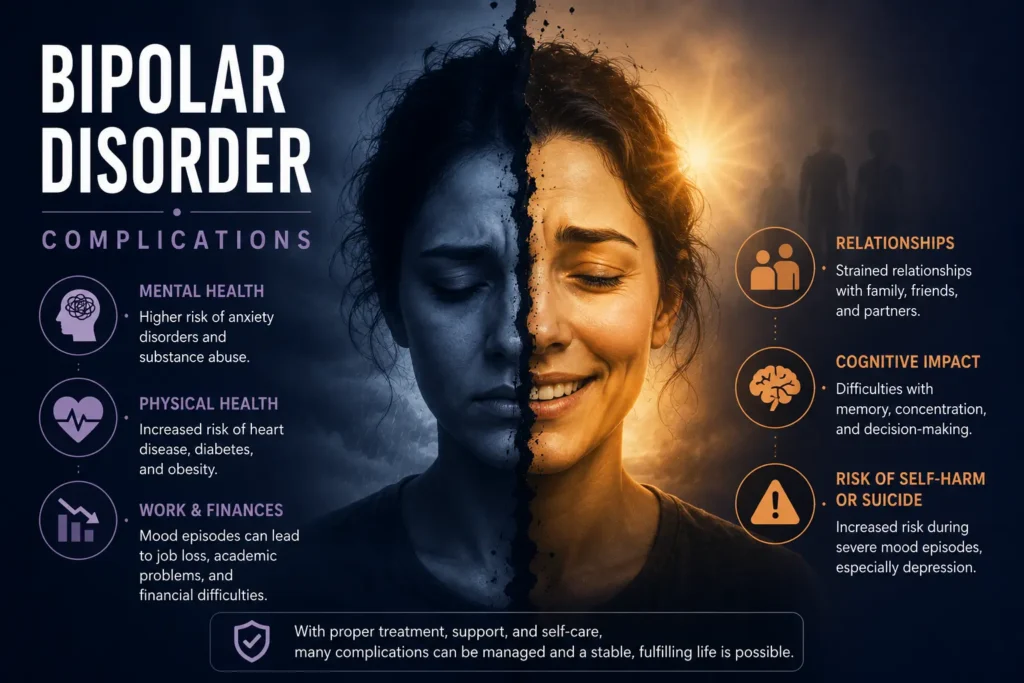
A complication is any additional problem that develops because of bipolar disorder — not the core symptoms themselves, but the downstream consequences of living with unmanaged mood episodes.
This is an important distinction. Bipolar disorder symptoms — mania, hypomania, depression — are the disorder itself. Complications are what happens around those symptoms: the marriage that ends during a manic spending spree, the depressive episode that turns into a substance use problem, the missed years of untreated illness that damage long-term brain health.
Complications tend to fall into a few categories:
- Psychiatric — other mental health conditions that develop alongside bipolar disorder
- Physical health — chronic conditions linked to bipolar disorder itself and to its treatments
- Social and relational — damage to marriages, friendships, and family trust
- Occupational and financial — job loss, debt, legal trouble
- Safety-related — self-harm and suicide risk
We’ll go through each of these in detail.
Why Complications Develop: The Role of Untreated Episodes
Bipolar disorder is a lifelong condition, and mood episodes don’t just disappear if they’re ignored. According to the American Psychiatric Association’s DSM-5 criteria, bipolar disorder is defined by a pattern of recurring mood episodes — and without treatment, that pattern typically continues or worsens.
Psychiatrists sometimes describe a “kindling effect”: each untreated episode can make the brain more sensitive to future episodes, meaning they can arrive more often and with less of an obvious trigger. This is one reason early, consistent treatment matters so much — it’s not just about managing today’s symptoms, it’s about protecting against a harder course of illness later on.
Several factors make complications more likely:
| Factor | Why It Raises Risk |
| Delayed diagnosis | Years of untreated mood episodes before the correct diagnosis is common, especially when bipolar disorder is misdiagnosed as depression |
| Inconsistent medication use | Stopping mood stabilizers, often during a “good” period, is one of the most common triggers for relapse |
| Co-occurring substance use | Alcohol and drugs can trigger episodes and interfere with medication effectiveness |
| Lack of routine | Irregular sleep and daily structure are strongly linked to mood episode onset |
| Limited social support | Isolation makes it harder to notice early warning signs and get help quickly |
| Untreated coexisting conditions | Anxiety, ADHD, or thyroid issues can complicate the overall clinical picture |
For a deeper look at what drives the disorder itself, see our guide on bipolar disorder causes.
Psychiatric Complications
Substance Use Disorders
Substance use disorders are among the most common complications of bipolar disorder. Some people drink or use drugs during mania to sustain the high energy or during depression to numb the low. Over time, this can develop into dependence, which then makes bipolar symptoms harder to treat and episodes harder to predict.
Substance use also increases the risk of dangerous drug interactions with mood stabilizers and antipsychotics, and it’s strongly associated with more hospitalizations and poorer long-term outcomes.
Anxiety Disorders
Generalized anxiety disorder, panic disorder, and social anxiety frequently occur alongside bipolar disorder. Anxiety can intensify mood symptoms — a person already emotionally overwhelmed by mania or depression will often experience anxiety as an added layer of distress rather than a separate, isolated problem.
Other Mental Health Conditions
ADHD, especially in people diagnosed with bipolar disorder in childhood or adolescence, and personality disorders sometimes co-occur as well. These overlapping conditions can make diagnosis and treatment more complex, which is why an accurate diagnosis from a psychiatric professional matters so much.
Cognitive Difficulties
Repeated, untreated mood episodes have been linked to difficulties with memory, concentration, and decision-making — sometimes called “cognitive complications.” This doesn’t mean everyone with bipolar disorder develops cognitive decline, but it is a recognized risk associated with a longer duration of untreated illness.
Physical Health Complications
Bipolar disorder isn’t just a mental health condition — it’s associated with real physical health risks, some tied to the illness itself and some tied to its treatment.
| Physical Health Risk | Why It’s Linked to Bipolar Disorder |
| Cardiovascular disease | Associated with lifestyle factors, medication side effects, and shared biological pathways |
| Metabolic syndrome / weight gain | Common side effect of several mood stabilizers and antipsychotic medications |
| Type 2 diabetes | Linked to medication effects and metabolic changes |
| Thyroid dysfunction | Some mood stabilizers, particularly lithium, can affect thyroid function over time |
| Sleep disorders | Disrupted sleep is both a symptom and a risk factor for future episodes |
| Migraine | More common in people with bipolar disorder than in the general population |
This is one reason routine physical health monitoring — bloodwork, weight checks, thyroid panels — is a standard part of long-term bipolar treatment, not an optional extra. Organizations like the World Health Organization and NHS both emphasize integrated physical and mental health care for people with serious mood disorders.
Social and Relationship Complications
Mood episodes don’t happen in isolation — they affect everyone around the person experiencing them.
During mania or hypomania, people may:
- Say hurtful things impulsively
- Make promises or plans they can’t follow through on
- Behave in ways that feel confusing or frightening to loved ones
- Engage in risky sexual behavior that damages trust
During depression, people may:
- Withdraw from friends and family for weeks or months
- Struggle to maintain basic communication
- Feel too exhausted or hopeless to participate in shared responsibilities
Over time, repeated cycles like these can wear down even strong relationships. Partners and family members may feel confused about which behavior is “the illness” and which is “the person” — a distinction that’s genuinely difficult, even for clinicians. Family education and therapy (including approaches like family-focused therapy) are often recommended specifically to help loved ones understand and respond to these patterns constructively.
Occupational and Financial Complications
Job Instability
Unmanaged mood episodes can make it hard to maintain steady employment. Mania can lead to impulsive resignations, conflict with coworkers, or grandiose decisions made without proper judgment. Depression can lead to missed workdays, reduced performance, or difficulty concentrating on tasks.
Financial Harm
Manic episodes are strongly associated with impulsive spending, risky investments, and gambling. It’s not unusual for a single manic episode to result in significant debt that takes years to recover from — a pattern well documented in clinical literature on bipolar disorder.
Legal Problems
Poor judgment during mania can occasionally lead to legal trouble: reckless driving, public disturbances, or impulsive decisions made without considering consequences. This isn’t true for everyone with bipolar disorder, but it’s a recognized risk during severe manic episodes.
Suicide Risk: The Most Serious Complication
This is the complication that matters most, and it deserves direct, clear language rather than euphemism.
Bipolar disorder carries one of the highest suicide risks among psychiatric conditions. According to the National Institute of Mental Health, mood disorders — including bipolar disorder — are among the strongest risk factors for suicide attempts and death by suicide. This risk is highest during depressive and mixed episodes, when a person may have both low mood and high energy or agitation at the same time.
This is precisely why treatment isn’t optional or something to pause during “good” periods. Consistent psychiatric care, a safety plan, and a support network are protective factors that meaningfully reduce this risk.
Warning Signs That Need Immediate Attention
- Talking about wanting to die or feeling like a burden
- Giving away possessions or making final arrangements
- Sudden calm after a period of severe depression
- Increased alcohol or drug use
- Withdrawing completely from everyone
- Expressing hopelessness about the future
Emergency Help
If you or someone you know is showing these warning signs, do not wait for the next scheduled appointment.
- In the US, call or text 988 to reach the Suicide & Crisis Lifeline, available 24/7.
- In the UK, contact the Samaritans at 116 123.
- If there is immediate danger, call your local emergency number or go to the nearest emergency room.
Reaching out during a crisis is not an overreaction. Crisis lines and emergency services exist specifically for these moments.
Complications by Bipolar Type: Does It Differ?
Complications can vary somewhat depending on which type of bipolar disorder someone has, largely because the intensity and pattern of episodes differ. For a full breakdown of these differences, read our dedicated comparison: Bipolar 1 vs Bipolar 2. Broadly:
| Aspect | Bipolar I | Bipolar II |
| Episode intensity | Full mania, often more disruptive short-term | Hypomania — less extreme, but depression tends to be more frequent and severe |
| Common complications | Hospitalization risk, financial/legal fallout from mania | Higher rates of chronic depressive complications, misdiagnosis as unipolar depression |
| Suicide risk | Elevated, especially during mixed or depressive episodes | Also elevated, sometimes underestimated due to milder mania |
For the full range of subtypes, including cyclothymic disorder, see our guide to types of bipolar disorder.
Myths vs. Facts About Bipolar Disorder Complications
| Myth | Fact |
| “Complications only happen to people with severe bipolar disorder.” | Even hypomania in Bipolar II can lead to serious relational and financial complications over time. |
| “If someone seems stable, they don’t need medication anymore.” | Stability is often the result of treatment working — stopping it is one of the most common causes of relapse. |
| “Bipolar disorder only affects mental health.” | It’s linked to real physical health risks, including cardiovascular and metabolic conditions. |
| “People with bipolar disorder can just ‘snap out of it.'” | Mood episodes are neurobiological, not a matter of willpower — this is well established in DSM-5 criteria. |
| “Talking about suicide will put the idea in someone’s head.” | Asking directly about suicidal thoughts does not increase risk and often opens the door to getting help. |
For more common misconceptions, see our full guide on bipolar disorder myths.
How to Prevent Complications
Prevention isn’t about eliminating all risk — it’s about stacking the odds in your favor.
Do:
- Take medication consistently, even when feeling well
- Keep a mood tracker to catch early warning signs
- Maintain a regular sleep schedule
- Stay connected with your psychiatric care team
- Build a crisis plan with trusted people before you need it
- Limit alcohol and recreational drug use
Don’t:
- Stop medication without medical guidance
- Isolate during depressive periods
- Ignore early signs of an emerging episode
- Assume things will resolve on their own
- Ignore physical health checkups
For a full breakdown of treatment options, including medication and therapy approaches, visit our guide on bipolar disorder treatment.
Prognosis: What Long-Term Outlook Looks Like
The long-term outlook for bipolar disorder varies significantly based on how early it’s diagnosed and how consistently it’s treated. Many people with bipolar disorder lead full, stable lives — holding careers, maintaining relationships, and managing symptoms effectively with the right combination of medication and therapy.
The complications described in this article are not inevitable. They represent what tends to happen when the illness goes unmanaged, not a fixed outcome. This is why organizations like the Mayo Clinic and Cleveland Clinic consistently emphasize early treatment and long-term follow-up as the strongest predictors of a good outcome.
For general context on how common bipolar disorder is and what research shows about outcomes, see our page on bipolar disorder statistics.
Frequently Asked Questions
What is the most serious complication of bipolar disorder? Suicide risk is the most serious complication, which is why ongoing psychiatric care and a crisis safety plan are essential parts of treatment.
Can bipolar disorder get worse if left untreated? Yes. Untreated episodes tend to become more frequent and more severe over time, a pattern often referred to as kindling.
Does bipolar disorder shorten life expectancy? Research has linked bipolar disorder to a higher risk of certain physical health conditions and suicide, both of which can affect overall life expectancy — which is part of why comprehensive treatment, including physical health monitoring, is recommended.
Can complications be reversed once they develop? Many complications — like damaged relationships, debt, or substance use — can improve significantly with sustained treatment, therapy, and time, though recovery isn’t always immediate.
Is substance abuse a symptom or a complication of bipolar disorder? It’s generally considered a complication — a co-occurring condition that often develops as people try to manage untreated mood symptoms.
Do all people with bipolar disorder experience these complications? No. Many people manage bipolar disorder successfully with consistent treatment and never experience severe complications. This article describes risks associated with the condition, not a guaranteed outcome.
Summary
Bipolar disorder complications develop primarily when the condition goes unmanaged over time. They range from co-occurring mental health conditions and physical health risks to relationship strain, financial harm, and — most seriously — a significantly elevated suicide risk.
None of this is meant to be discouraging. It’s meant to underline why consistent treatment matters so much. With an accurate diagnosis, the right treatment plan, and a strong support system, most of these complications are preventable — and many people with bipolar disorder go on to live full, stable, well-managed lives.
This article is for educational purposes and is not a substitute for professional medical advice. If you or someone you know is struggling with bipolar disorder or having thoughts of suicide, please reach out to a qualified healthcare provider or a crisis line immediately.