Emotional Symptoms of Bipolar Disorder: Understanding the Highs, Lows, and In-Between
Bipolar disorder is often summed up in one sentence: it causes extreme mood swings. But that phrase barely scratches the surface of what those swings actually feel like from the inside — the sudden confidence that borders on invincibility, the irritability that flares over nothing, the hopelessness that settles in without warning, or the strange emotional flatness that can follow a mood episode.
This guide breaks down the emotional symptoms of bipolar disorder in detail: what they look like during mania, hypomania, depression, and mixed episodes, why they happen, and how they differ from ordinary mood changes everyone experiences. For a wider look at the condition as a whole, our guides to bipolar disorder and what is bipolar are a good place to start.
Table of Contents
Key Takeaways
- Bipolar disorder produces distinct emotional patterns depending on the mood episode: euphoria and irritability during mania, hopelessness and emptiness during depression, and a confusing mix of both during mixed states.
- According to the American Psychiatric Association’s DSM-5, a manic episode requires a mood change accompanied by a genuine increase in energy or activity, not mood change alone.
- Emotional symptoms are not the same as simply “being moody.” They’re more intense, last longer, and interfere with daily functioning.
- Irritability, not just euphoria, is one of the most common and often overlooked emotional symptoms of mania.
- Persistent hopelessness or emotional numbness should always be discussed with a healthcare provider, particularly if thoughts of self-harm are present.
The emotional symptoms of bipolar disorder include euphoria, grandiosity, and irritability during manic or hypomanic episodes, and hopelessness, sadness, guilt, and emotional numbness during depressive episodes. During mixed episodes, a person may feel agitated and energized while also feeling deeply sad or hopeless at the same time. These emotional shifts are more intense and longer-lasting than ordinary mood changes and can significantly affect relationships, work, and daily decision-making.
What Makes These Emotional Symptoms Different From Normal Mood Changes
Everyone has good days and bad days. What separates bipolar disorder from typical emotional ups and downs is intensity, duration, and impact. A manic or depressive episode isn’t a passing mood — it’s a sustained emotional state that can last for days, weeks, or longer, and it noticeably disrupts a person’s usual functioning.
The DSM-5, the diagnostic manual published by the American Psychiatric Association, requires that a manic episode involve a distinct period of abnormally elevated, expansive, or irritable mood, along with a genuine increase in energy or goal-directed activity, lasting at least one week (or any length of time if hospitalization becomes necessary). This is an important detail: mood change alone isn’t enough for a diagnosis. The emotional shift has to come paired with real behavioral and energy changes, which is part of what separates bipolar disorder from everyday irritability or a rough week.
For the full list of causes behind these mood shifts, see our guide to bipolar disorder causes.
Emotional Symptoms During Manic Episodes
Mania is the most intense “up” phase of bipolar I disorder. Emotionally, it can feel euphoric, but it can just as easily feel agitated and irritable, which is a detail many people miss.
| Emotional Symptom | What It Looks Like |
| Euphoria | An intense, often unrealistic sense of happiness or excitement |
| Grandiosity | Inflated self-esteem, believing you have special abilities, talent, or importance |
| Irritability | Snapping at others, feeling easily frustrated, especially if plans are interrupted |
| Impulsive emotional reactions | Sudden anger, excitement, or emotional intensity that feels hard to control |
| Overconfidence | Believing risky decisions will work out, even when evidence suggests otherwise |
| Racing emotions | Feelings that shift and intensify quickly, matching racing thoughts |
Not everyone experiencing mania feels “on top of the world.” Some people primarily feel wound-up, agitated, and short-tempered instead of euphoric. This is why mania is sometimes missed or mistaken for a personality trait rather than a symptom. A closer breakdown of the full symptom picture, including physical and behavioral signs, is available in our guide to mania symptoms.
Emotional Symptoms During Hypomanic Episodes
Hypomania is a milder version of mania, seen in bipolar II disorder. Emotionally, it can feel like an unusually good, confident, and energized mood — often pleasant enough that people don’t initially see it as a problem.
- Heightened optimism and self-assurance
- Increased sociability and emotional openness
- Mild irritability if interrupted or challenged
- A noticeable “lift” in mood compared to a person’s usual baseline
Because hypomania doesn’t cause the same severe impairment as full mania, it’s frequently overlooked, especially by the person experiencing it. Our dedicated guide to hypomania symptoms explains how to recognize it, and mania vs hypomania breaks down exactly how the two differ.
Emotional Symptoms During Depressive Episodes
The depressive phase of bipolar disorder brings a very different emotional experience — one that mirrors major depressive disorder in many ways.
| Emotional Symptom | What It Looks Like |
| Persistent sadness | A heavy, ongoing low mood that doesn’t lift with reassurance or good news |
| Hopelessness | A sense that things won’t get better, even when circumstances are otherwise stable |
| Loss of interest (anhedonia) | No longer finding pleasure in hobbies, relationships, or activities once enjoyed |
| Guilt or worthlessness | Excessive self-blame, sometimes over things unrelated to any real fault |
| Emotional numbness | Feeling disconnected or “flat,” rather than overtly sad |
| Irritability | Depression in bipolar disorder can also show up as short-temperedness, not just sadness |
| Anxiety | Persistent worry or unease often accompanies depressive episodes |
Emotional numbness deserves special mention, since it’s often misunderstood. Some people describe depressive episodes not as intense sadness, but as an absence of feeling altogether — a kind of emotional flatness that can be just as distressing as sadness itself. For a deeper look at the full depressive symptom picture, see our guide to bipolar depression symptoms.
Emotional Symptoms During Mixed Episodes
A mixed episode is one of the most emotionally disorienting experiences in bipolar disorder. It involves features of both mania and depression at the same time — for example, feeling deeply hopeless while also feeling agitated, energized, and unable to slow down.
This combination is particularly difficult because the energy and impulsivity of mania can combine with the despair of depression, which research has linked to a higher risk of impulsive or self-harming behavior during mixed states. Our full guide to mixed episode symptoms covers this pattern in more depth. When mood episodes cycle unusually fast, sometimes several times within a month, that’s covered separately in rapid cycling bipolar symptoms.
Irritability: The Emotional Symptom People Often Miss
Irritability deserves its own spotlight because it shows up across nearly every phase of bipolar disorder — mania, hypomania, depression, and mixed states alike. It’s easy to associate bipolar disorder only with dramatic highs and lows, but ongoing irritability, short temper, or a persistently “on edge” feeling is just as central to the emotional picture, especially for people whose manic episodes lean irritable rather than euphoric.
This is one reason bipolar disorder can be mistaken for other conditions early on, since irritability alone isn’t unique to bipolar disorder. A full clinical evaluation is necessary to tell the difference, which is covered in our guide to bipolar disorder diagnosis.
Emotional Numbness and Anhedonia: When Feelings Seem to Disappear
Not every emotional symptom is loud or intense. Anhedonia — the reduced ability to feel pleasure — is a core symptom of depressive episodes and can leave a person feeling emotionally “muted,” even around people or activities they normally care about.
This flatness can be confusing for loved ones, who may expect depression to look like visible sadness or crying. In reality, it often looks like withdrawal, disinterest, and a quiet absence of emotional reaction, which can make it harder for others to recognize what’s happening.
Anxiety and Bipolar Disorder
Anxiety often travels alongside bipolar disorder, particularly during depressive and mixed episodes. Persistent worry, a sense of dread, or racing anxious thoughts can intensify the emotional weight of a depressive episode, and anxious agitation can also show up during mixed states. Because anxiety disorders are common alongside bipolar disorder, a comprehensive evaluation typically looks at both together rather than in isolation.
Emotional Symptoms Across Bipolar 1, Bipolar 2, and Related Conditions
Emotional intensity can vary depending on which type of bipolar disorder someone has. Bipolar I disorder involves full manic episodes, which tend to bring more extreme euphoria, grandiosity, or irritability. Bipolar II disorder involves hypomania rather than full mania, alongside more prominent depressive episodes, which often means the depressive emotional symptoms are more front-and-center over time.
For a full side-by-side comparison, our guide to bipolar 1 vs bipolar 2 walks through the key differences, including how emotional intensity and duration differ between the two.
How Emotional Symptoms Differ by Age and Life Stage
Emotional symptoms don’t always look the same across age groups.
- In teenagers, irritability and emotional reactivity are often more prominent than classic euphoria. Our guide to bipolar symptoms in teenagers explains this pattern in more depth.
- In children, emotional symptoms can present differently than in adults, making early recognition especially important. See bipolar symptoms in children for more detail.
- Emotional patterns can also differ somewhat between men and women, covered in our guides to bipolar symptoms in men and bipolar symptoms in women.
- Recognizing emotional shifts early, before they become a full episode, can make a meaningful difference. Our guide to early signs of bipolar disorder walks through what to look for.
Emotional vs. Physical Symptoms: How They Work Together
Emotional symptoms rarely occur in isolation — they’re closely tied to the physical changes happening in the body during each phase of bipolar disorder.
| Category | Manic/Hypomanic Phase | Depressive Phase |
| Core emotion | Euphoria, irritability, grandiosity | Sadness, hopelessness, guilt |
| Self-perception | Inflated confidence | Diminished self-worth |
| Emotional reactivity | Quick, intense reactions | Blunted or absent reactions (numbness) |
| Anxiety | Can appear as agitation | Often appears as persistent worry |
| Related physical signs | Elevated energy, reduced sleep need | Fatigue, oversleeping or insomnia |
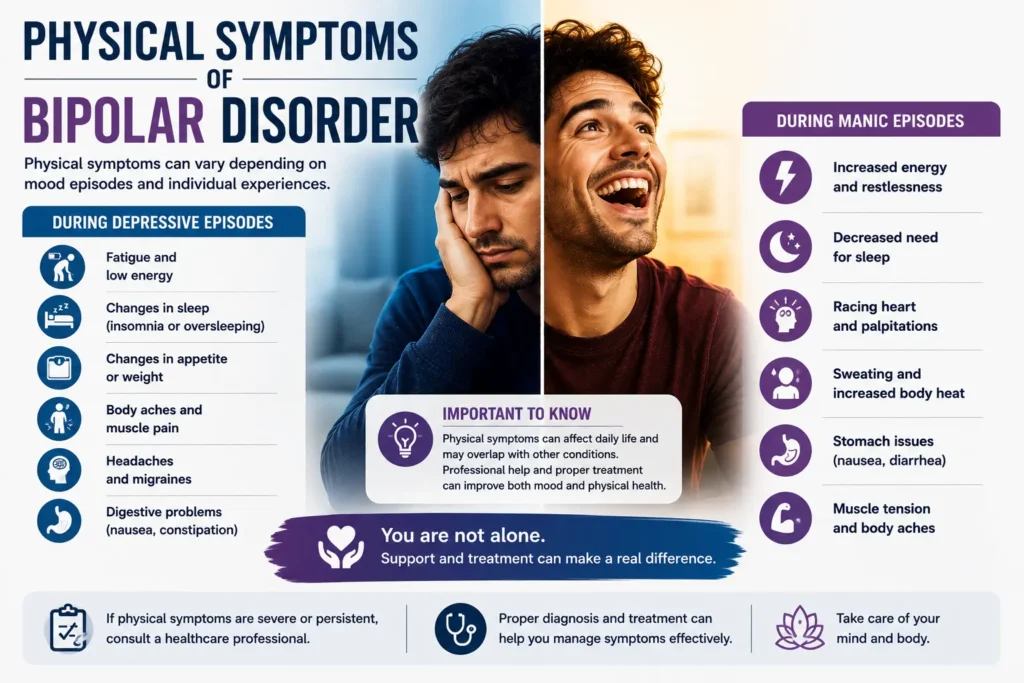
For a closer look at how these emotional shifts connect to physical changes like sleep, appetite, and energy, see our companion guide to the physical symptoms of bipolar disorder.
Myths vs. Facts About Emotional Symptoms
Myth: Bipolar disorder just means being “moody.” Fact: The emotional shifts in bipolar disorder are far more intense and longer-lasting than everyday mood changes, and they significantly affect daily functioning.
Myth: Mania always feels good. Fact: Mania frequently involves irritability, agitation, and emotional intensity that doesn’t feel pleasant at all, not just euphoria.
Myth: Depression in bipolar disorder always looks like visible sadness. Fact: It can also show up as emotional numbness, flatness, or a loss of interest without obvious crying or distress.
Myth: Emotional symptoms mean someone can just “snap out of it.” Fact: These are symptoms of a diagnosable medical condition, not a matter of willpower.
A more complete list of misconceptions about the condition is available in our guide to bipolar disorder myths.
Common Mistakes People Make When Interpreting Emotional Symptoms
- Assuming irritability is just a personality trait rather than a possible symptom.
- Mistaking hypomania for simply “having a great week,” delaying recognition and treatment.
- Overlooking emotional numbness because it doesn’t look like classic sadness.
- Dismissing mixed emotional states as confusing or contradictory rather than recognizing them as a distinct symptom pattern.
Warning Signs and When to Seek Emergency Help
While many emotional symptoms of bipolar disorder can be managed with proper treatment, some require immediate attention. Seek urgent help if someone experiences:
- Thoughts of suicide or self-harm
- A sudden loss of touch with reality, including delusions or hallucinations
- Extreme agitation combined with hopelessness, particularly during a mixed episode
- Emotional symptoms severe enough to prevent basic daily functioning
If you or someone you know is in crisis, contact the 988 Suicide & Crisis Lifeline (call or text 988 in the US) or local emergency services right away. Emotional symptoms that escalate into a break from reality are covered in more depth in our guide to psychotic symptoms in bipolar disorder.
Diagnosis and Treatment: A Brief Overview
Diagnosing bipolar disorder involves a full clinical evaluation of mood history, duration, and functional impact, not a single conversation about how someone is feeling that day. Our guide to bipolar disorder diagnosis explains this process in detail.
Treatment for emotional symptoms typically combines mood-stabilizing medication with psychotherapy, such as cognitive behavioral therapy, which can help people recognize early emotional warning signs before a full episode develops. Lifestyle strategies like consistent sleep and stress management also play a meaningful supporting role. For the full range of options, see our guide to bipolar disorder treatment.
Left unaddressed, ongoing emotional symptoms can contribute to relationship strain, work difficulties, and other complications, explored further in our guide to bipolar disorder complications. With appropriate care, many people see significant improvement in emotional stability over time, discussed in our bipolar disorder prognosis guide. If unfamiliar clinical terms come up, our bipolar disorder glossary is a helpful reference.
Frequently Asked Questions
What are the main emotional symptoms of bipolar disorder? The main emotional symptoms include euphoria, irritability, and grandiosity during manic or hypomanic episodes, and sadness, hopelessness, guilt, or emotional numbness during depressive episodes.
Is irritability a symptom of bipolar disorder? Yes. Irritability is one of the most common emotional symptoms and can appear during manic, hypomanic, depressive, and mixed episodes, not just as anger on its own.
Can bipolar disorder cause emotional numbness? Yes. Some people experience depressive episodes as a flat or numb emotional state rather than overt sadness, which can make the symptom harder for others to notice.
How is bipolar mania different from just feeling happy? Mania involves a sustained period of abnormally elevated, expansive, or irritable mood combined with a genuine increase in energy or activity, lasting at least a week and disrupting daily functioning, not a brief good mood.
Do emotional symptoms look the same in bipolar 1 and bipolar 2? Not exactly. Bipolar I tends to involve more intense manic emotional symptoms, while bipolar II often involves more prominent depressive emotional symptoms alongside milder hypomanic episodes.
Can anxiety be part of the emotional symptoms of bipolar disorder? Yes. Anxiety commonly occurs alongside bipolar disorder, particularly during depressive and mixed episodes, and is often addressed as part of a comprehensive treatment plan.
Are mixed emotional states, like feeling sad and energized at once, really a symptom? Yes. Mixed episodes involve features of both mania and depression simultaneously, and the resulting emotional experience can feel contradictory but is a recognized clinical pattern.
When should emotional symptoms be evaluated by a professional? Any pattern of emotional symptoms that lasts more than a few days, disrupts daily life, or includes thoughts of self-harm should be evaluated by a qualified healthcare provider as soon as possible.
Summary
The emotional symptoms of bipolar disorder go far beyond simple mood swings. From the euphoria and irritability of mania to the hopelessness and numbness of depression, and the disorienting mix of both during mixed episodes, these emotional shifts are intense, sustained, and capable of disrupting daily life in real ways.
Recognizing these patterns for what they are — clinical symptoms of a treatable condition, not personality flaws or simple bad moods — is often the first step toward getting proper support. If these emotional patterns sound familiar, whether in yourself or someone you care about, a conversation with a qualified healthcare professional is the best next step, alongside exploring our broader library of guides on diagnosis, treatment, and living well with bipolar disorder.