Bipolar disorder is usually described as a mood condition. But ask anyone living with it, and they’ll tell you it’s felt in the body too — in aching muscles, disrupted sleep, sudden weight shifts, racing hearts, and exhausted limbs that never quite match how “rested” a night’s sleep should feel.
This guide focuses specifically on the physical symptoms of bipolar disorder — what they look like during mania, depression, and mixed states, why they happen, and when they signal something that needs urgent attention. If you’re looking for a broader overview of the condition itself, our bipolar disorder guide and what is bipolar explainer are good starting points before diving into the body-focused symptoms below.
Table of Contents
Key Takeaways
- Bipolar disorder is a mood disorder, but it produces measurable physical effects, including sleep disruption, appetite and weight changes, fatigue, pain, and psychomotor changes (movement that speeds up or slows down).
- Physical symptoms differ depending on the phase: mania, hypomania, depression, and mixed episodes each have a distinct physical signature.
- Long-term, untreated bipolar disorder is linked to higher rates of certain physical health conditions, including cardiovascular and metabolic issues.
- Some physical symptoms — like chest pain, fainting, or severe confusion — need immediate medical attention and shouldn’t be assumed to be “just bipolar.”
- A qualified healthcare provider should evaluate any new or worsening physical symptom, since bipolar disorder can also mask or overlap with unrelated medical conditions.
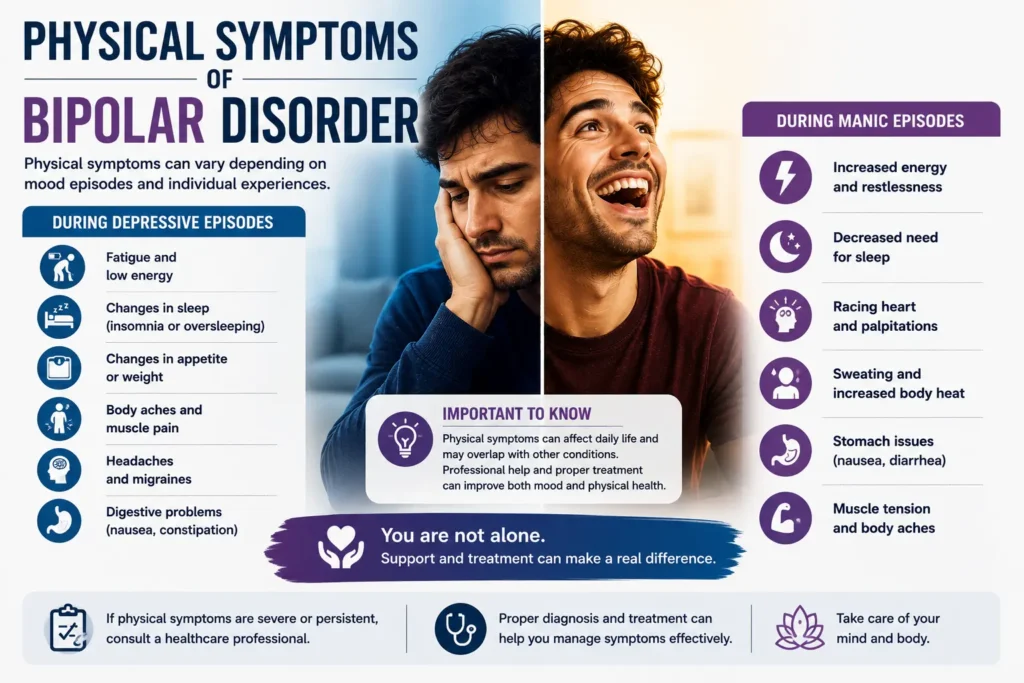
The physical symptoms of bipolar disorder include changes in sleep (too little during mania, too much during depression), shifts in appetite and weight, fatigue, headaches, muscle tension, digestive discomfort, restlessness or slowed movement, and a racing heart rate. These symptoms occur because mood episodes affect the body’s stress hormones, nervous system activity, and daily habits, not just emotions.
Why Bipolar Disorder Shows Up in the Body
Bipolar disorder involves shifts between emotional highs (mania or hypomania) and lows (depression), sometimes with mixed features of both at once. According to the National Institute of Mental Health (NIMH), these mood episodes bring noticeable changes in energy, sleep, and activity levels — not just feelings.
That matters because energy, sleep, and activity are physical processes. When they shift dramatically, the body reacts. Stress hormones like cortisol rise. Heart rate and blood pressure can climb. Sleep debt builds up or, in depression, the body seems to want to sleep endlessly. Appetite hormones swing in either direction. None of this is “in someone’s head” — it’s a physiological response to a real neurological and psychiatric condition.
For a deeper look at what triggers these shifts in the first place, see our full guide to bipolar disorder causes.
Physical Symptoms During Manic and Hypomanic Episodes
Mania and hypomania are both “up” phases, though mania is more intense and disruptive. Physically, this phase often looks like the body running in overdrive.
| Physical Symptom | What It Looks Like |
| Decreased need for sleep | Feeling rested after just 2–4 hours, or barely sleeping at all |
| Increased energy | Restlessness, constant movement, difficulty sitting still |
| Rapid or pressured speech | Talking faster than usual, jumping between topics |
| Increased heart rate | Racing pulse, sometimes noticeable heart palpitations |
| Trembling or jitteriness | Hands or body feeling shaky, especially under stress |
| Reduced appetite | Forgetting to eat or feeling too “wired” to be hungry |
| Sweating or feeling overheated | Physical agitation raising body temperature |
| Increased sex drive | A physical symptom tied to mania’s heightened impulsivity |
Because these symptoms can feel like more energy rather than a problem, many people don’t recognize mania as it’s happening. Our guide to mania symptoms and hypomania symptoms breaks down the emotional and behavioral side in more depth. Sleep loss, in particular, doesn’t just accompany mania — it can also trigger or worsen it, which is covered in our dedicated piece on mania and sleep.
Physical Symptoms During Depressive Episodes
The depressive side of bipolar disorder often brings the opposite physical pattern: everything slows down.
| Physical Symptom | What It Looks Like |
| Fatigue | Persistent tiredness, even after a full night’s sleep |
| Hypersomnia | Sleeping far more than usual, difficulty getting out of bed |
| Insomnia | For some people, depression causes trouble sleeping instead |
| Appetite and weight changes | Eating much more or much less than usual |
| Slowed movement and speech | Physically moving, thinking, or talking more slowly (psychomotor slowing) |
| Unexplained aches and pains | Headaches, back pain, or muscle soreness with no clear physical cause |
| Digestive changes | Nausea, constipation, or a generally upset stomach |
| Low libido | A drop in sex drive is common during depressive phases |
These symptoms overlap closely with those of major depressive disorder, which is one reason bipolar depression is sometimes misdiagnosed at first. Our dedicated article on bipolar depression symptoms covers this in more detail.
Physical Symptoms During Mixed Episodes
A mixed episode happens when symptoms of mania and depression occur at the same time — for example, feeling exhausted and hopeless while also feeling physically agitated and unable to sit still. Physically, this can be one of the most uncomfortable states, combining a racing heart and restlessness with the heaviness and fatigue of depression.
Because mixed episodes carry a higher risk of impulsive behavior and suicidal thoughts, they deserve their own careful attention. Our full breakdown is available in mixed episode symptoms. If mood episodes cycle very quickly, sometimes several times a month, that pattern is discussed separately in rapid cycling bipolar symptoms.
Sleep: The Physical Symptom That Connects Every Phase
Sleep disruption is one of the most consistent physical symptoms across all bipolar episodes, just in opposite directions. Mania tends to reduce the need for sleep dramatically. Depression tends to increase the desire to sleep, or in some cases, causes insomnia despite exhaustion.
This isn’t a side detail. Sleep and mood are tightly linked in bipolar disorder, and poor sleep can both result from and trigger a new episode. Maintaining a consistent sleep schedule is one of the most commonly recommended lifestyle strategies by mental health professionals for this reason.
Appetite, Weight, and Metabolic Changes
Appetite swings are common across bipolar episodes. Some people lose their appetite almost entirely during mania. Others develop increased appetite or emotional eating during depression. Over time, these fluctuations, combined with certain medications used to treat bipolar disorder, can contribute to weight gain.
This connects to a broader pattern researchers have observed: bipolar disorder is associated with higher rates of metabolic issues, including changes in blood sugar regulation and cholesterol, compared to the general population. This doesn’t mean everyone with bipolar disorder will develop these issues, but it’s a reason routine physical health checkups matter alongside mental health treatment.
Headaches, Body Aches, and Chronic Pain
Headaches and migraines are frequently reported alongside bipolar disorder. So are generalized muscle aches, especially in the neck, shoulders, and back. Several factors likely contribute:
- Chronic stress and elevated cortisol levels
- Poor or irregular sleep
- Muscle tension linked to anxiety, which commonly occurs alongside bipolar disorder
- Reduced physical activity during depressive episodes
Pain in bipolar disorder is real, even when medical tests come back normal. That doesn’t make it any less worth addressing with a healthcare provider, particularly if pain is persistent or worsening.
Digestive and Gut Symptoms
Stomach discomfort, nausea, constipation, or diarrhea are also commonly reported physical symptoms. Stress and mood swings can affect gut function through the nervous system, sometimes called the gut-brain connection. Eating pattern changes during mood episodes — skipping meals during mania, overeating during depression — can also directly affect digestion.
Psychomotor Changes: Restlessness vs. Slowing Down
Psychomotor symptoms describe how mood affects physical movement itself, not just energy levels in a general sense.
- During mania: Pacing, fidgeting, faster gestures, and an inability to stay physically still.
- During depression: Visibly slower movements, a heavier or more effortful way of walking or talking, sometimes called psychomotor retardation.
Clinicians look for these visible movement changes as part of a full evaluation, since they’re one of the more observable physical markers of a mood episode in progress.
Heart Rate, Blood Pressure, and Long-Term Cardiovascular Health
Elevated heart rate and blood pressure are common during manic or highly stressed states. Over the long term, research has linked bipolar disorder with a higher risk of cardiovascular conditions, an association researchers believe is tied to chronic stress hormone exposure, sleep disruption, medication side effects, and lifestyle factors like reduced physical activity during depressive periods.
Organizations such as the American Heart Association and CDC have both highlighted the connection between mental health conditions and heart disease risk, which is part of why comprehensive bipolar disorder treatment typically includes attention to physical health, not just mood stabilization.
Sensory Sensitivity and Restlessness in the Limbs
Some people with bipolar disorder report heightened sensitivity to light or sound, particularly during manic episodes, when the nervous system is in a more activated state. Restless legs — an uncomfortable urge to move the legs, especially at night — has also been reported by some individuals with bipolar disorder, though more research is still needed to fully understand this link.
How Physical Symptoms Differ Across Groups
Physical symptoms of bipolar disorder aren’t identical for everyone. Age, sex, and life stage can all shape how the condition shows up in the body.
- Men and women can experience differing symptom patterns and timing, covered in more depth in our guides to bipolar symptoms in men and bipolar symptoms in women.
- Teenagers often show more irritability and physical complaints like stomachaches and headaches rather than classic “elevated mood.” Our guide to bipolar symptoms in teenagers explains this pattern.
- Children can present very differently from adults, which is why early recognition matters. See bipolar symptoms in children for a closer look.
- Catching physical and behavioral changes early can make a meaningful difference in long-term outcomes. Our guide to early signs of bipolar disorder walks through what to watch for.
Physical vs. Psychological Symptoms: A Side-by-Side Look
It helps to see how physical symptoms relate to the more commonly discussed emotional symptoms of bipolar disorder.
| Category | Manic/Hypomanic Phase | Depressive Phase |
| Sleep | Reduced need for sleep | Oversleeping or insomnia |
| Energy | Physically restless, wired | Fatigued, heavy-feeling |
| Appetite | Often decreased | Often increased or decreased |
| Movement | Fast, agitated | Slowed, effortful |
| Heart rate | Elevated | Usually normal or low |
| Mood (for context) | Elevated, irritable, or euphoric | Sad, hopeless, empty |
For a full picture of the emotional and cognitive symptoms that accompany these physical changes, our general bipolar disorder symptoms guide covers the condition more broadly.
Myths vs. Facts About Physical Symptoms
Myth: Bipolar disorder only affects mood, not the body. Fact: Sleep, appetite, energy, pain, and even heart health are all commonly affected.
Myth: Physical symptoms always mean an underlying medical condition, separate from bipolar disorder. Fact: While ruling out other causes is important, many physical symptoms are a well-documented part of bipolar mood episodes themselves.
Myth: If someone “looks fine” physically, they can’t be in a mood episode. Fact: Physical symptoms like fatigue, restlessness, or appetite changes aren’t always visible to others, even when they’re significantly affecting the person.
A more complete list of misconceptions is covered in our guide to bipolar disorder myths.
Common Mistakes People Make
- Dismissing fatigue or body aches as “just stress” instead of mentioning them to a doctor or therapist.
- Assuming a racing heart or trembling is unrelated to a mood episode.
- Stopping medication because physical side effects appear, without talking to a prescriber first.
- Ignoring long-term physical health checkups because mental health treatment is the main focus.
Warning Signs That Need Immediate Medical Attention
Most physical symptoms of bipolar disorder are manageable with proper treatment, but some require urgent care. Seek emergency medical help if someone experiences:
- Chest pain, fainting, or a dangerously irregular heartbeat
- Signs of severe dehydration or exhaustion from days without sleep
- Confusion, disorientation, or loss of touch with reality
- Thoughts of suicide or self-harm
If you or someone you know is in crisis, contact the 988 Suicide & Crisis Lifeline (call or text 988 in the US) or your local emergency services immediately. This is separate from, but sometimes connected to, more severe symptoms like psychotic symptoms in bipolar disorder, which also warrant prompt professional evaluation.
Diagnosis and Treatment: A Brief Overview
Diagnosing bipolar disorder involves a full clinical evaluation, not just a physical symptom checklist, since many of these symptoms overlap with other conditions. For a full explanation of how professionals reach a diagnosis, see our guide to bipolar disorder diagnosis.
Treatment typically combines mood-stabilizing medication, psychotherapy, and lifestyle strategies like consistent sleep schedules and stress management, which can meaningfully reduce both emotional and physical symptoms over time. Our complete guide to bipolar disorder treatment covers these options in depth. It’s also worth understanding how physical symptoms can evolve if left unaddressed, which our guide on bipolar disorder complications explores, along with what a well-managed long-term outlook can look like in our bipolar disorder prognosis guide.
If unfamiliar medical terms come up along the way, our bipolar disorder glossary is a useful reference, and our bipolar disorder statistics page offers a broader look at how common the condition is.
Frequently Asked Questions
What are the most common physical symptoms of bipolar disorder? The most reported physical symptoms include sleep changes, fatigue, appetite and weight shifts, headaches, muscle tension, digestive discomfort, and a racing heart rate during manic episodes.
Can bipolar disorder cause body pain? Yes. Headaches, muscle aches, and general body pain are commonly reported, often linked to stress hormones, poor sleep, and tension.
Does bipolar disorder affect heart health? Research links bipolar disorder with a higher long-term risk of cardiovascular issues, likely tied to chronic stress, sleep disruption, and certain medication side effects. This makes ongoing physical health monitoring important.
Why does bipolar disorder cause sleep problems? Mania typically reduces the need for sleep, while depression often causes oversleeping or insomnia. Sleep and mood are closely connected in bipolar disorder, each capable of affecting the other.
Can bipolar disorder cause weight gain? Appetite changes during mood episodes, along with certain medications, can contribute to weight changes over time. This is a common and manageable part of long-term treatment planning with a healthcare provider.
Are physical symptoms different in bipolar 1 vs bipolar 2? There can be differences in intensity, since bipolar 1 involves full manic episodes while bipolar 2 involves hypomania, which is milder. For a full comparison, see our guide to bipolar 1 vs bipolar 2.
When should I see a doctor about physical symptoms? Any new, severe, or worsening physical symptom deserves a conversation with a healthcare provider, especially chest pain, fainting, extreme exhaustion, or confusion, which require prompt evaluation.
Can physical symptoms appear before mood symptoms are noticeable? Yes, in some cases physical changes like sleep disruption or appetite shifts appear early, sometimes before someone recognizes a mood episode is developing.
Summary
Bipolar disorder is far more than a mood condition — it produces real, measurable physical symptoms that shift depending on whether someone is in a manic, depressive, or mixed episode. Sleep changes, fatigue, pain, appetite shifts, and cardiovascular effects are all part of how this condition shows up in the body, not just the mind.
Recognizing these physical symptoms of bipolar disorder for what they are, rather than dismissing them as unrelated, is often the first step toward getting the right support. If you’re noticing these changes in yourself or someone you care about, a conversation with a qualified healthcare professional is the best next step, alongside exploring our broader library of guides on diagnosis, treatment, and living well with bipolar disorder.