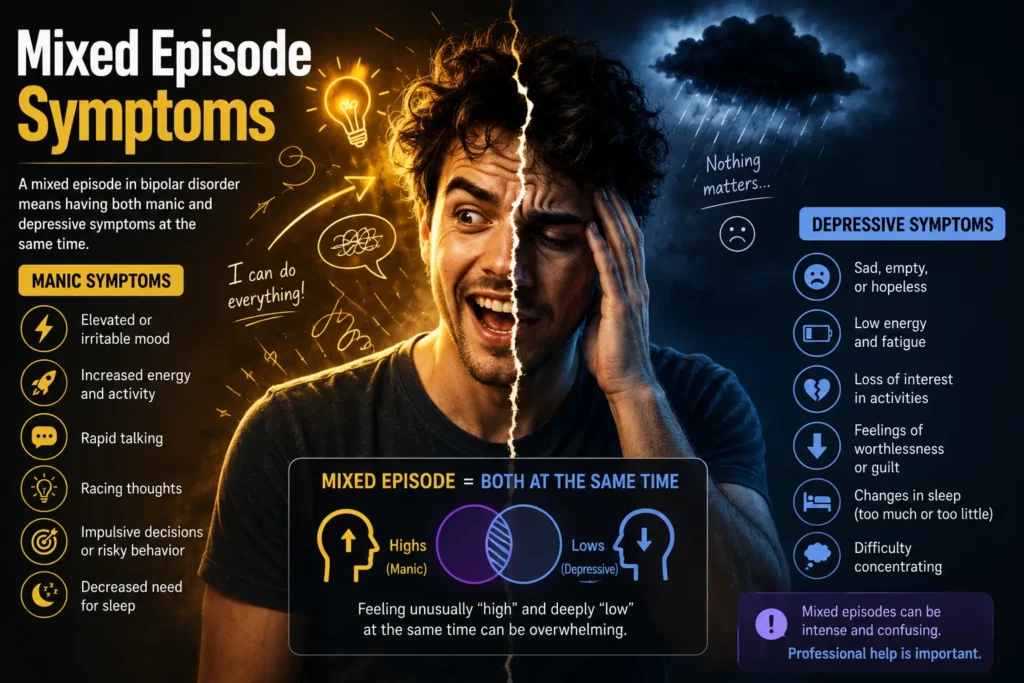
A mixed episode happens when someone experiences symptoms of mania (or hypomania) and depression at the same time, or within the same short stretch of days. Think racing thoughts and high energy paired with hopelessness and suicidal thinking — not one after the other, but layered together. This combination, known clinically as “mixed features,” carries a higher risk of impulsive and self-harming behavior than a typical manic or depressive episode alone, which is why recognizing it early matters so much.
Table of Contents
Introduction
Most people picture bipolar disorder as a switch: weeks of feeling unstoppable, then weeks of feeling flattened. A mixed episode doesn’t work that way. Instead of the mood flipping cleanly from one pole to the other, both poles show up in the same window of time.
Someone in a mixed episode might feel wired and exhausted at once. They might talk fast, feel agitated, and still cry uncontrollably or think about ending their life. It’s confusing to experience and just as confusing to watch from the outside, because it doesn’t match the “up” or “down” story most people expect from bipolar disorder.
This guide breaks down exactly what a mixed episode looks like, how it differs from ordinary mania or depression, what causes it, and when it becomes a medical emergency. For a broader look at how bipolar disorder presents overall, see our guide on bipolar disorder symptoms.
Key Takeaways
- A mixed episode combines manic/hypomanic and depressive symptoms during the same period, rather than in separate phases.
- The DSM-5 no longer treats “mixed episode” as its own diagnosis — it’s now described using the “with mixed features” specifier attached to a manic, hypomanic, or depressive episode.
- Mixed features carry a notably higher risk of suicidal thinking and impulsive behavior than mood episodes without them.
- Mixed episodes can occur in both bipolar 1 and bipolar 2, though the mix of symptoms can look different in each.
- Diagnosis and treatment require a mental health professional — this article is educational, not a substitute for clinical evaluation.
What Is a Mixed Episode? (Definition)
A mixed episode is a period during which a person shows symptoms from both ends of the mood spectrum — manic/hypomanic and depressive — at the same time.
Older diagnostic manuals treated “mixed episode” as its own category. The current DSM-5, published by the American Psychiatric Association, changed this. Instead of a standalone diagnosis, clinicians now add a specifier called “with mixed features” to whichever episode is dominant. So a person might be diagnosed with:
- A manic episode, with mixed features (mostly manic, but with several depressive symptoms layered in)
- A depressive episode, with mixed features (mostly depressed, but with several manic/hypomanic symptoms layered in)
This distinction matters because it shapes treatment. A clinician needs to know which mood state is driving the episode, even when the other pole is clearly present too. If you’re unfamiliar with how mania and depression are defined individually, our guides on mania and bipolar depression symptoms cover each in depth.
“Mixed features,” “mixed mood episode,” and “bipolar mixed episode” all describe the same clinical picture — the terminology varies by source, but the symptom pattern is consistent.
Mixed Episode Symptoms: What It Actually Looks Like
Because a mixed episode blends two opposing mood states, the symptom list looks like a combination of two very different columns.
Manic or Hypomanic Symptoms That Can Appear
| Symptom | What It Looks Like |
| Elevated or irritable mood | Feeling wired, on edge, or unusually short-tempered |
| Increased energy | Restlessness, inability to sit still, constant motion |
| Racing thoughts | Ideas moving faster than they can be spoken |
| Pressured speech | Talking quickly, loudly, or being hard to interrupt |
| Decreased need for sleep | Feeling rested after 2–4 hours of sleep |
| Impulsivity | Risky spending, driving, or sexual behavior |
| Grandiosity | Inflated sense of abilities or importance |
Depressive Symptoms That Can Appear
| Symptom | What It Looks Like |
| Depressed mood | Persistent sadness, emptiness, or hopelessness |
| Loss of interest | Withdrawing from activities that used to matter |
| Guilt or worthlessness | Harsh self-criticism, feeling like a burden |
| Fatigue | Physical heaviness despite manic-level energy |
| Suicidal thoughts | Passive or active thoughts of death or self-harm |
| Difficulty concentrating | Trouble following conversations or tasks |
| Appetite or weight changes | Eating much more or much less than usual |
What Makes It “Mixed”
The defining feature isn’t that a person has some symptoms from each list — it’s that they have them at the same time, not in alternating days or weeks. A person might describe it as:
- Feeling agitated and unable to sit still, while also feeling utterly hopeless
- Having racing thoughts about how worthless they are
- Talking fast about how nothing matters and no one would notice if they were gone
- Feeling both keyed-up and exhausted in the same hour
This combination — energy plus despair — is part of why mixed episodes are considered one of the more dangerous presentations of bipolar disorder. The person has the mental agitation and impulsivity of mania combined with the dark thinking of depression, which is a difficult mix to sit with safely.
For symptom patterns specific to psychosis occurring alongside mood episodes, see psychotic symptoms in bipolar disorder.
Mixed Episode vs. Rapid Cycling vs. Standard Mania or Depression
People often confuse mixed episodes with rapid cycling, since both involve fast mood changes. They aren’t the same thing.
| Feature | Mixed Episode | Rapid Cycling | Standard Manic Episode | Standard Depressive Episode |
| Timing of opposite symptoms | Present simultaneously | Alternating episodes (4+ per year) | Manic symptoms only | Depressive symptoms only |
| Suicide risk | Notably elevated | Elevated, varies by phase | Lower than mixed | Elevated, but without manic agitation |
| Typical duration | Days to weeks | Ongoing pattern over a year | Days to weeks (bipolar 1) or shorter (hypomania) | Two weeks or longer |
| Diagnostic label | Episode “with mixed features” | Specifier describing episode frequency | Manic episode | Major depressive episode |
If you want a deeper comparison of manic and hypomanic presentations specifically, our mania vs. hypomania guide walks through the distinction in detail.
Causes and Risk Factors
Mixed episodes arise from the same underlying biological and environmental factors that drive bipolar disorder generally — there isn’t a separate “cause” unique to the mixed presentation. Research points to a combination of genetics, brain chemistry, and stress as contributing factors.
Some factors associated with a higher likelihood of mixed features include:
- A personal or family history of bipolar disorder, particularly bipolar 1
- Younger age of onset
- Co-occurring anxiety disorders
- Substance use, which can trigger or intensify mixed states
- Sleep disruption
- Certain antidepressant medications, when used without a mood stabilizer, in people with bipolar disorder
Because sleep loss is such a common trigger, it’s worth understanding the connection covered in mania and sleep. For a full breakdown of biological and environmental contributors to bipolar disorder overall, see bipolar disorder causes and causes of mania.
Who Is More Likely to Experience Mixed Episodes?
Mixed features can occur in anyone with bipolar disorder, but a few patterns show up in the research:
- They’re reported more frequently in bipolar 1 disorder than bipolar 2, though they can occur in either. See bipolar 1 vs bipolar 2 for how the two types differ overall.
- Women are more often diagnosed with mixed features than men in some studies, though research findings vary.
- Adolescents and younger adults with bipolar disorder may present with mixed symptoms more often than older adults.
Individual presentation varies widely, and only a qualified clinician can determine whether a specific set of symptoms meets criteria for mixed features.
Diagnosis: How Clinicians Identify Mixed Features
Diagnosing a mixed episode requires a full clinical evaluation, not a symptom checklist completed alone. A psychiatrist or psychologist will typically:
- Take a detailed history of mood symptoms, including timing and duration
- Rule out other explanations, such as substance use, thyroid conditions, or other psychiatric disorders
- Apply DSM-5 criteria for the “with mixed features” specifier, which requires at least three symptoms of the opposite pole present during the episode
- Assess suicide risk directly, given how strongly mixed features correlate with it
Because self-diagnosis is unreliable for a condition this complex, anyone noticing these symptoms in themselves or someone else should reach out to a mental health professional. Our bipolar disorder diagnosis guide explains what a full diagnostic evaluation involves.
Treatment Approaches for Mixed Episodes
Treatment for mixed episodes generally differs from treatment for “pure” mania or depression, because giving an antidepressant alone can worsen manic symptoms, and giving only a stimulant-like approach can worsen the depressive side.
Common approaches include:
- Mood stabilizers (such as lithium or valproate), often used as a first-line option
- Atypical antipsychotics approved for mixed features, which can address both symptom clusters at once
- Careful antidepressant use, typically avoided as a standalone treatment due to the risk of triggering mania
- Psychotherapy, including cognitive behavioral therapy (CBT) and family-focused therapy, to build coping skills and support relapse prevention
- Lifestyle stabilization, particularly consistent sleep schedules, since sleep disruption can intensify mixed symptoms
Medication decisions are individualized and should always be made with a prescribing clinician, since the right combination depends on episode history, other health conditions, and response to previous treatments. For a full overview of options, visit bipolar disorder treatment.
Myths vs. Facts
| Myth | Fact |
| “Mixed episodes mean someone has two disorders at once.” | It’s one disorder — bipolar disorder — presenting with overlapping symptoms, not two separate conditions. |
| “If someone seems energetic, they can’t be suicidal.” | Mixed episodes are specifically dangerous because agitation and suicidal thinking can coexist. |
| “Mixed episodes only happen in bipolar 1.” | They’re more commonly reported in bipolar 1, but they can occur in bipolar 2 as well. |
| “Antidepressants are always the right treatment.” | Antidepressants alone can worsen a mixed episode and are generally used cautiously, if at all. |
| “It’s just mood swings.” | Mixed features are a defined clinical presentation with specific diagnostic criteria, not everyday moodiness. |
For broader misconceptions about bipolar disorder as a whole, see bipolar disorder myths.
Warning Signs and When to Seek Emergency Help
Because mixed episodes combine impulsivity with despair, they require a lower threshold for concern than either symptom alone.
Seek immediate help if you or someone else shows:
- Talk of wanting to die, disappear, or “not be a burden”
- Giving away possessions or making final arrangements
- Reckless behavior combined with visible hopelessness
- Extreme agitation paired with statements of worthlessness
- Sudden calm after a period of severe distress (which can sometimes signal a decision has been made)
If there is any immediate risk of suicide or self-harm, call or text 988 (the Suicide & Crisis Lifeline in the US) or go to the nearest emergency room. If you’re outside the US, contact your local emergency number or a local crisis line.
This is a sensitive topic, and if you’re personally struggling with these thoughts, please know that support is available and reaching out is a strong first step, not a last resort.
Complications of Untreated Mixed Episodes
Left untreated, mixed episodes are associated with:
- Higher rates of suicide attempts compared to non-mixed mood episodes
- Increased hospitalization
- Greater functional impairment at work, school, or in relationships
- Higher likelihood of substance use as a coping mechanism
- Longer overall illness duration before mood stabilizes
For a full picture of how untreated bipolar disorder can affect long-term health, see bipolar disorder complications and bipolar disorder prognosis.
Checklist: Recognizing a Possible Mixed Episode
Use this as a starting point for a conversation with a clinician — not as a self-diagnosis tool.
- [ ] Racing thoughts or rapid speech alongside sadness or hopelessness
- [ ] High energy or restlessness combined with fatigue
- [ ] Irritability or agitation paired with guilt or worthlessness
- [ ] Impulsive decisions made during a low mood
- [ ] Sleep needs dropping while mood remains low or despairing
- [ ] Suicidal thoughts occurring alongside high energy or agitation
If several of these apply and have lasted more than a few days, it’s time to speak with a mental health professional.
Frequently Asked Questions
What is a mixed episode in bipolar disorder? It’s a period when manic or hypomanic symptoms and depressive symptoms occur together, rather than in separate phases. It’s officially described in the DSM-5 as an episode “with mixed features.”
Are mixed episodes the same as rapid cycling? No. Rapid cycling refers to having four or more distinct mood episodes within a year. A mixed episode refers to overlapping symptoms within a single episode.
How long does a mixed episode usually last? Duration varies by person, but mixed features can persist for days to several weeks, depending on treatment and individual illness patterns.
Can bipolar 2 disorder involve mixed episodes? Yes. While mixed features are reported more often in bipolar 1, they can also occur alongside hypomanic or depressive episodes in bipolar 2. See bipolar 2 hypomania for more on how hypomania presents in bipolar 2.
Why are mixed episodes considered more dangerous? The combination of manic-level energy and impulsivity with depressive despair and suicidal thinking creates a higher-risk situation than either mood state alone.
Can antidepressants cause mixed episodes? In people with bipolar disorder, antidepressants used without a mood stabilizer can sometimes trigger or worsen manic or mixed symptoms. This is why treatment is typically managed by a psychiatrist familiar with bipolar-specific prescribing.
What should I do if I think I’m having a mixed episode? Reach out to a psychiatrist, therapist, or primary care doctor as soon as possible. If there’s any thought of self-harm, contact 988 (US) or emergency services immediately.
Is a mixed episode a separate diagnosis from bipolar disorder? No. It’s a specifier applied to an existing manic, hypomanic, or depressive episode within a bipolar disorder diagnosis — not a standalone condition.
Summary
A mixed episode isn’t a milder or stranger version of bipolar disorder — it’s a distinct, high-risk presentation where manic and depressive symptoms occur together instead of in separate phases. Recognizing the pattern — energy and agitation paired with hopelessness or suicidal thinking — is the first step toward getting the right kind of help, since treatment for mixed features differs from treatment for standard mania or depression.
If any of the symptoms described here sound familiar, the most useful next step is a conversation with a mental health professional who can evaluate the full clinical picture. For a broader understanding of how bipolar disorder is classified and diagnosed, explore our guides on types of bipolar disorder and what is bipolar disorder.
This article is for educational purposes and isn’t a substitute for professional medical advice. If you’re experiencing thoughts of self-harm, please contact 988 (US) or your local emergency services.