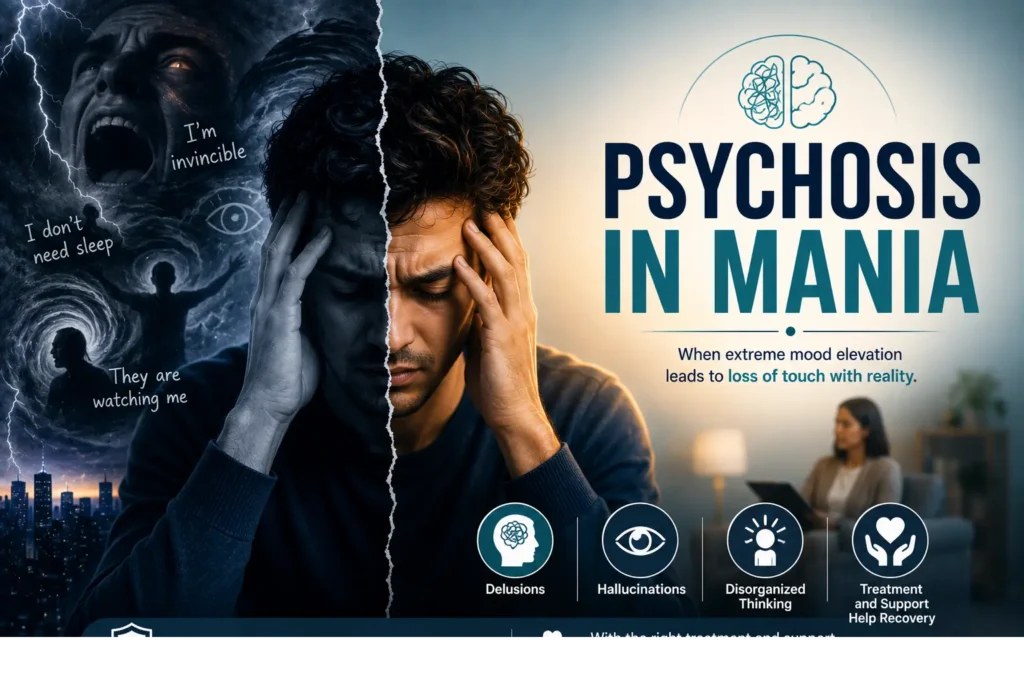
Psychosis in mania happens when a manic episode becomes severe enough that a person loses touch with reality — experiencing delusions, hallucinations, or extremely disorganized thinking on top of the usual manic symptoms. It occurs in roughly half of manic episodes in bipolar I disorder and is considered a psychiatric emergency that almost always requires antipsychotic medication and close medical supervision, often in a hospital setting.
Table of Contents
Key Takeaways
- Psychotic mania is a severe form of a manic episode, not a separate diagnosis.
- It’s specifically labeled as “bipolar 1 with psychotic features” in clinical settings.
- Common symptoms include grandiose delusions, paranoid delusions, and auditory or visual hallucinations.
- It differs from schizophrenia mainly in timing — psychotic mania symptoms appear alongside a mood episode, not independently of one.
- Treatment typically combines antipsychotic medication with a mood stabilizer, and hospitalization is common during acute episodes.
What “Psychosis in Mania” Actually Means
Mania on its own involves elevated mood, high energy, reduced need for sleep, and impulsive behavior. Psychosis adds another layer on top of that: a break from reality. When the two combine, a person isn’t just energetic and impulsive — they may believe things that aren’t true or perceive things that aren’t there.
Clinically, this is referred to as a manic episode “with psychotic features,” and it’s one of the specifiers used within the DSM-5 diagnostic framework for bipolar disorder. It’s most associated with bipolar I disorder, since full mania — the type severe enough to include psychosis — is a defining feature of that diagnosis rather than bipolar II, where episodes stay at the milder hypomania level. For a full breakdown of how the two conditions differ, see bipolar 1 vs bipolar 2.
Symptoms of Psychotic Mania
Psychotic mania includes the standard features of a manic episode plus psychotic symptoms layered on top.
| Category | What It Looks Like |
| Core manic symptoms | Elevated or irritable mood, decreased need for sleep, rapid speech, racing thoughts, impulsive decisions |
| Delusions | Fixed false beliefs — for example, believing one has special powers, immense wealth, or a divine mission |
| Hallucinations | Hearing voices, seeing things others don’t, or less commonly, tactile or olfactory hallucinations |
| Disorganized thinking | Speech that jumps between unrelated topics, making it hard for others to follow |
| Impaired insight | Difficulty recognizing that the beliefs or perceptions aren’t real |
Two types of delusions are especially common in manic psychosis:
Grandiose delusions involve an inflated sense of identity, power, or importance — believing one has been chosen for a special purpose, has extraordinary talents, or holds immense wealth or influence.
Paranoid delusions involve believing that others are plotting against, watching, or trying to harm the person, which can sometimes lead to defensive or confrontational behavior.
Both are considered “mood-congruent” psychotic features because they tend to match the expansive, high-energy tone of mania — as opposed to mood-incongruent psychosis, where the content doesn’t fit the emotional state at all.
For a comparison of full mania against the milder end of the spectrum, see mania vs hypomania and the general mania symptoms overview.
What Causes Psychosis to Develop During Mania
The exact mechanism isn’t fully understood, but research points to a combination of biological and environmental contributors, consistent with the broader causes of bipolar disorder generally.
| Contributing Factor | How It’s Linked |
| Genetics | A family history of bipolar disorder or psychotic disorders raises risk |
| Neurochemical changes | Dysregulation of dopamine and other neurotransmitters during severe mood episodes |
| Sleep deprivation | Extended sleep loss is one of the most consistent triggers for both mania and psychotic symptoms |
| Substance use | Stimulants, and sometimes alcohol withdrawal, can trigger or worsen psychotic mania |
| Episode severity | Psychosis tends to appear when mania reaches its most intense point, rather than early on |
| Medication non-adherence | Stopping mood stabilizers abruptly is a common precursor to a severe episode |
More on general risk contributors is available in our guide to causes of mania.
Psychotic Mania vs. Schizophrenia: How They’re Different
Because both involve delusions and hallucinations, psychotic mania is sometimes confused with schizophrenia. The distinction matters for treatment.
| Feature | Psychotic Mania | Schizophrenia |
| Timing of psychosis | Occurs during a mood episode (mania or, less often, depression) | Can occur independent of mood episodes |
| Mood symptoms | Always present alongside psychosis | Not a core diagnostic requirement |
| Duration | Typically resolves as the mood episode resolves with treatment | Often a more chronic, ongoing pattern |
| Underlying diagnosis | Bipolar I disorder | Schizophrenia spectrum disorder |
| Primary treatment | Antipsychotic + mood stabilizer | Antipsychotic medication, typically longer-term |
A psychiatrist distinguishes between the two by looking closely at whether psychotic symptoms have ever occurred without an accompanying mood episode. If they have, a different or additional diagnosis may be considered.
Diagnosis: How Clinicians Confirm Psychotic Mania
Diagnosis involves a full clinical interview, a review of mood history, and often collateral information from family members, since insight is frequently impaired during an active episode. Clinicians assess:
- Whether manic symptoms meet full DSM-5 criteria (not just hypomania-level symptoms)
- Whether delusions or hallucinations are present during the same period
- Whether the psychotic content is mood-congruent or mood-incongruent, which can affect prognosis
- Whether substances, medical conditions, or medications could explain the symptoms instead
For the general diagnostic process bipolar disorder follows, see bipolar disorder diagnosis.
Treatment for Psychosis in Mania
Because psychotic mania represents a severe episode, treatment is typically more urgent and more intensive than treatment for hypomania or milder mania. For context on how the mania end of the spectrum is generally treated, see mania treatment; for a comparison against the milder hypomania treatment approach, that guide covers the differences in urgency and setting.
Hospitalization
Inpatient care is common during acute psychotic mania, mainly for safety — impaired insight and impulsivity can lead to dangerous decisions — and to allow rapid medication adjustment under close monitoring.
Medications
| Medication Type | Examples | Role |
| Antipsychotics | Olanzapine, risperidone, quetiapine, haloperidol | Address hallucinations and delusions directly, often the first priority |
| Mood stabilizers | Lithium, valproate | Address the underlying manic episode and reduce relapse risk |
| Combination therapy | Antipsychotic + mood stabilizer | Standard approach for psychotic mania, more common than either alone |
| Benzodiazepines (short-term) | Lorazepam | Sometimes used briefly for agitation or sleep during acute stabilization |
Medication is typically started at a higher dose or with a faster-acting agent than would be used for a milder episode, since the priority is stabilizing safety first.
Psychotherapy (After Acute Stabilization)
Once psychotic symptoms resolve and mood stabilizes, therapy becomes an important part of long-term management — not during the acute phase itself, when insight is limited. Approaches used include:
- Psychoeducation, to help the person and family understand what happened and recognize early warning signs going forward
- Cognitive Behavioral Therapy (CBT), to build coping strategies for managing triggers like sleep loss or stress
- Family-focused therapy, since family involvement in recognizing relapse signs is strongly associated with better outcomes
Recovery Timeline: What to Expect
| Phase | Typical Timeframe | What Happens |
| Acute stabilization | Days to 1–2 weeks | Antipsychotic and mood stabilizer started, often inpatient |
| Symptom resolution | 2–6 weeks | Psychotic symptoms typically resolve as mood stabilizes |
| Insight returns | Variable, often gradual | Person begins to recognize the episode wasn’t based in reality |
| Maintenance phase | Ongoing | Continued mood stabilizer, regular psychiatric follow-up, therapy |
Recovery timelines vary significantly by individual, prior episode history, and how quickly treatment began.
Myths vs. Facts About Manic Psychosis
| Myth | Fact |
| “Psychotic mania means someone has schizophrenia.” | It’s a feature of bipolar I disorder, distinguished by its connection to a mood episode. |
| “People with psychotic mania are always dangerous.” | Most people are not violent toward others; the greater risk is usually to their own safety or judgment. |
| “Once psychosis happens, it will always come back.” | With consistent treatment, many people go long periods, or their whole life, without another psychotic episode. |
| “Antipsychotics are only for schizophrenia.” | They’re a standard, evidence-based treatment for psychotic mania as well. |
| “Psychosis in mania means the person will never fully recover insight.” | Most people regain full insight once the episode resolves with treatment. |
For broader misconceptions about bipolar disorder, see bipolar disorder myths.
Complications of Untreated Psychotic Mania
- Increased risk of dangerous or impulsive decisions due to impaired reality testing
- Greater likelihood of hospitalization the longer treatment is delayed
- Strain on relationships and employment during and after an episode
- Higher risk of a difficult depressive crash once the manic phase ends
- Potential for longer-term impact on overall illness course
More detail on how repeated or untreated episodes affect long-term outcomes is available in bipolar disorder complications and bipolar 1 prognosis.
Warning Signs and When to Seek Emergency Help
Seek immediate medical attention if someone is experiencing:
- Hearing voices or seeing things that others don’t
- Fixed beliefs that don’t respond to reasoning (for example, believing they have special powers or are being targeted)
- Extreme agitation, aggression, or inability to communicate coherently
- Behavior that puts their safety or others’ safety at risk
- Any thoughts of harming themselves or others
This is a medical emergency. In the US, call 911 or go to the nearest emergency room; the 988 Suicide & Crisis Lifeline is also available 24/7 by call or text. In the UK, call 999 in an emergency or contact the Samaritans at 116 123. Don’t wait to see if symptoms pass on their own — early intervention significantly improves outcomes.
If you’re a family member trying to help someone in this state, staying calm, avoiding arguing about the content of delusions, and contacting emergency services or a psychiatrist directly is generally more effective than trying to reason the person out of it.
Frequently Asked Questions
Is psychosis part of every manic episode? No. Psychosis occurs in a significant portion of manic episodes, particularly more severe ones, but many people experience mania without any psychotic features.
Can hypomania include psychosis? No — by definition, hypomania does not include psychotic features. If psychosis is present, the episode is classified as full mania, not hypomania. See hypomania for the distinction.
Does having psychotic mania mean a worse prognosis? Not necessarily. With consistent treatment and medication adherence, many people recover full functioning between episodes, though psychotic features are generally associated with more severe episodes overall.
How long does psychosis last during a manic episode? It typically resolves within days to a few weeks of starting antipsychotic treatment, though this varies by individual and how early treatment begins.
Can psychotic mania happen only once? Yes, some people experience it during a single severe episode and never again, especially with consistent long-term treatment, though others may have recurring episodes without ongoing maintenance care.
Is manic psychosis the same as a “manic episode with psychotic features”? Yes — these terms are used interchangeably in clinical and everyday language.
Can medication side effects cause psychosis-like symptoms? Certain medications and substances can cause psychotic symptoms independent of bipolar disorder, which is why clinicians rule out other causes during diagnosis.
Summary
Psychosis in mania is a severe manifestation of a manic episode, most closely associated with bipolar I disorder, involving delusions, hallucinations, or disorganized thinking layered on top of typical manic symptoms. It’s treated urgently with antipsychotic medication, often alongside a mood stabilizer, and frequently requires hospitalization during the acute phase. With prompt treatment, most people recover full insight and functioning, and ongoing maintenance treatment significantly reduces the risk of future episodes. If you or someone you know is showing signs of psychosis during a manic episode, treat it as a medical emergency and seek help immediately.
To understand where psychotic mania fits within the broader condition, explore our guides on bipolar 1 manic episodes, living with bipolar 1, and bipolar disorder symptoms.