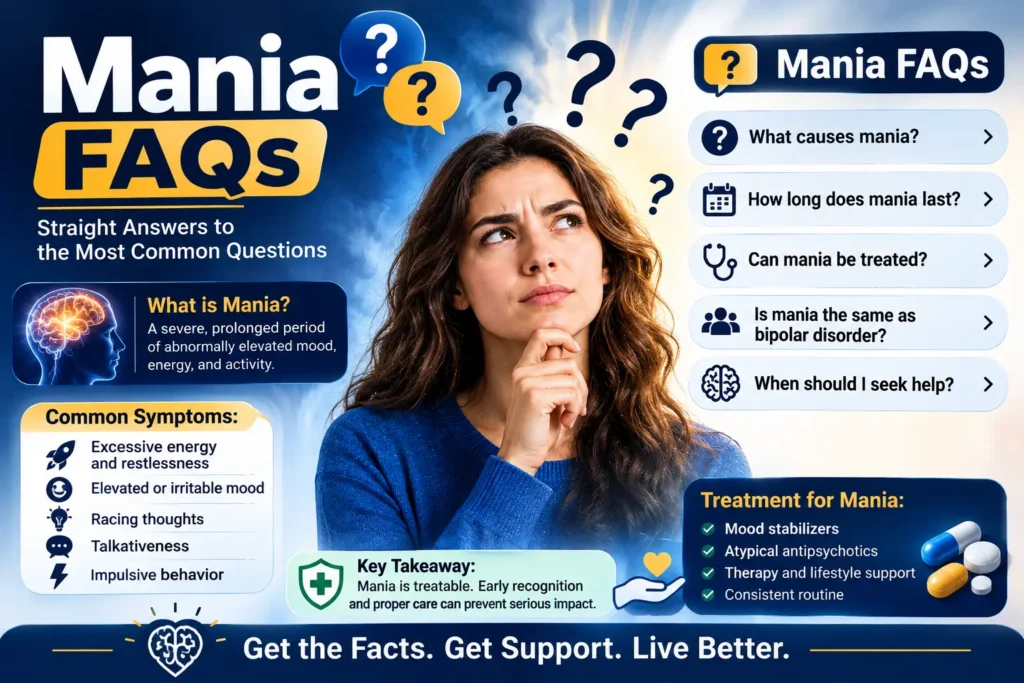
Mania FAQs: This guide answers the questions people ask most often about mania—what it is, how it’s different from hypomania, what causes it, how it’s diagnosed and treated, and what to do if you’re worried about yourself or someone else. Each answer is kept brief and links to a dedicated in-depth guide if you want to go further on a specific topic.
Table of Contents
Key Takeaways
- Mania is a distinct period of abnormally elevated mood and energy, most closely associated with bipolar I disorder.
- It’s different from hypomania, which is milder and doesn’t cause the same level of impairment.
- Diagnosis follows DSM-5 criteria and requires a full clinical evaluation.
- Treatment usually combines medication, therapy, and lifestyle management — see mania treatment for the full breakdown.
- Severe mania, especially with psychosis, is a medical emergency that needs prompt attention.
Basics: What Mania Is and Isn’t
What exactly is mania? Mania is a distinct period of abnormally elevated, expansive, or irritable mood combined with unusually high energy, lasting at least a week (or requiring hospitalization) and causing noticeable impairment in daily life. It’s one of the defining features of bipolar I disorder. See our full guide on mania for the complete picture.
Is mania the same as being really happy or excited? No. Ordinary happiness or excitement doesn’t involve the sustained, disruptive changes in sleep, judgment, and behavior that define mania. Mania is a clinical mood state, not an intense version of a normal good mood.
What’s the difference between mania and hypomania? Hypomania is a milder, shorter version of elevated mood that doesn’t cause severe impairment or require hospitalization, while mania is more intense, lasts longer, and can include psychosis. See mania vs hypomania for a full side-by-side comparison.
Is “manic depression” the same thing as mania? “Manic depression” is the older, outdated name for bipolar disorder as a whole — not a separate term for mania specifically. See manic depression for more on the terminology history.
Is “hypermania” a real term? No — it’s not a recognized clinical diagnosis. It’s usually a mix-up with “hypomania” or an informal way of describing an especially intense manic episode. See hypermania for the full explanation.
Can someone have mania without having bipolar disorder? Manic-like symptoms can occasionally be caused by substances or certain medical conditions, but recurring manic episodes without another explanation are specifically associated with bipolar I disorder. A full evaluation is needed to determine the correct diagnosis.
Symptoms: How to Recognize Mania
What are the main symptoms of mania? Core symptoms include elevated or irritable mood, decreased need for sleep, rapid speech, racing thoughts, grandiosity, increased goal-directed activity, and impulsive or risky behavior. For the complete symptom list, see mania symptoms.
Does mania always include psychosis? No. Psychosis — delusions or hallucinations — occurs in a significant portion of manic episodes but not all of them. When it does occur, it’s a more severe presentation requiring urgent care. See psychosis in mania for details.
How long does a manic episode usually last? By DSM-5 criteria, symptoms must last at least one week (or lead to hospitalization) to be classified as a manic episode, though the actual duration varies significantly by individual and treatment timing.
Can mania happen without any obvious trigger? It can appear to happen without an obvious cause, but there’s often an identifiable trigger — such as sleep loss, high stress, or a medication change — even if it isn’t immediately apparent. See mania triggers for common examples.
Why do people with mania need so little sleep? Decreased need for sleep is one of the core diagnostic symptoms of mania — it reflects a genuine shift in the brain’s sleep-wake regulation, not just excitement or willpower. See mania and sleep for the full explanation of this connection.
Is irritability a symptom of mania, or just happiness? Both are possible. Manic episodes can present as euphoric, irritable, or a mix of both — irritability alone doesn’t rule out mania, especially if it comes with the other core symptoms.
Causes and Risk Factors
What causes mania? Mania results from a combination of genetic vulnerability, changes in brain chemistry, and environmental factors, most often occurring as part of bipolar I disorder. See causes of mania and the broader bipolar disorder causes guide for details.
Is mania hereditary? Bipolar disorder, which includes manic episodes, has a documented genetic component — having a close family member with the condition raises risk, though it doesn’t guarantee someone will develop it.
Can stress alone cause a manic episode? Stress is a well-documented trigger, but it typically activates an existing underlying vulnerability rather than causing mania in someone without that susceptibility. See mania triggers for more on this distinction.
Can medications cause mania? Yes — certain medications, particularly antidepressants used without a mood stabilizer, can trigger a manic or hypomanic switch in people with an underlying bipolar vulnerability.
Can substance use cause mania? Stimulant use and, in some cases, alcohol withdrawal can trigger or mimic manic symptoms. A clinician will typically rule out substance-induced causes during diagnosis.
Diagnosis
How is mania diagnosed? Diagnosis involves a clinical interview, a detailed mood history, and often input from family members, since insight can be limited during an active episode. Clinicians assess symptoms against DSM-5 criteria and rule out other explanations. See bipolar disorder diagnosis for the full process.
Can a blood test diagnose mania? No single blood test diagnoses mania. Blood work may be used to rule out medical causes (like thyroid issues) that can mimic manic symptoms, but diagnosis itself is clinical, based on symptoms and history.
Can mania be misdiagnosed as something else? Yes — it’s sometimes mistaken for anxiety, ADHD, or a personality disorder, particularly if a full mood history isn’t taken. This is why a thorough clinical evaluation matters.
Does having one manic episode mean a bipolar I diagnosis? A single confirmed manic episode is generally sufficient to diagnose bipolar I disorder, according to DSM-5 criteria, even without a prior depressive episode.
Treatment and Management
How is mania treated? Treatment typically combines mood-stabilizing or antipsychotic medication with psychotherapy and lifestyle management, and severe episodes often require hospitalization for safety. See mania treatment for the full breakdown.
What medications are used for mania? Common options include mood stabilizers like lithium and valproate, along with atypical antipsychotics such as olanzapine or quetiapine. Medication choice depends on severity, other symptoms, and individual response — always guided by a psychiatrist.
Is hospitalization always necessary for mania? Not always, but it’s common for severe episodes, especially those involving psychosis, safety risks, or a lack of insight into the illness.
Can therapy alone treat mania? Therapy plays an important supporting role, but medication is typically necessary to manage the acute biological symptoms of mania, especially in more severe episodes.
How long does treatment take to work? Medication effects often take one to a few weeks to fully stabilize mood, though the timeline varies by individual and by which medication is used.
Is mania treated differently than hypomania? Yes — mania often requires more urgent intervention and, in some cases, hospitalization, while hypomania is more often managed on an outpatient basis. See hypomania treatment for the comparison.
Living With Mania and Long-Term Outlook
Can someone fully recover from a manic episode? Yes — with proper treatment, most people recover full functioning between episodes, though ongoing maintenance treatment is usually needed to prevent relapse. See bipolar disorder prognosis for more detail.
Does mania get worse over time if untreated? Repeated untreated episodes are associated with a less stable long-term course for some people, which is part of why early and consistent treatment matters. See bipolar disorder complications.
Can someone with a history of mania live a normal life? Many people with bipolar disorder manage the condition effectively with consistent treatment and go on to have stable careers, relationships, and daily routines.
What should I do if I notice early signs of mania in myself? Contact your psychiatrist or therapist as soon as possible — early intervention at the first signs often prevents a full episode from developing. Keeping a written relapse-prevention plan can help you act quickly.
For Friends and Family
How can I help someone who is manic? Stay calm, avoid arguing about delusional content if psychosis is present, encourage them to contact their psychiatrist, and prioritize safety. Avoid confrontation, which can heighten agitation.
Should I try to stop someone from making impulsive decisions during mania? Where possible and safe, gently limiting access to major financial decisions or high-risk situations can help, but safety always comes first — involve professional support rather than trying to manage a severe episode alone.
Is it normal to feel frustrated or exhausted supporting someone with mania? Yes, this is a common and understandable experience. Supporting a loved one through manic episodes can be demanding, and seeking your own support — whether through therapy or a support group — is a reasonable step.
Can family involvement help prevent future episodes? Yes — family members are often able to notice early warning signs (reduced sleep, faster speech, increased spending) before the person experiencing them does, which supports faster intervention.
Emergency and Warning Signs
What are the warning signs a manic episode is developing? Reduced need for sleep without tiredness, rapid speech, racing thoughts, increasing impulsivity, and rising irritability are common early signs. Catching these early gives the best chance to intervene before the episode escalates.
When is mania a medical emergency? When it includes hallucinations, delusions, extreme agitation, dangerous behavior, or any thoughts of self-harm or harming others. See psychosis in mania for what a psychotic manic episode looks like.
What should I do in a mania-related emergency? In the US, call 988 (Suicide & Crisis Lifeline) or 911 if there’s immediate danger. In the UK, contact the Samaritans at 116 123 or call 999. Don’t wait to see if symptoms resolve on their own — early intervention matters.
Frequently Asked Questions (Quick-Reference Summary)
Is mania a mental illness on its own? No — mania is a symptom or episode type, most closely tied to bipolar I disorder, rather than a standalone diagnosis.
Can children experience mania? Bipolar disorder can occur in children and adolescents, though diagnosis in this age group requires careful evaluation, since symptoms can overlap with other conditions.
Does everyone with bipolar disorder experience full mania? No — bipolar II disorder involves hypomania rather than full mania, which is one of the key differences between the two subtypes. See bipolar 1 vs bipolar 2 for the complete comparison.
Can mania be prevented entirely? Consistent medication adherence, sleep protection, and stress management significantly reduce relapse risk, though prevention isn’t guaranteed — ongoing management is the realistic goal.
Is it possible to feel productive and creative during mania? Some people do report feeling highly productive or creative during manic episodes, but this often comes with judgment and safety risks that outweigh the perceived benefits, which is why treatment remains important even when someone feels “good.”
Summary
Mania is a distinct, clinically defined mood episode involving elevated mood, high energy, and significant impairment, most closely tied to bipolar I disorder. It differs from hypomania in severity and duration, requires a full clinical evaluation for accurate diagnosis, and is treated through a combination of medication, therapy, and lifestyle management. If you or someone you know is showing early warning signs, reaching out to a psychiatrist promptly — or emergency services if safety is a concern — gives the best chance of managing the episode effectively.
For deeper dives into specific aspects covered here, explore our guides on mania symptoms, mania treatment, and bipolar disorder.