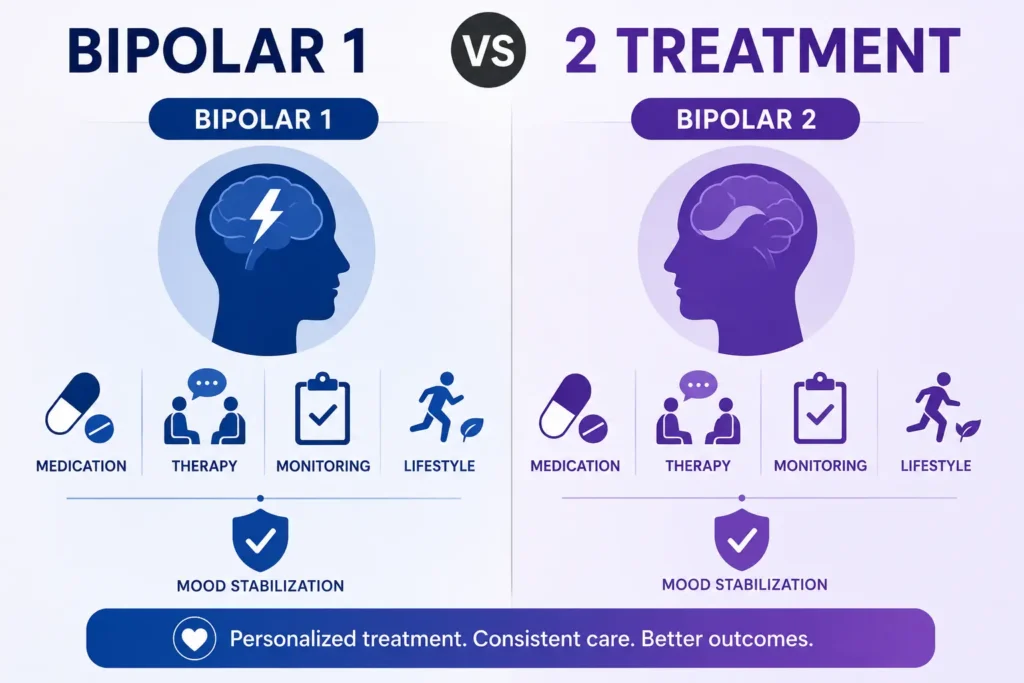
Bipolar 1 vs 2 Treatment uses many of the same tools — mood stabilizers, antipsychotics, therapy, and lifestyle management — but the emphasis shifts depending on the type. Bipolar 1 treatment is often built around controlling acute mania, so mood stabilizers and antipsychotics take priority, and antidepressants are used carefully because they can trigger a manic episode. Bipolar 2 treatment leans more heavily toward managing recurring depression, since that’s where most of the illness burden sits, while still using mood stabilizers to prevent hypomania from escalating or destabilizing mood over time.
Table of Contents
Key Takeaways
- Mood stabilizers are first-line treatment for both bipolar 1 and bipolar 2.
- Antidepressants are used more cautiously in bipolar 1 due to the risk of triggering full mania.
- Bipolar 2 treatment often puts more weight on managing depressive episodes, since they occur more frequently.
- Antipsychotic medications play a bigger role in bipolar 1, especially during acute manic episodes.
- Therapy (psychotherapy) is recommended for both types and improves long-term outcomes.
- Treatment is always individualized — there’s no single medication or plan that works the same way for everyone.
Why Treatment Differs: The Core Reason
Bipolar 1 and bipolar 2 aren’t treated with entirely different toolkits. They’re treated with different priorities from the same toolkit, and that comes down to how each condition typically presents.
Bipolar 1 is defined by full manic episodes, which can involve dangerous impulsivity, psychosis, or the need for hospitalization. Treatment has to be able to stop that quickly and prevent it from happening again. Bipolar 2 is defined by hypomania paired with major depressive episodes, and depression tends to dominate the clinical picture over time. So treatment leans more toward long-term depression management while still preventing hypomanic episodes from escalating.
If you haven’t already, it helps to understand the core differences between the two conditions before diving into treatment specifics — our guide on bipolar 1 vs bipolar 2 and our comparison chart both lay out the distinctions in detail.
Bipolar 1 vs Bipolar 2 Treatment: Comparison Table
| Treatment Component | Bipolar 1 | Bipolar 2 |
| Primary treatment goal | Control acute mania and prevent relapse | Manage recurring depression and prevent hypomania escalation |
| Mood stabilizers | Core, first-line treatment | Core, first-line treatment |
| Antipsychotic medication | Commonly used, especially during manic episodes | Used more selectively, often for depressive episodes |
| Antidepressants | Used with caution, almost always alongside a mood stabilizer | Used more often, but still monitored for hypomania risk |
| Hospitalization | More common during severe manic episodes | Uncommon, mainly for severe depression or safety concerns |
| Psychotherapy | Strongly recommended alongside medication | Strongly recommended, often central to the treatment plan |
| Treatment urgency during acute episode | Often requires rapid intervention | Usually more gradual, unless depression becomes severe |
| Long-term monitoring focus | Watching for signs of mania relapse | Watching for depressive relapse and hypomania patterns |
This table is a general educational overview. Actual treatment plans are built individually by a psychiatrist based on episode history, symptom severity, and how a person responds to specific medications.
Medications Used in Bipolar 1 Treatment
Bipolar 1 treatment typically centers on stabilizing mood quickly, especially during a manic episode, then maintaining that stability long-term.
| Medication Type | Role in Bipolar 1 | Examples of Drug Classes |
| Mood stabilizers | First-line for both acute mania and long-term maintenance | Lithium, valproate (anticonvulsant class) |
| Atypical antipsychotics | Used for acute mania, sometimes for maintenance | Various second-generation antipsychotics |
| Anticonvulsants | Used as mood stabilizers, especially when lithium isn’t suitable | Valproate, lamotrigine (more often for depressive prevention) |
| Antidepressants | Used cautiously, generally combined with a mood stabilizer | Various classes, prescribed selectively |
Lithium remains one of the most well-studied treatments for bipolar 1 disorder and is referenced by organizations including the Mayo Clinic and NHS as a first-line option, particularly for reducing the risk of future manic episodes. Antipsychotic medications are frequently used during acute mania because they tend to work faster than mood stabilizers alone.
Antidepressants are generally avoided as a standalone treatment in bipolar 1 because there’s a documented risk that they can trigger mania or contribute to rapid mood cycling. When they’re used, it’s typically alongside a mood stabilizer and under close monitoring.
Medications Used in Bipolar 2 Treatment
Bipolar 2 treatment tends to weigh depression management more heavily, since depressive episodes are usually more frequent and longer-lasting than hypomanic ones.
| Medication Type | Role in Bipolar 2 | Examples of Drug Classes |
| Mood stabilizers | First-line, especially for preventing hypomania and stabilizing mood | Lithium, lamotrigine |
| Antidepressants | Used more frequently than in bipolar 1, but still monitored | Various classes, usually combined with a mood stabilizer |
| Atypical antipsychotics | Sometimes used for depressive episodes specifically | Select second-generation antipsychotics approved for bipolar depression |
| Anticonvulsants | Used for mood stabilization, particularly for depressive prevention | Lamotrigine is often favored here |
Lamotrigine is commonly discussed as a useful option in bipolar 2 because of its effectiveness at preventing depressive episodes, which is where much of the illness burden sits for this type. As with bipolar 1, antidepressants aren’t ruled out, but they’re still prescribed carefully, since hypomania can be triggered even though the risk is generally considered lower than the risk of full mania in bipolar 1.
Medication choice always depends on individual history, other health conditions, and how a person has responded to treatment before. Nothing here should be used to start, stop, or adjust medication without guidance from a prescribing doctor.
Therapy and Psychotherapy: Similar Value, Slightly Different Focus
Medication alone isn’t considered a complete treatment plan for either type. Psychotherapy is recommended alongside medication for both bipolar 1 and bipolar 2, and several approaches have strong evidence behind them:
- Cognitive Behavioral Therapy (CBT): Helps identify and change thought patterns that worsen mood episodes, and builds coping strategies for both depressive and elevated states.
- Family-Focused Therapy: Involves close family members in treatment, improving communication and helping loved ones recognize early warning signs.
- Interpersonal and Social Rhythm Therapy (IPSRT): Focuses on stabilizing daily routines, especially sleep, since irregular routines are strongly linked to mood episode triggers in both types.
- Psychoeducation: Teaches patients and families to recognize early symptoms of mania, hypomania, or depression before they escalate.
For bipolar 2, therapy often plays an especially central role in managing the depressive episodes that dominate the illness course. For bipolar 1, therapy is equally important but is typically introduced once acute mania has been stabilized with medication first.
Hospitalization and Crisis-Level Treatment
One of the clearest treatment differences between the two types is how often hospitalization becomes necessary.
Bipolar 1 mania can involve severe impulsivity, poor judgment, or psychosis, which sometimes makes hospitalization necessary to keep someone safe while medication takes effect. This is far less common in bipolar 2, since hypomania by definition doesn’t reach that level of severity. However, hospitalization can still become necessary in bipolar 2 if a depressive episode becomes severe or includes thoughts of self-harm.
If you’re trying to understand how severity plays into diagnosis in the first place, our guide on bipolar disorder diagnosis explains how clinicians assess episode severity as part of determining bipolar type.
Lifestyle Strategies That Support Both Types
Medication and therapy do the heavy lifting, but daily habits play a real role in treatment stability for both bipolar 1 and bipolar 2:
- Consistent sleep schedule: Irregular sleep is one of the most common mood episode triggers for both types.
- Routine daily structure: Regular meal times, activity levels, and wake times help stabilize the body’s internal rhythms.
- Limiting alcohol and recreational drug use: Substance use can interfere with medication and increase episode risk.
- Stress management: Ongoing stress is a known contributor to relapse in both manic/hypomanic and depressive episodes.
- Tracking mood patterns: Keeping a simple mood log helps both patients and clinicians catch early warning signs.
These strategies don’t replace medical treatment, but they meaningfully support it. For more on the underlying causes and contributing factors this treatment approach is designed around, see our guide on bipolar disorder causes.
Dos and Don’ts of Bipolar Treatment
| Do | Don’t |
| Take medication consistently, even when feeling well | Stop medication abruptly without medical guidance |
| Track mood, sleep, and energy patterns | Ignore early warning signs of an episode |
| Involve a trusted support person in your care plan | Rely solely on antidepressants without a mood stabilizer |
| Attend therapy alongside medication | Assume hypomania or mild “up” periods don’t need attention |
| Communicate openly with your prescriber about side effects | Adjust doses on your own |
Myths vs Facts About Bipolar Treatment
| Myth | Fact |
| “Bipolar 2 doesn’t really need medication since it’s milder.” | Bipolar 2 is a serious condition that typically requires ongoing treatment, often centered on preventing depressive relapse. |
| “Antidepressants are always safe for bipolar disorder.” | Antidepressants can trigger mania or hypomania, especially without a mood stabilizer, so they’re prescribed carefully. |
| “Once mania is controlled, bipolar 1 treatment is done.” | Bipolar 1 requires long-term maintenance treatment to prevent relapse, not just acute crisis management. |
| “Therapy isn’t necessary if medication is working.” | Psychotherapy improves long-term outcomes and relapse prevention even when medication is effective. |
| “Treatment looks the same for everyone with the same type.” | Treatment plans are individualized based on symptom history, severity, and response to specific medications. |
For a broader list of misconceptions about bipolar disorder in general, see our full bipolar disorder myths guide.
What Happens If Treatment Is Delayed or Skipped
Untreated or under-treated bipolar disorder, whether type 1 or type 2, tends to worsen over time. Episodes can become more frequent, mood cycling can accelerate, and the risk of complications like job loss, relationship strain, substance use, and suicidal thinking increases. Consistent treatment is strongly associated with better long-term stability and quality of life.
For more detail on what can happen without proper treatment, see our guide on bipolar disorder complications, and for a broader view of what long-term outcomes typically look like with treatment, visit our bipolar disorder prognosis page.
Warning Signs That Treatment Needs Adjusting
Treatment isn’t static — plans often need to change over time. Signs it may be time to talk to a prescriber include:
- Depressive or manic/hypomanic symptoms returning despite treatment
- New or worsening side effects
- Sleep disruption that isn’t improving
- Increased irritability, agitation, or impulsivity
- Any thoughts of self-harm or suicide
Getting Emergency Help
If you or someone you know is in crisis or having thoughts of suicide, get help immediately:
- 988 Suicide & Crisis Lifeline (US): call or text 988
- Emergency services: call 911 (US) or your local emergency number
- Outside the US, search for your country’s crisis line or go to the nearest emergency department
Never wait for a scheduled appointment if there’s an immediate safety concern.
Frequently Asked Questions
Is bipolar 1 harder to treat than bipolar 2? Not necessarily harder — just different. Bipolar 1 often requires faster intervention during acute mania, while bipolar 2 can be harder to manage long-term because depressive episodes are frequent and antidepressant use requires extra caution.
Can bipolar 2 be treated without antidepressants? Yes. Mood stabilizers like lithium or lamotrigine are often effective on their own for bipolar 2, and some treatment plans avoid antidepressants entirely to reduce the risk of triggering hypomania.
Do people with bipolar 1 always need antipsychotic medication? Not always, but antipsychotics are commonly used during acute manic episodes because they tend to act faster than mood stabilizers alone. Long-term use depends on the individual case.
Is therapy alone enough to treat bipolar disorder? Generally, no. Psychotherapy is a strong complement to medication, but medication is typically necessary to manage the underlying mood episodes in both bipolar 1 and bipolar 2.
How long does bipolar treatment usually last? Bipolar disorder is typically a lifelong condition, and treatment is usually ongoing rather than short-term, even during periods of stability. Stopping treatment early is associated with a higher risk of relapse.
Are the medications for bipolar 1 and bipolar 2 completely different? No. There’s significant overlap, especially with mood stabilizers. The main differences are in how cautiously antidepressants are used and how often antipsychotics are needed.
Summary
Bipolar 1 and bipolar 2 treatment share the same foundation — mood stabilizers, careful medication management, psychotherapy, and lifestyle support — but the emphasis shifts based on how each condition typically presents. Bipolar 1 treatment prioritizes controlling and preventing severe manic episodes, while bipolar 2 treatment often focuses more on managing recurring depression and preventing hypomania from destabilizing mood. Neither plan is more “intensive” across the board; they’re tailored to the pattern of episodes each condition tends to produce.
If you’re trying to understand which type you or someone you care about may be dealing with before exploring treatment further, start with our guide on bipolar 1 vs bipolar 2, and for a full breakdown of treatment approaches across all bipolar types, visit our main bipolar disorder treatment guide.
This article is for educational purposes and is not a substitute for professional medical advice, diagnosis, or treatment. Always consult a qualified healthcare provider before starting, stopping, or changing any treatment plan.