Bipolar 1 Prognosis: What the Long-Term Outlook Really Looks Like
Bipolar 1 Prognosis is generally good with consistent treatment, even though bipolar 1 disorder is a lifelong condition. Most people experience periods of full or…
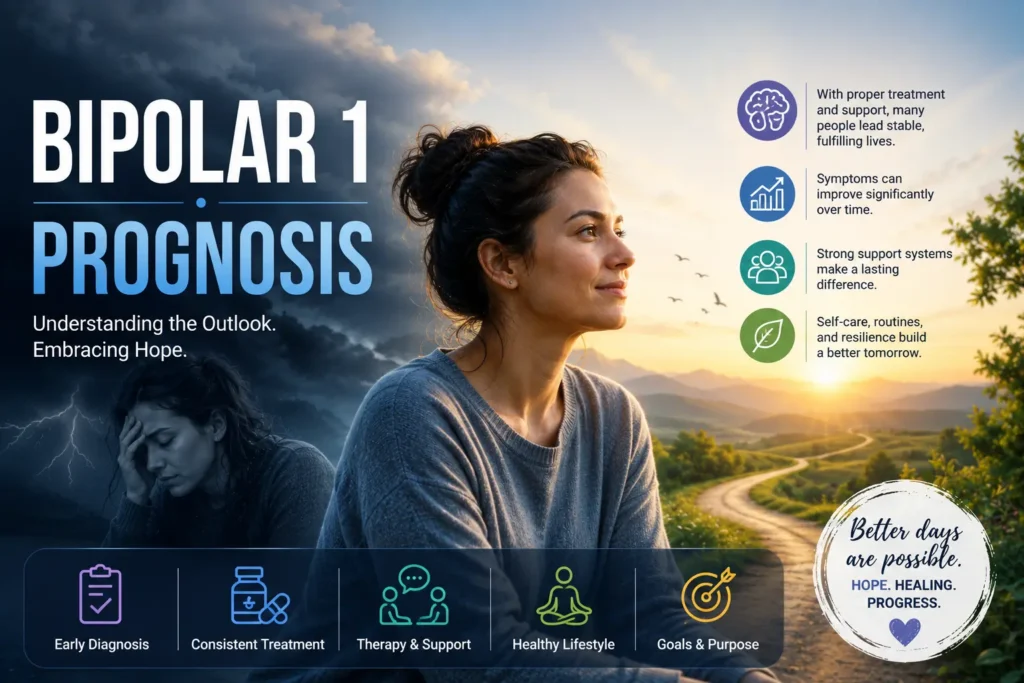
Bipolar 1 Prognosis is generally good with consistent treatment, even though bipolar 1 disorder is a lifelong condition. Most people experience periods of full or…

Living well with bipolar 1 disorder comes down to a few consistent habits: sticking with treatment, protecting sleep, managing stress, recognizing early warning signs, and…
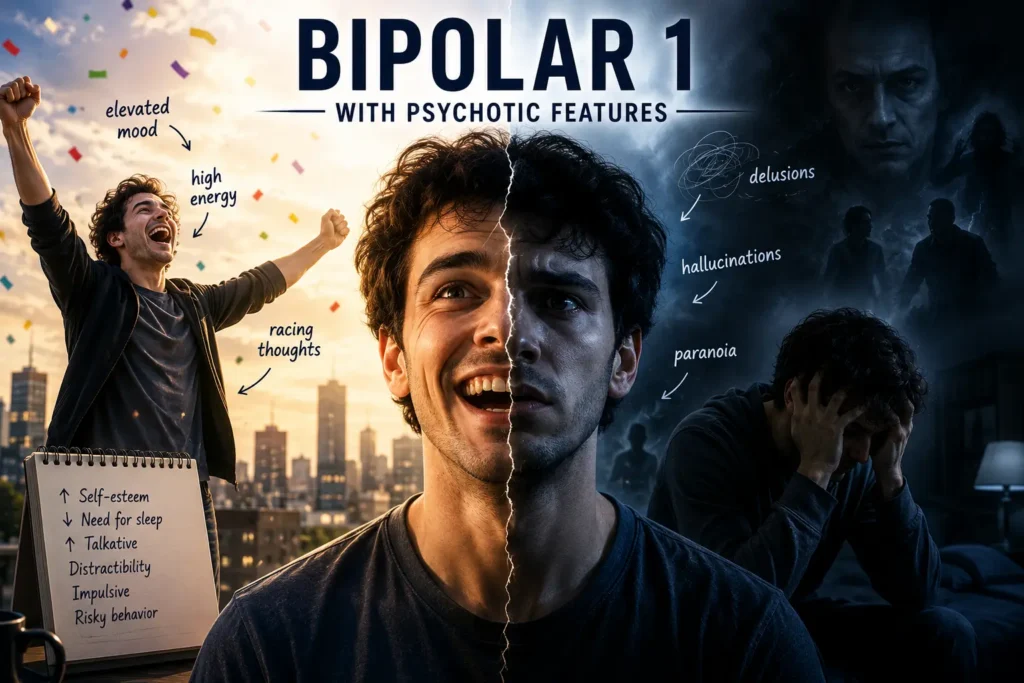
Bipolar 1 with psychotic features is a specifier used when a manic or depressive episode includes psychosis — hallucinations, delusions, or a significant break from…
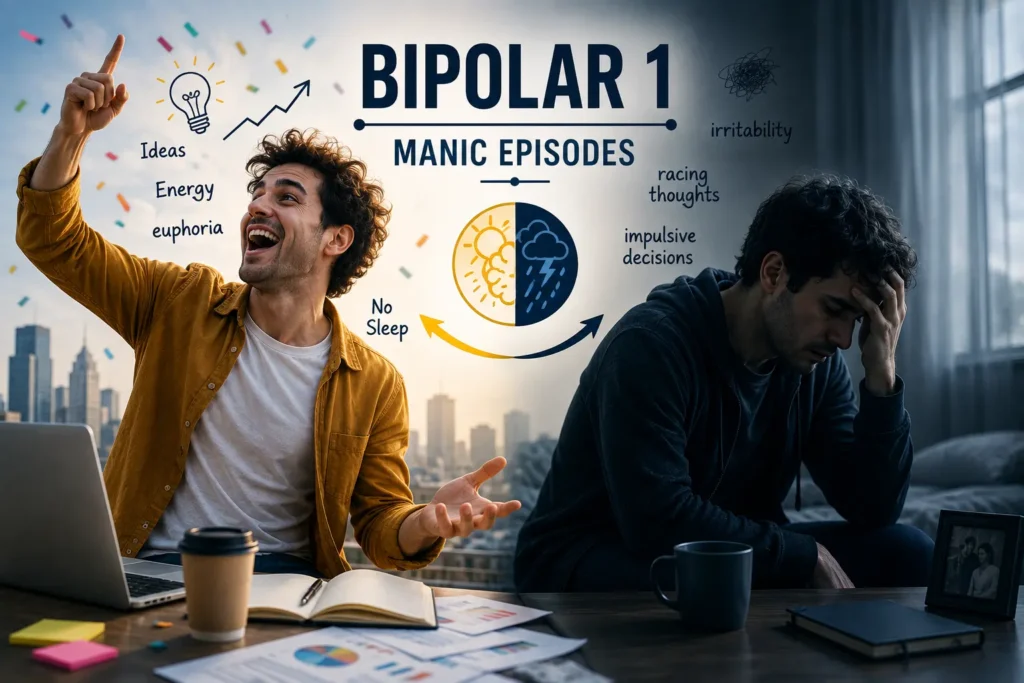
Bipolar 1 Manic Episodes are distinct periods of abnormally elevated, expansive, or irritable mood combined with a surge in energy and activity, lasting at least…

Bipolar 1 disorder is treated with a combination of medication and therapy, almost always managed long-term rather than as a short course. Mood stabilizers like…
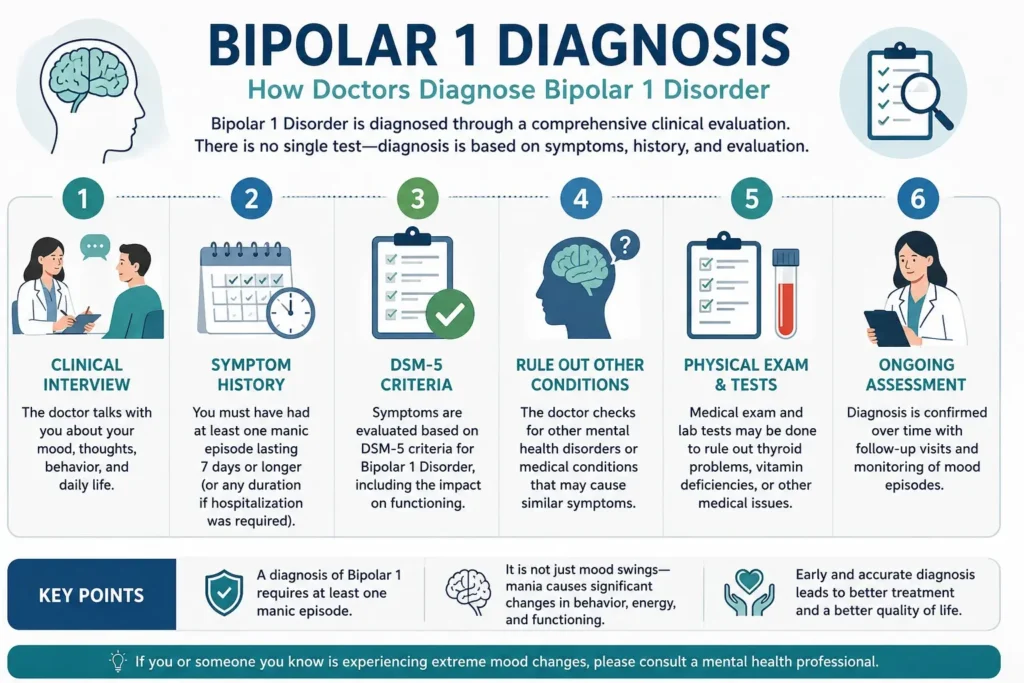
Bipolar 1 disorder is diagnosed through a clinical evaluation, not a blood test or brain scan. A psychiatrist or qualified mental health professional gathers a…
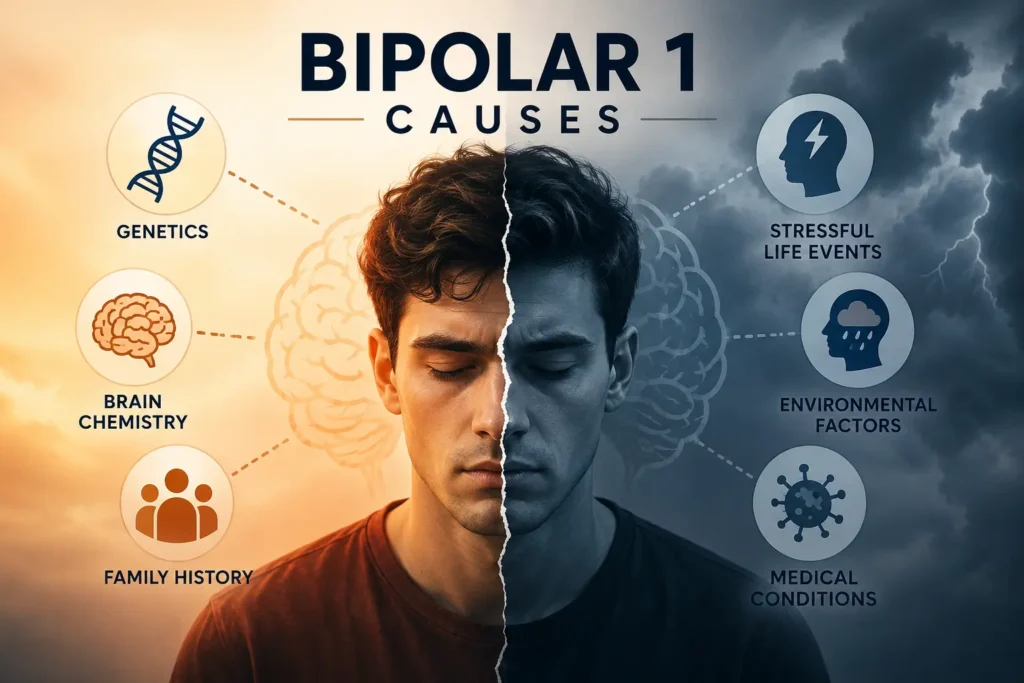
What Causes Bipolar 1 Disorder? Bipolar 1 disorder doesn’t have one single cause. Research points to a combination of genetics, brain structure and chemistry, and…
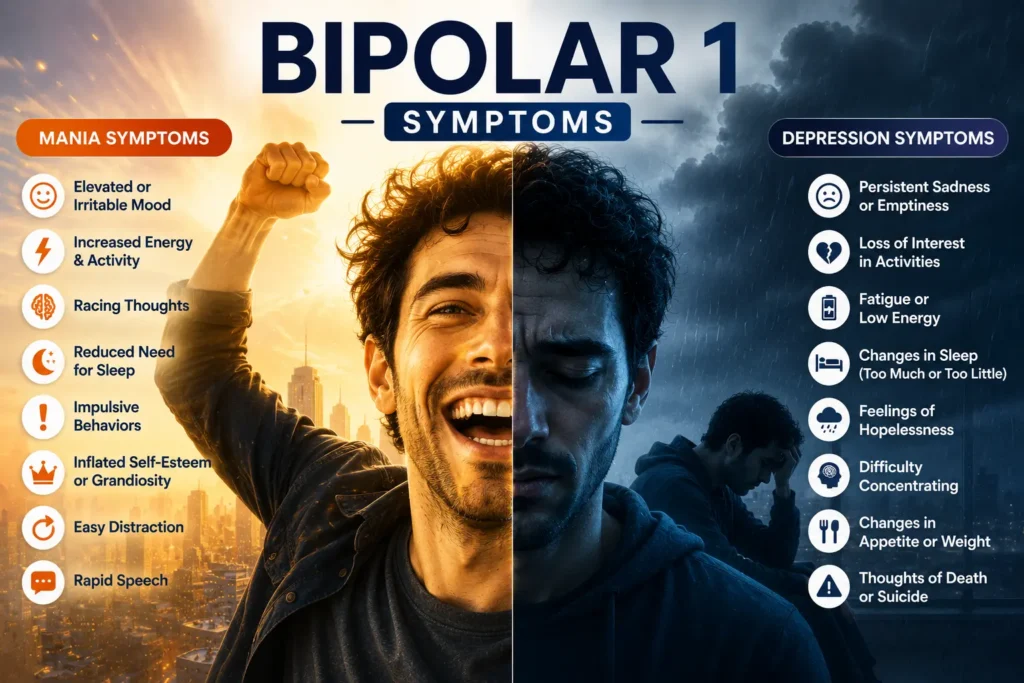
Bipolar 1 symptoms disorder is defined by at least one full manic episode — a period of abnormally high energy, racing thoughts, reduced need for…
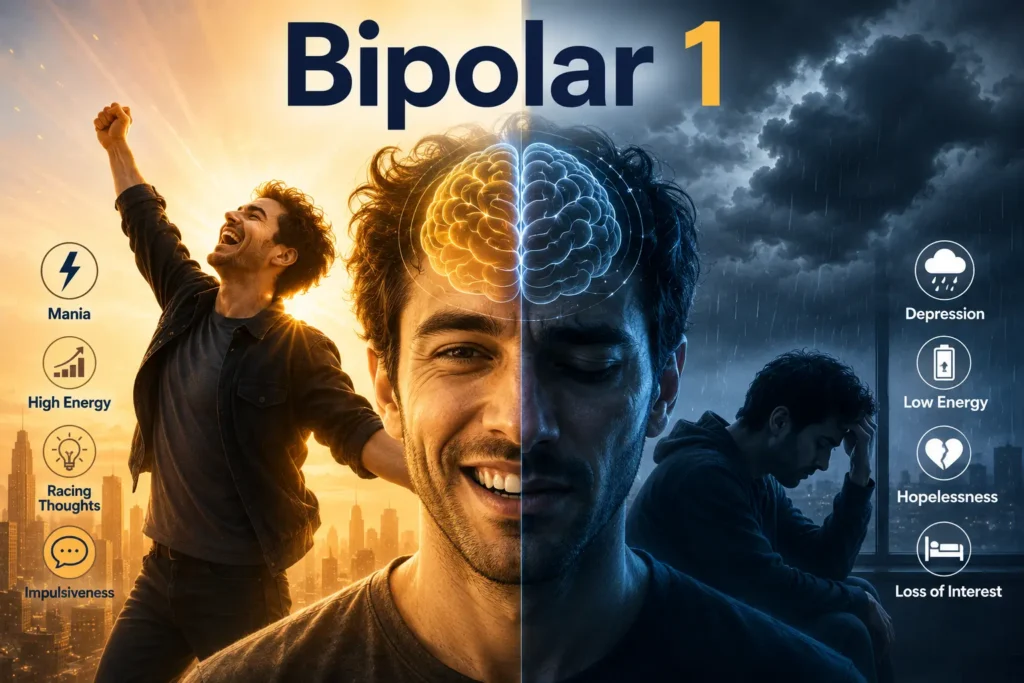
Bipolar 1 disorder is a mental health condition defined by at least one full manic episode — a period of abnormally high energy, elevated or…
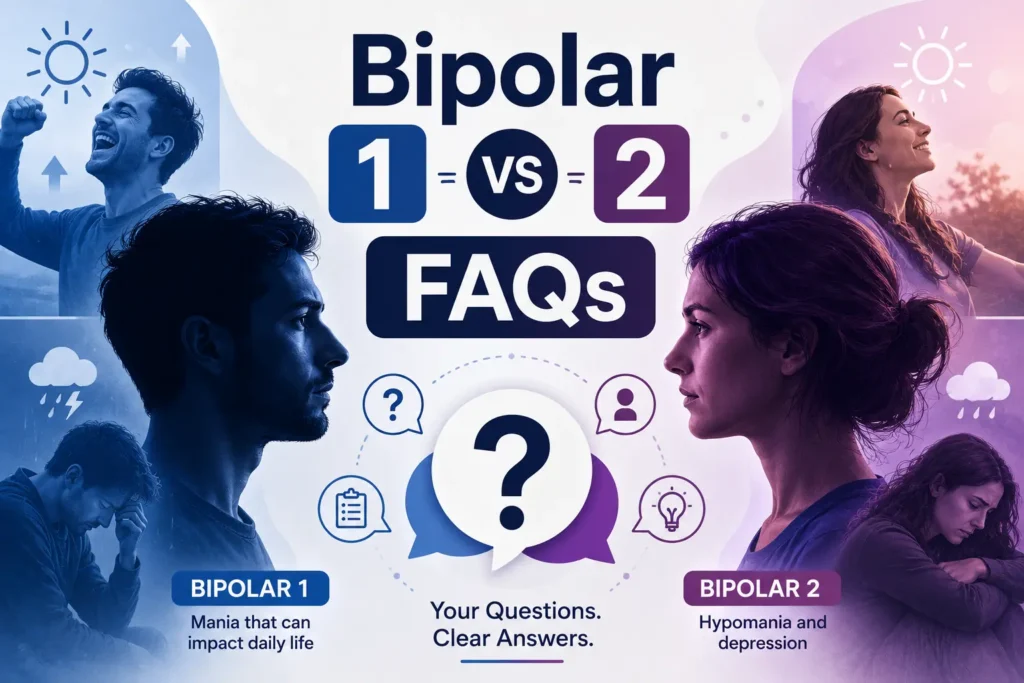
Bipolar 1 vs 2 FAQs: Bipolar I and Bipolar II are different diagnoses defined by the type of “high” episode a person experiences — full…