Bipolar 1 vs 2 Symptoms: How to Tell the Difference
The biggest difference between Bipolar 1 vs 2 Symptoms comes down to the “up” episodes. Bipolar 1 involves full mania — intense enough to disrupt…
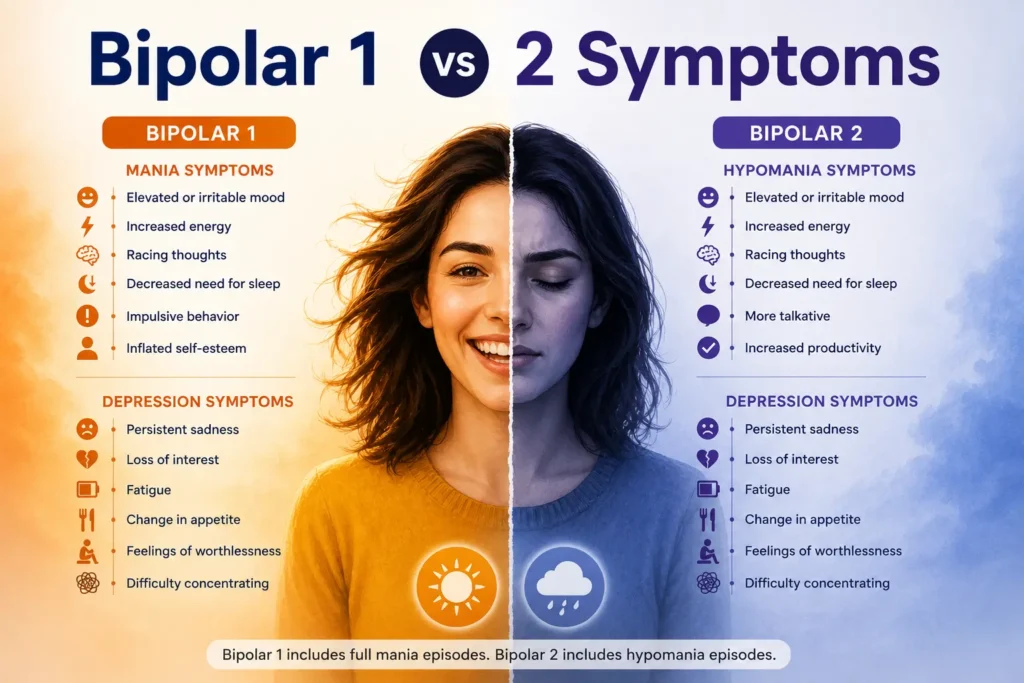
The biggest difference between Bipolar 1 vs 2 Symptoms comes down to the “up” episodes. Bipolar 1 involves full mania — intense enough to disrupt…
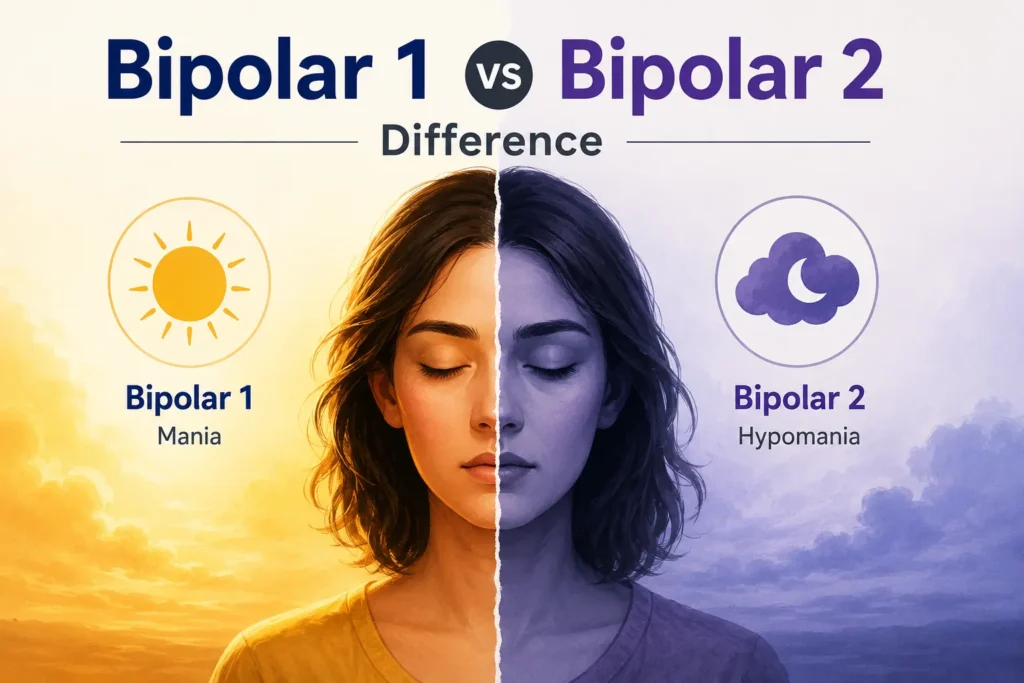
Understanding the Bipolar 1 vs Bipolar 2 Difference starts with one key distinction: the intensity of the “up” episodes. The main Bipolar 1 vs Bipolar…
A bipolar disorder glossary is a reference list of the clinical and everyday terms used to describe bipolar disorder — words like mania, hypomania, mixed…
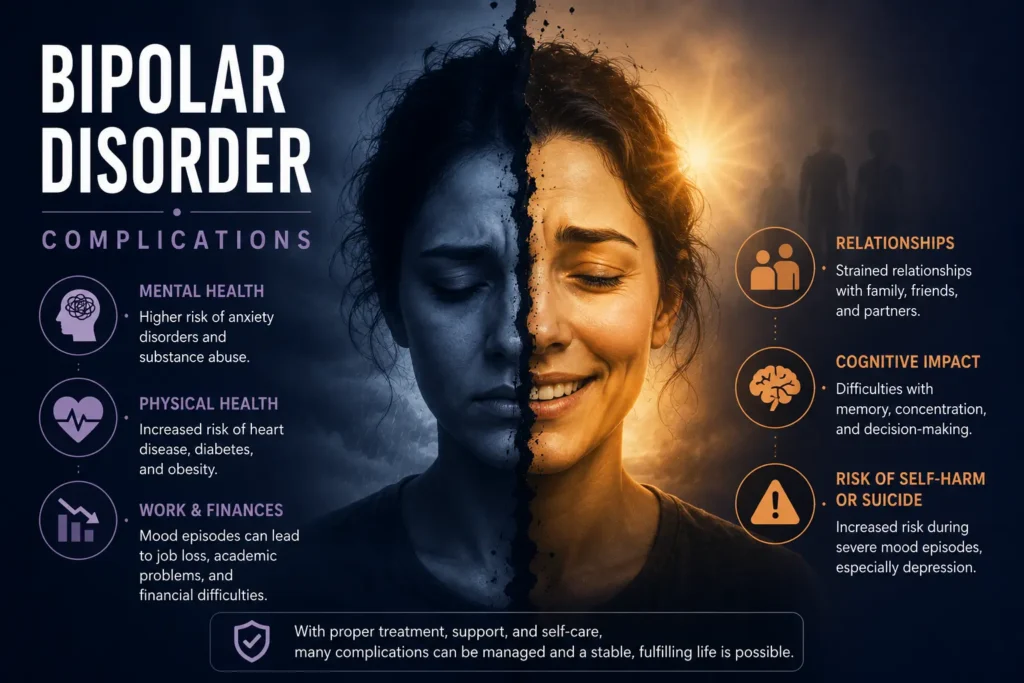
Bipolar disorder complications develop when mood episodes go unmanaged for long periods. Left untreated, bipolar disorder can lead to substance use problems, damaged relationships, job…
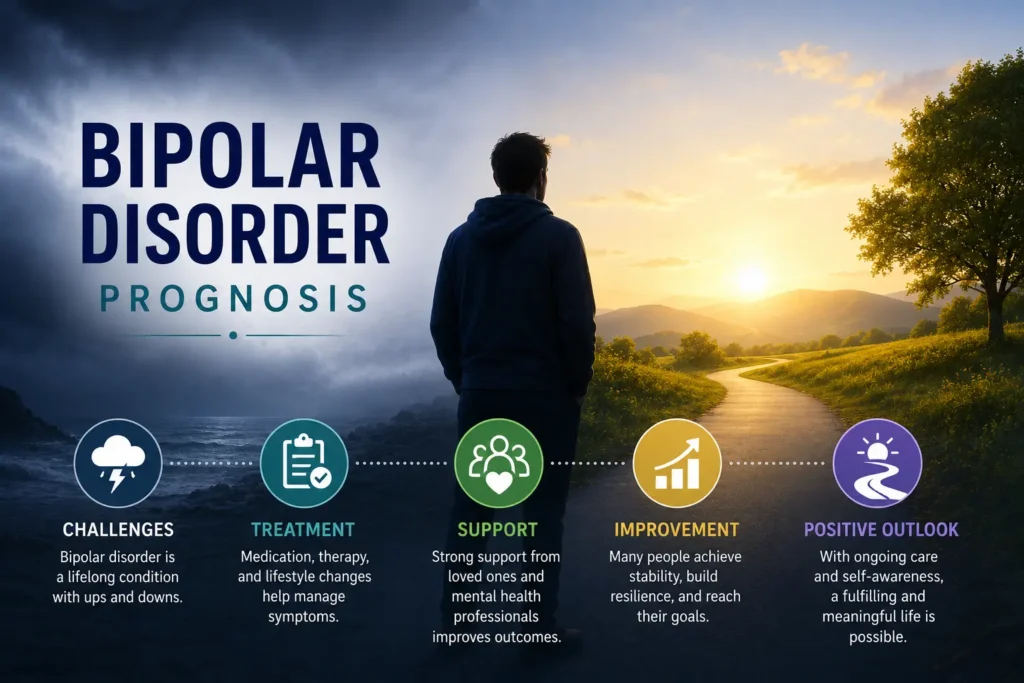
Bipolar Disorder Prognosis: Bipolar disorder is a lifelong condition, but it’s also a highly manageable one. With consistent treatment—including medication, therapy, and lifestyle structure—most people…
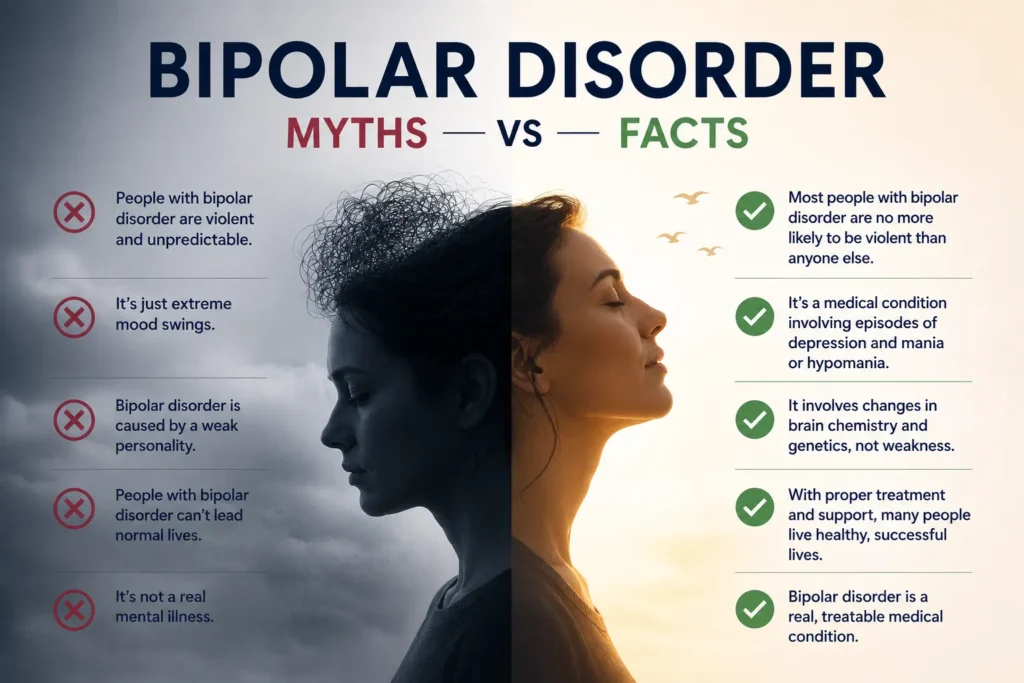
Bipolar Disorder Myths vs Facts: Bipolar disorder is one of the most misunderstood conditions in mental health. It isn’t “just mood swings,” it isn’t the…
Bipolar disorder affects roughly 1 in 200 people worldwide — about 37 million people, according to the World Health Organization’s 2021 estimate. In the United…
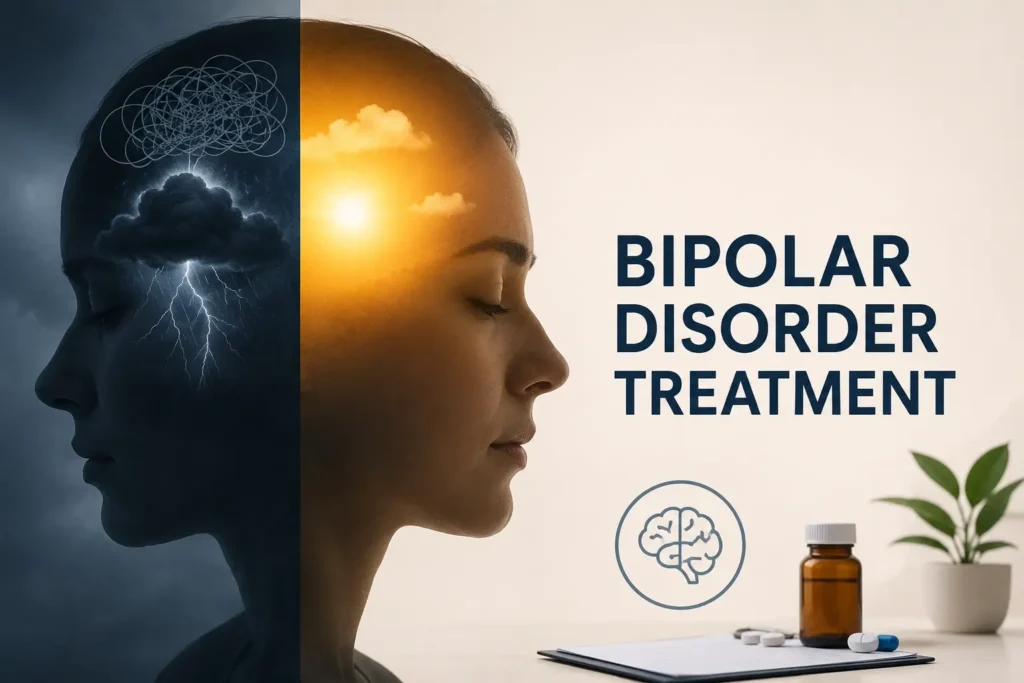
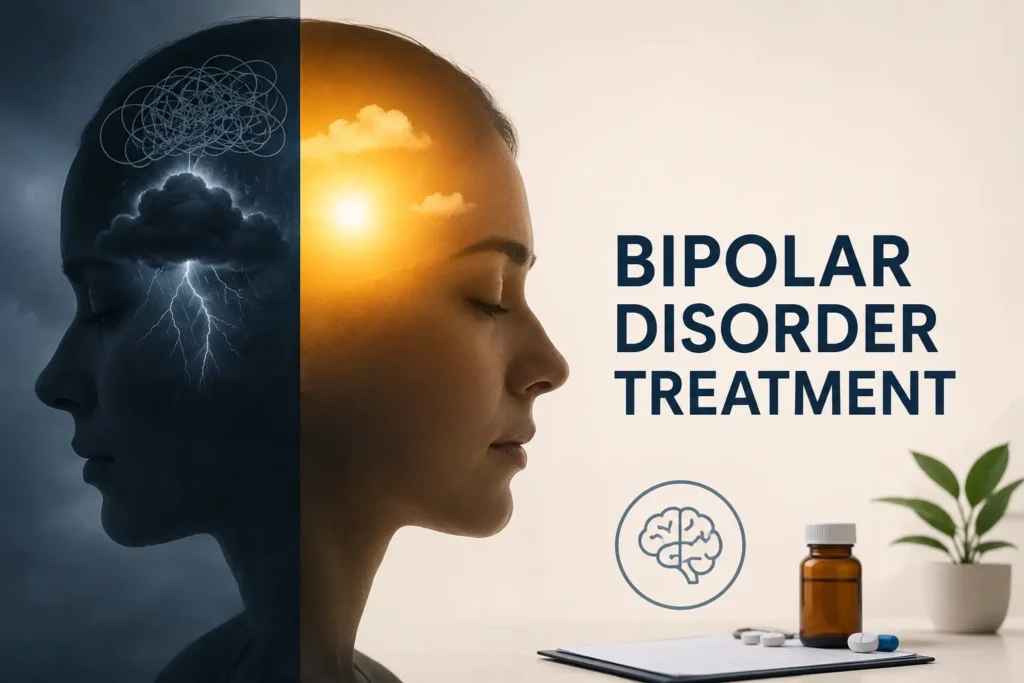
Bipolar disorder treatment almost always combines three things: medication to stabilize mood, therapy to build coping skills, and lifestyle habits that protect sleep and routine….
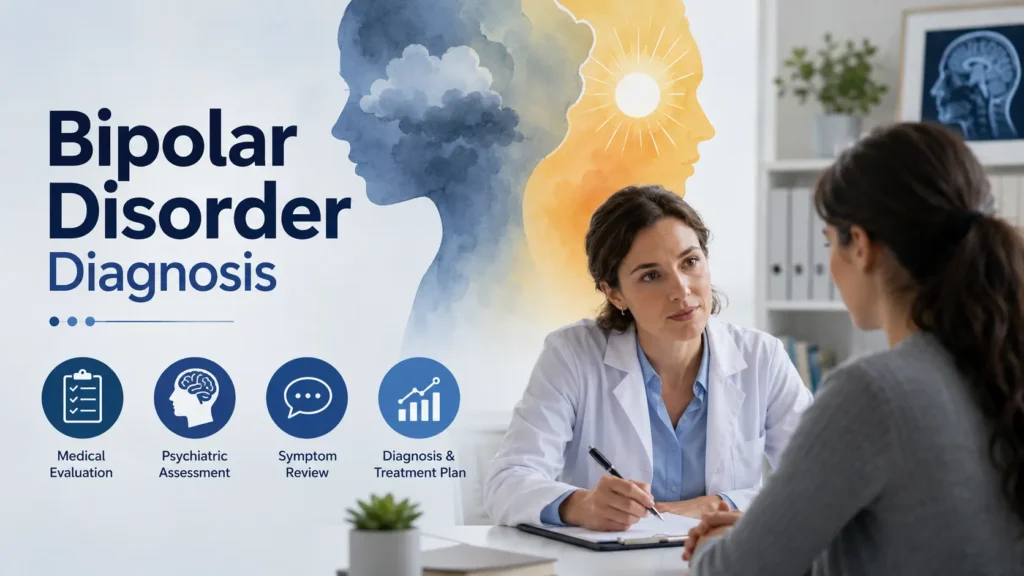
Bipolar Disorder Diagnosis is based on a thorough clinical evaluation rather than a single medical test. There’s no blood test or brain scan that confirms…
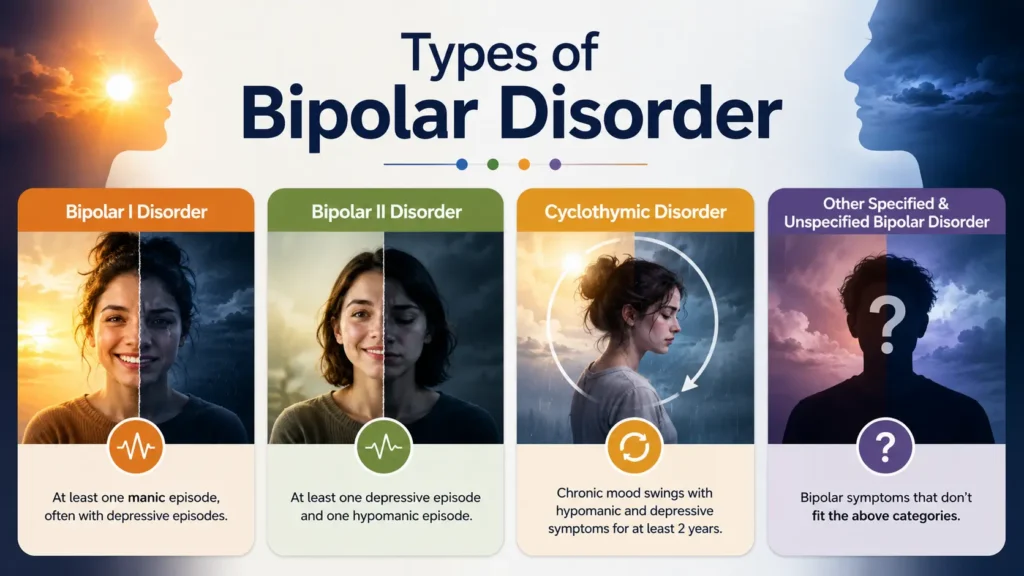
There are four recognized types of bipolar disorder: Bipolar I, Bipolar II, Cyclothymic disorder, and Other Specified or Unspecified Bipolar and Related Disorders. Each type…