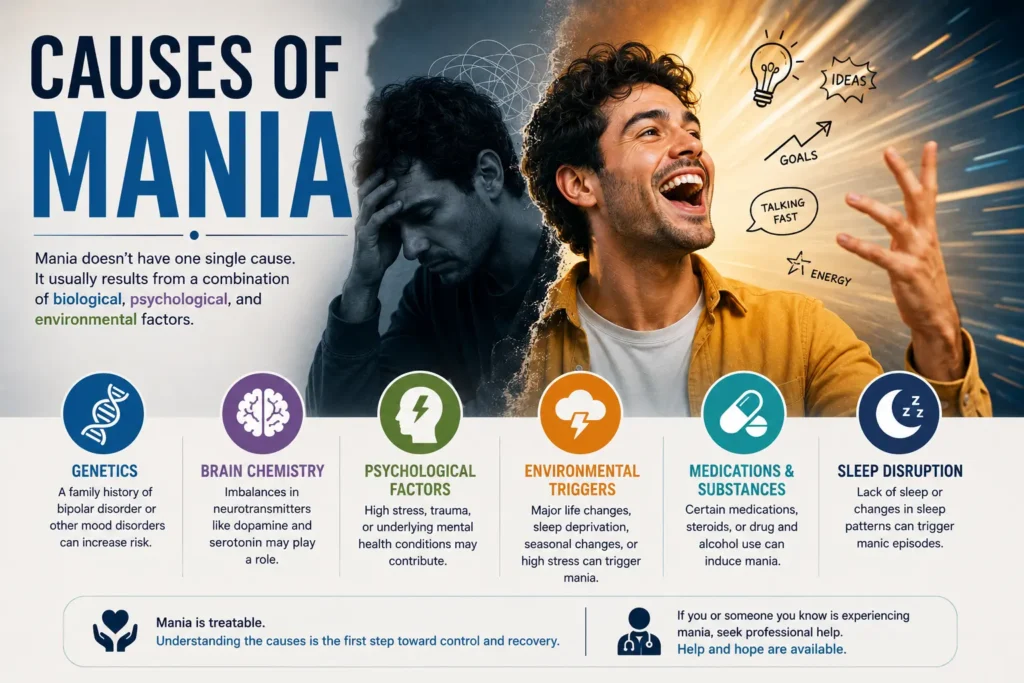
Causes of Mania: Mania doesn’t have one single cause. It develops from a combination of genetic vulnerability, changes in brain chemistry, and outside triggers like sleep loss, stress, substance use, or certain medications.
In most cases, mania occurs in people with an underlying biological predisposition to bipolar disorder, and a trigger tips that vulnerability into a full manic episode.
Table of Contents
Key Takeaways
- Mania results from a mix of genetic, biological, and environmental factors, not a single cause.
- Family history is one of the strongest known risk factors for mania.
- Sleep disruption is one of the most common and preventable manic triggers.
- Certain medications, especially antidepressants and corticosteroids, can trigger mania in people with an underlying vulnerability.
- Substance use, including stimulants and alcohol, can bring on or worsen manic symptoms.
- Understanding personal triggers is one of the most effective tools for preventing future episodes.
Why Understanding the Causes of Mania Matters
Knowing what causes mania isn’t just a scientific curiosity — it directly shapes prevention and treatment. If someone knows sleep loss or a specific medication tends to trigger their episodes, they and their care team can plan around it.
Mania is the defining symptom of bipolar 1 disorder, and while researchers don’t fully understand every mechanism involved, decades of research point to a consistent pattern: biological vulnerability plus environmental triggers. For the full clinical picture of what a manic episode looks like, including symptoms and duration, see our guides on the manic episode and mania symptoms. This article focuses specifically on what causes and triggers mania to begin with.
Biological Causes of Mania
Genetics and Family History
Mania has one of the strongest genetic links in psychiatry. People with a close relative — a parent or sibling — who has bipolar disorder face a meaningfully higher risk of developing it themselves compared to the general population. No single gene causes mania; instead, researchers believe multiple genes interact with environmental factors to increase vulnerability.
Brain Chemistry and Neurotransmitters
Mania is associated with irregular activity in brain chemicals called neurotransmitters, particularly dopamine, serotonin, and norepinephrine. These chemicals regulate mood, energy, motivation, and sleep. When their activity becomes dysregulated, it can produce the elevated mood, high energy, and reduced need for sleep characteristic of mania.
Brain Structure and Function
Some research using brain imaging has found differences in areas involved in emotional regulation and decision-making among people with bipolar disorder. These differences may help explain why judgment and impulse control are so affected during a manic episode, though this remains an active area of research rather than a settled explanation.
Circadian Rhythm Disruption
The body’s internal clock, or circadian rhythm, plays a significant role in mood regulation. Disruptions to this rhythm — through irregular sleep schedules, shift work, or jet lag — are strongly linked to the onset of manic episodes.
Environmental and Lifestyle Triggers
| Trigger | How It Contributes to Mania |
| Sleep loss | One of the most common and well-documented manic triggers |
| High stress | Major life stress, whether negative or positive, can destabilize mood regulation |
| Substance use | Stimulants, alcohol, and recreational drugs can directly trigger or intensify mania |
| Certain medications | Antidepressants, corticosteroids, and some other drugs can induce mania in vulnerable individuals |
| Seasonal changes | Some people notice manic episodes clustering around spring or increased daylight |
| Major life changes | Both positive events (a new job, a relationship) and negative ones (loss, conflict) can act as triggers |
| Postpartum period | Hormonal and sleep changes after childbirth can trigger episodes in some individuals |
For a broader explanation of causes across bipolar disorder as a whole, see bipolar disorder causes. If you’re specifically researching bipolar 1, our dedicated bipolar 1 causes guide goes further into that context.
Sleep Loss: The Most Common Manic Trigger
Sleep deprivation deserves its own spotlight because of how consistently it’s linked to manic episodes. Losing even one or two nights of adequate sleep can be enough to trigger symptoms in someone with an underlying vulnerability to bipolar disorder.
This creates a difficult cycle: mania itself reduces the need for sleep, and that lost sleep can then intensify the episode further. Because of this, sleep regulation is considered one of the most important, evidence-based strategies for reducing manic risk — not just a general wellness tip.
Substance-Induced Mania
Certain substances can directly trigger manic or manic-like symptoms, either on their own or by interacting with an existing predisposition to bipolar disorder.
| Substance | Effect on Mania Risk |
| Stimulants (cocaine, amphetamines) | Can directly trigger manic symptoms |
| Alcohol | Can disrupt sleep and mood regulation, increasing risk |
| Recreational drugs generally | Vary widely, but many disrupt neurotransmitter balance |
| Caffeine (in excess) | Can worsen sleep disruption in vulnerable individuals |
When mania occurs only during substance use and resolves once the substance clears the system, clinicians may classify it as substance-induced rather than part of bipolar disorder itself. A qualified professional needs to make this distinction, since it affects both diagnosis and treatment.
Medication-Induced Mania
Some medications are known to trigger manic episodes, particularly in people who already have an underlying vulnerability to bipolar disorder.
| Medication Type | Why It Can Trigger Mania |
| Antidepressants | Can occasionally cause a “switch” into mania in people with bipolar disorder |
| Corticosteroids | Known to affect mood regulation and can induce manic symptoms |
| Certain stimulant medications | Can overstimulate mood and energy systems |
| Thyroid medications (at high doses) | Can affect mood stability in some individuals |
This is one reason accurate diagnosis matters before starting treatment for depression or other conditions — someone with undiagnosed bipolar disorder can be pushed into mania by a medication meant to help. If antidepressant-related mania is a concern, our guide on bipolar 2 hypomania covers a related pattern seen in milder form.
Risk Factors for Developing Mania
Risk factors don’t cause mania directly, but they increase the likelihood of an episode occurring in someone already vulnerable.
- Family history of bipolar disorder or other mood disorders
- A previous manic, hypomanic, or depressive episode
- History of substance use
- Chronic sleep disruption or irregular schedules
- High-stress periods, especially combined with poor sleep
- Postpartum period, for some individuals
- Onset of bipolar disorder typically in the late teens to twenties, which is when first episodes are most common
Common Myths About What Causes Mania
| Myth | Fact |
| Mania is caused by personality or poor discipline | Mania stems from biological and genetic factors, not character traits |
| Only stress causes mania | Stress is one of several triggers, alongside sleep loss, substances, and medications |
| Mania only happens to people who use drugs | Substance use can trigger mania, but many people develop it with no substance involvement at all |
| If there’s no family history, mania can’t happen | Family history raises risk but isn’t required for mania to occur |
| Mania has one clear, single cause | Mania results from an interaction of multiple biological and environmental factors |
For more misconceptions across bipolar disorder generally, see bipolar disorder myths.
Can Mania Be Prevented?
While the underlying biological vulnerability to mania can’t be changed, many known triggers can be managed, which meaningfully reduces the risk of future episodes.
Evidence-based strategies include:
- Keeping a consistent sleep schedule, even during stressful periods
- Avoiding recreational stimulants and limiting alcohol
- Working with a psychiatrist before starting or stopping medications, especially antidepressants
- Managing stress through routine, support systems, and therapy
- Tracking mood patterns to catch early warning signs
- Staying consistent with prescribed mood stabilizers, if part of a treatment plan
For a full breakdown of treatment options that support long-term stability, see bipolar disorder treatment.
When to Seek Help
If you notice a pattern of manic symptoms following specific triggers — lost sleep, a new medication, high stress, or substance use — it’s worth discussing with a mental health professional, even if a full episode hasn’t occurred yet. Early intervention often prevents escalation.
Seek urgent care if symptoms include:
- Hallucinations, delusions, or disorganized thinking
- Talk of self-harm or harm to others
- Dangerous or irreversible decisions
- Multiple nights without sleep combined with extreme agitation
If you or someone you know is in crisis, contact emergency services immediately, or in the US, call or text 988 to reach the Suicide & Crisis Lifeline, available 24/7.
Frequently Asked Questions
What is the main cause of mania? There isn’t a single main cause. Mania develops from a combination of genetic vulnerability, brain chemistry changes, and environmental triggers like sleep loss, stress, substances, or certain medications.
Can stress alone cause a manic episode? Stress can act as a trigger, particularly in someone with an underlying vulnerability to bipolar disorder, but it typically works alongside biological factors rather than as a sole cause.
Can you develop mania without a family history of bipolar disorder? Yes. While family history increases risk, mania can still occur in people with no known family history.
Do antidepressants cause mania? In people with an underlying vulnerability to bipolar disorder, antidepressants can sometimes trigger a manic or hypomanic episode. This is one reason careful diagnosis matters before starting antidepressant treatment.
Is sleep loss really a common trigger for mania? Yes. Sleep disruption is one of the most well-documented and consistent triggers for manic episodes, and protecting regular sleep is a key part of prevention.
Can substance use alone cause mania? Certain substances, particularly stimulants, can trigger manic-like symptoms directly. Whether this reflects substance-induced mania or an underlying bipolar disorder requires a professional evaluation.
Can mania be prevented once someone knows their triggers? Not entirely, but understanding personal triggers — like sleep loss or specific medications — allows for proactive management that significantly reduces the frequency and severity of future episodes.
Summary
Mania emerges from a layered mix of genetic predisposition, brain chemistry, and environmental triggers rather than any single cause. Sleep loss, high stress, substance use, and certain medications are among the most common triggers in people who are biologically vulnerable to bipolar disorder. While the underlying vulnerability can’t be eliminated, understanding and managing these triggers is one of the most effective tools for reducing how often manic episodes occur. If you’re noticing a pattern connected to specific triggers, a mental health professional can help you build a plan around it.
This article is for educational purposes and is not a substitute for professional medical advice. If you or someone you know is experiencing symptoms of mania, please consult a qualified healthcare provider.