Hypermania: What the Term Means (and Why It’s Not an Official Diagnosis)
“Hypermania” is not a recognized clinical term in the DSM-5 or any official psychiatric diagnostic system. It shows up in everyday language in two main…
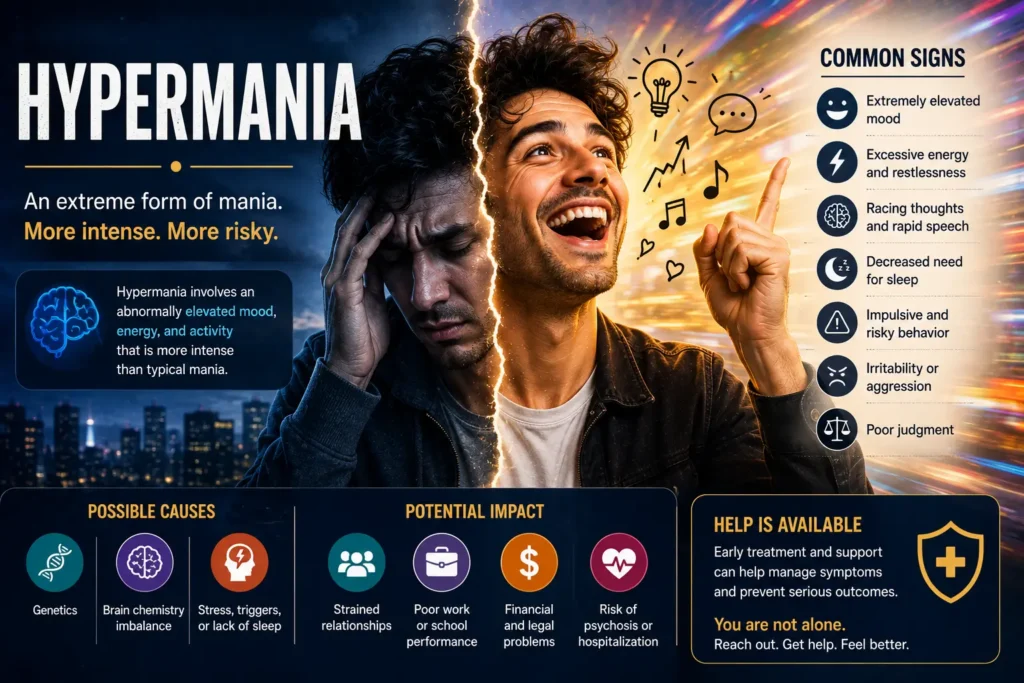
“Hypermania” is not a recognized clinical term in the DSM-5 or any official psychiatric diagnostic system. It shows up in everyday language in two main…
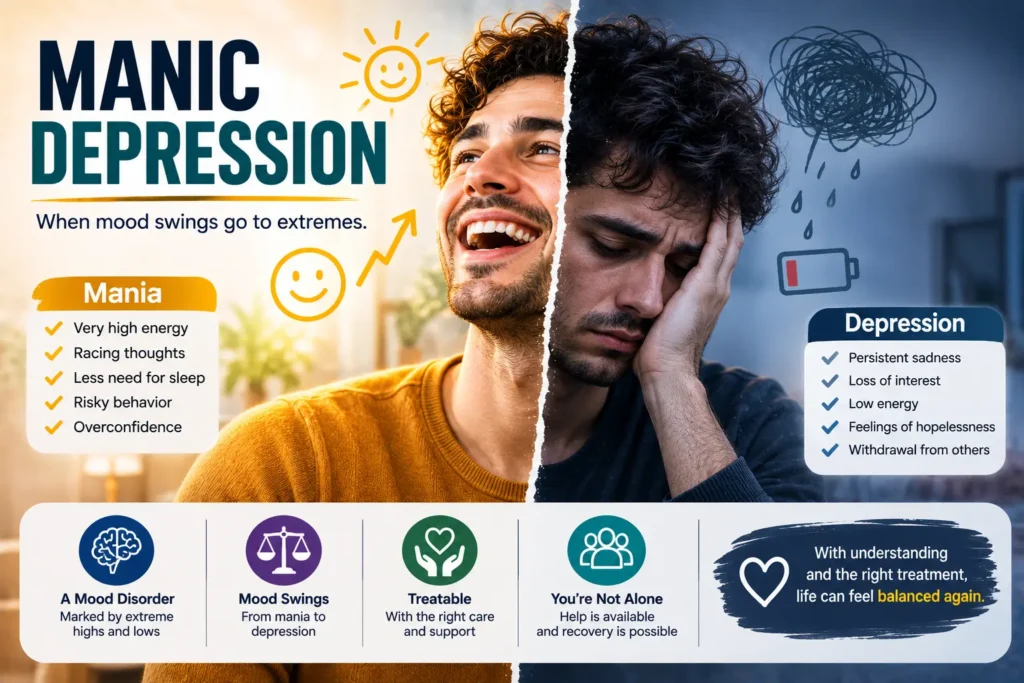
Manic depression is the older, now-outdated term for what’s officially called bipolar disorder today. The name changed because “manic depression” only described two mood extremes…
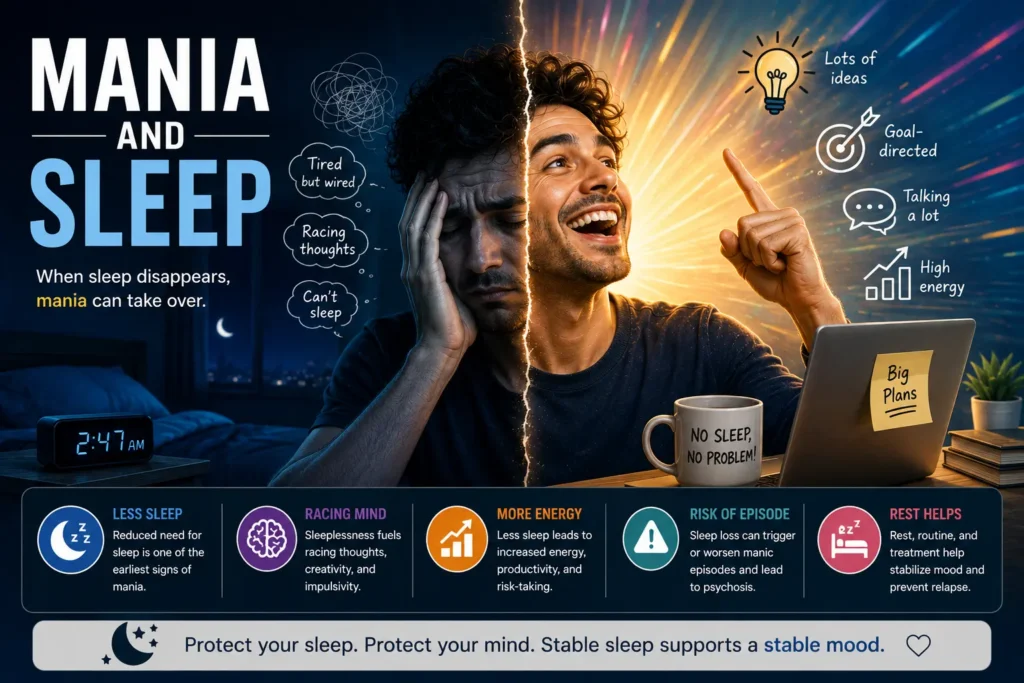
Mania and sleep have a bidirectional relationship: losing sleep can trigger a manic episode, and mania itself dramatically reduces the need for sleep — sometimes…
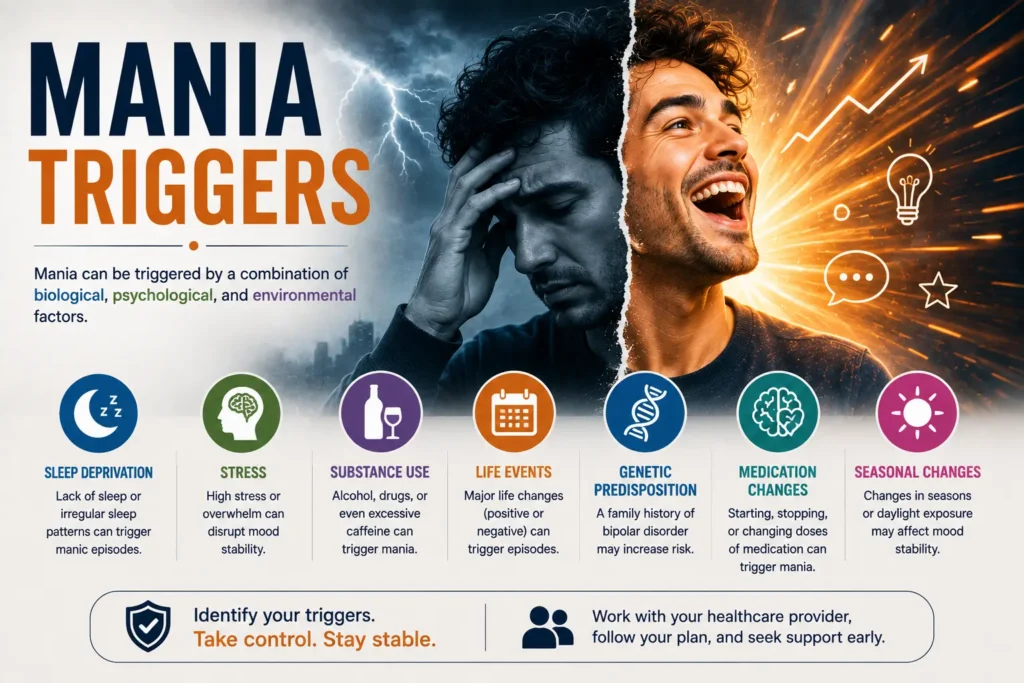
Mania triggers are the specific events, habits, or changes that can set off a manic episode in someone with bipolar disorder — most commonly sleep…
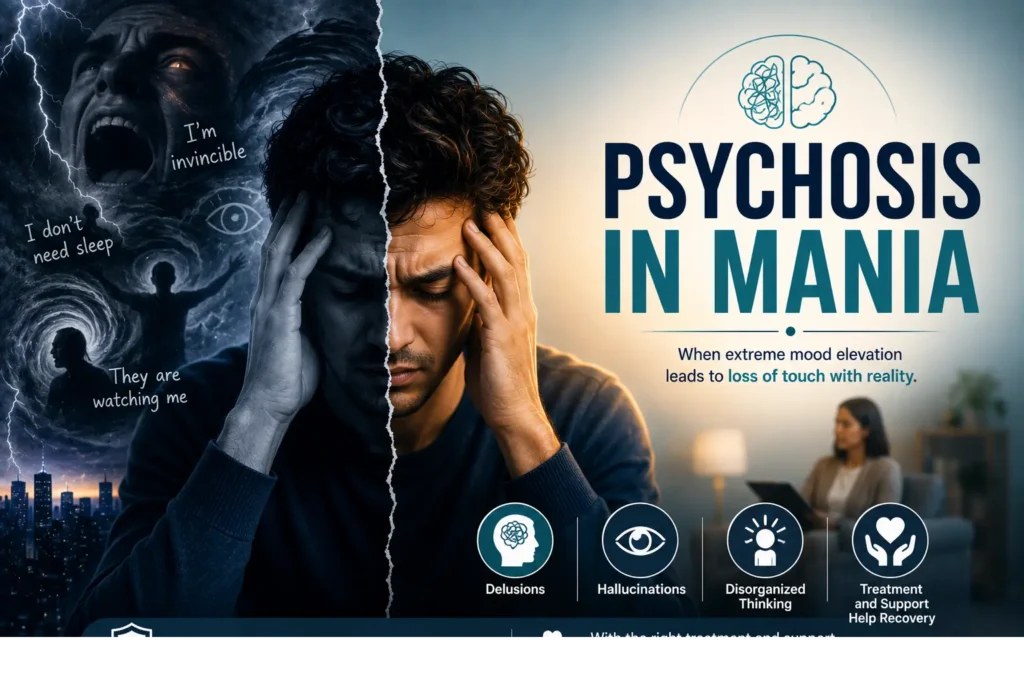
Psychosis in mania happens when a manic episode becomes severe enough that a person loses touch with reality — experiencing delusions, hallucinations, or extremely disorganized…

Hypomania treatment usually combines mood-stabilizing or antipsychotic medication with structured psychotherapy and lifestyle changes such as regular sleep and stress management. The goal isn’t to…

Mania treatment almost always starts with medication — usually a mood stabilizer, an antipsychotic, or both — because mania is a medical emergency of the…
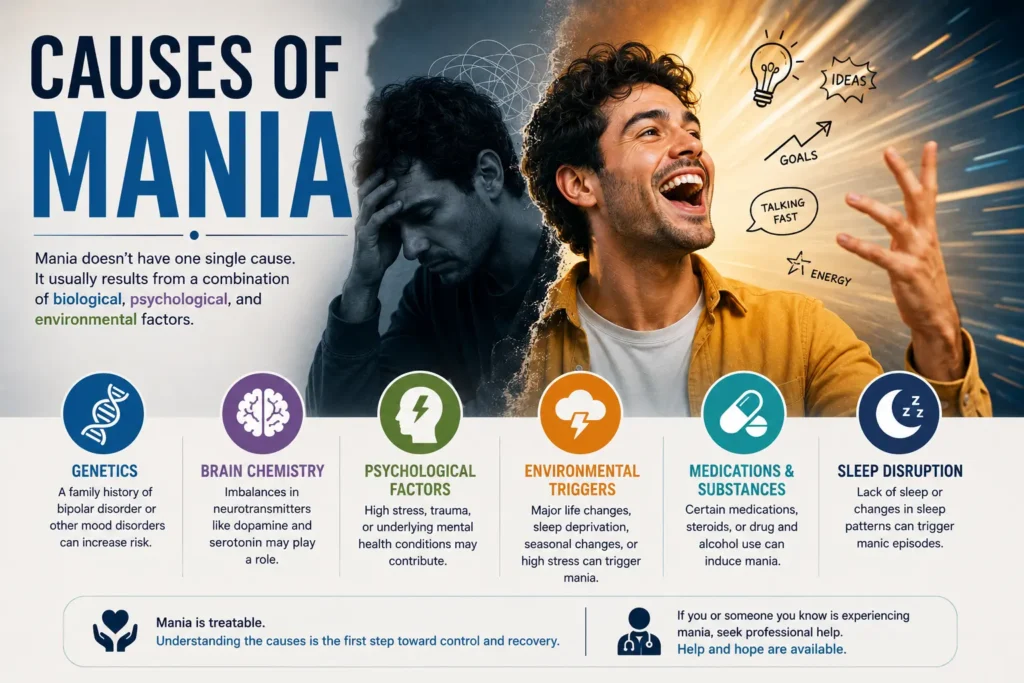
Causes of Mania: Mania doesn’t have one single cause. It develops from a combination of genetic vulnerability, changes in brain chemistry, and outside triggers like…
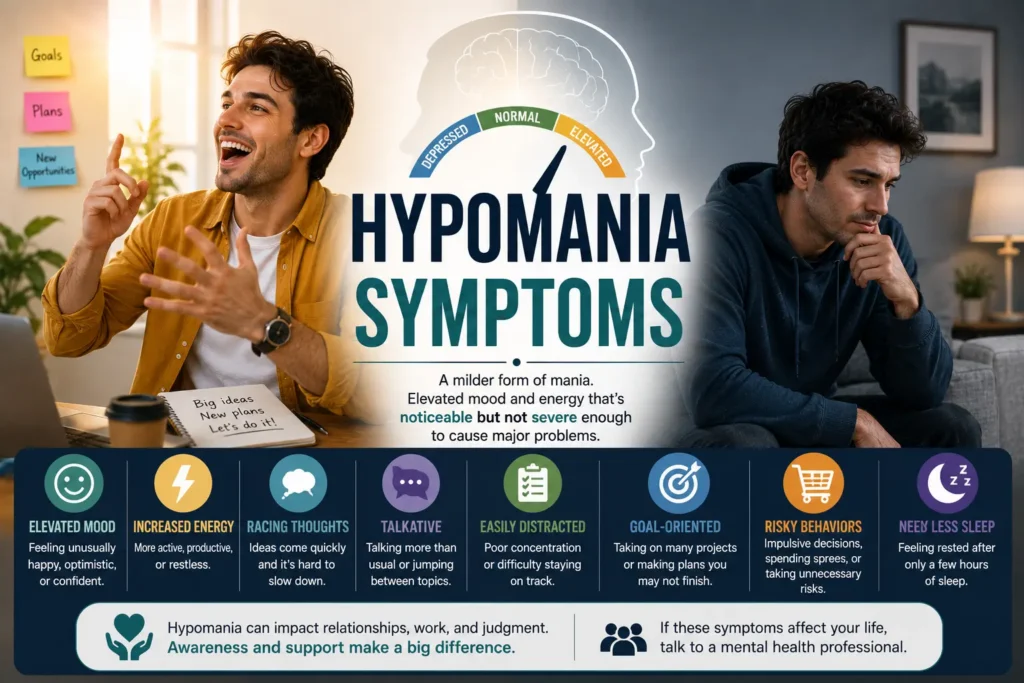
Hypomania symptoms include a noticeably elevated, expansive, or irritable mood combined with increased energy, lasting at least four consecutive days. Common signs are reduced need…
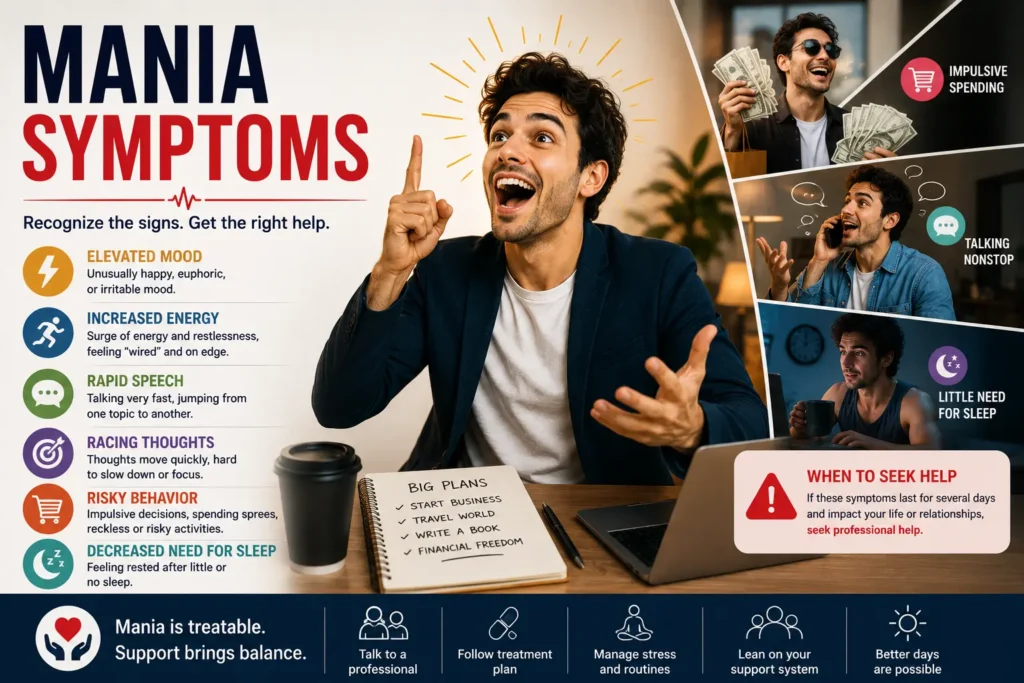
Mania symptoms include an abnormally elevated, expansive, or irritable mood combined with a noticeable increase in energy, lasting most of the day for at least…