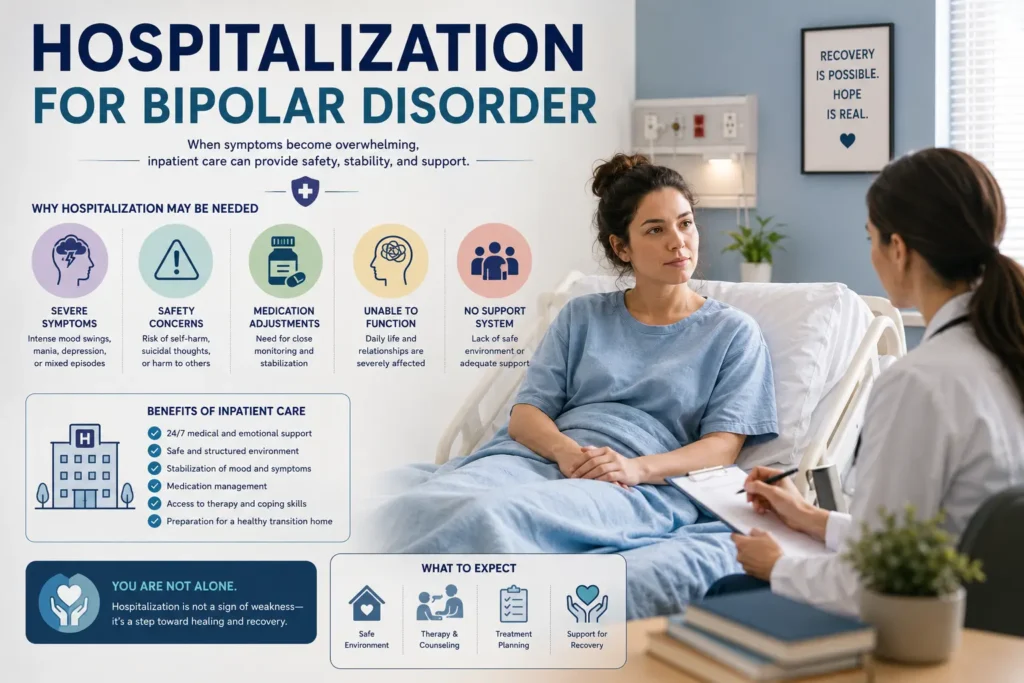

Hospitalization for bipolar disorder is typically needed when someone is at risk of harming themselves or others, experiencing severe mania or psychosis, or unable to…
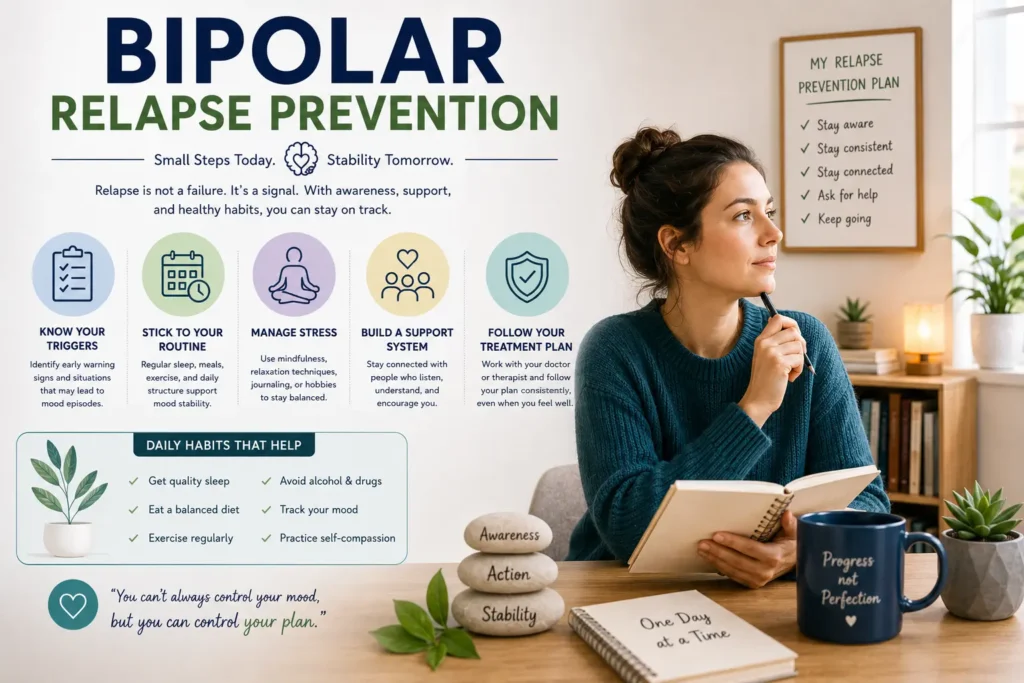
Bipolar relapse prevention means learning to recognize your personal early warning signs — often called a “relapse signature” — before a full manic or depressive…
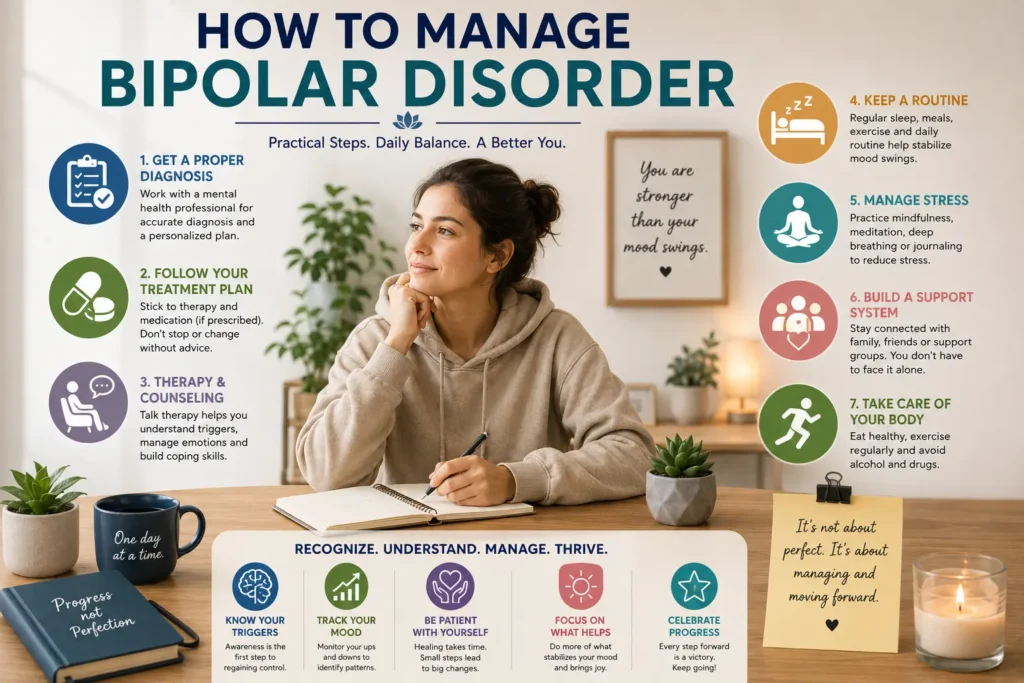
How to Manage Bipolar Disorder: Managing bipolar disorder well usually means combining consistent medical treatment with daily habits that protect your mood—steady sleep, a predictable…
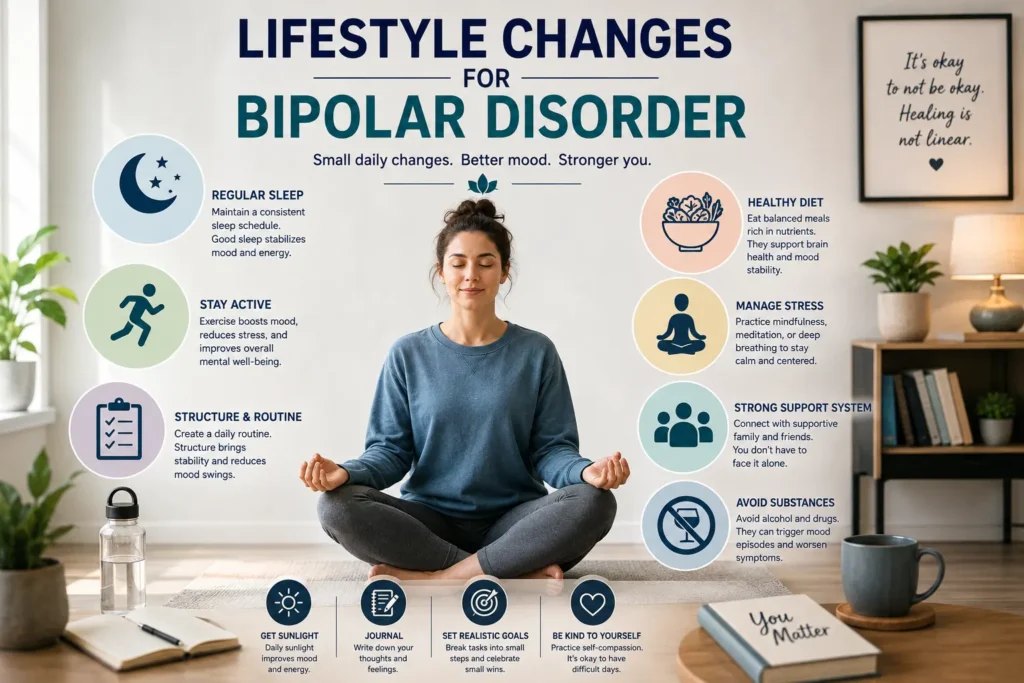
Lifestyle Changes for Bipolar Disorder: Lifestyle changes won’t replace medication or therapy, but they can meaningfully reduce how often mood episodes happen and how severe…
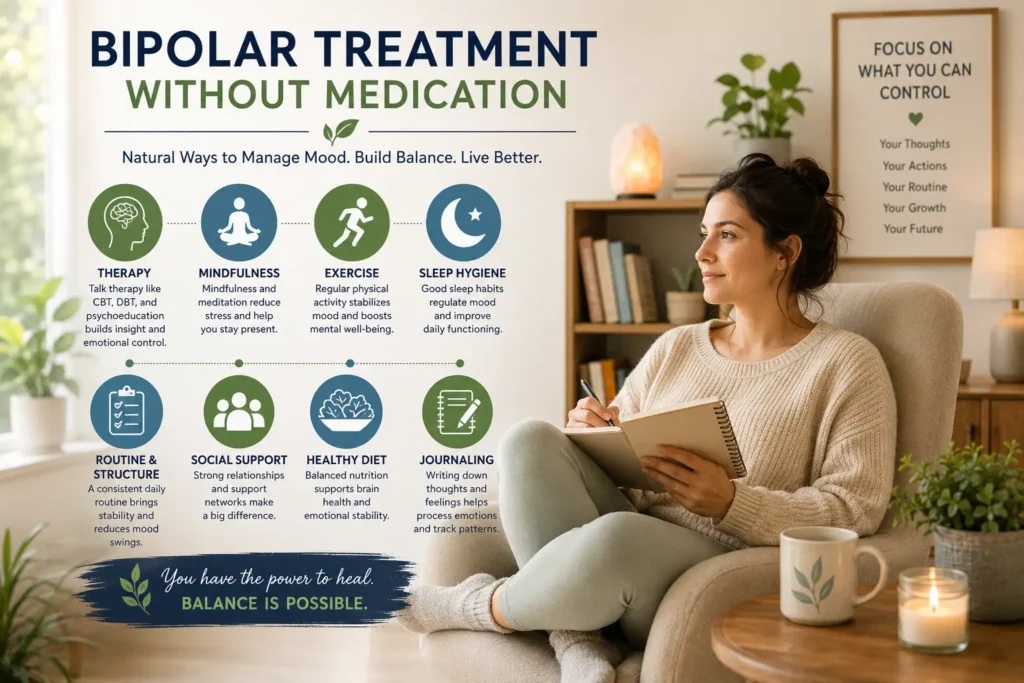
Bipolar Treatment Without Medication: There’s no natural treatment or therapy proven to replace medication for bipolar disorder. Mood stabilizers, antipsychotics, and other prescribed medications remain…
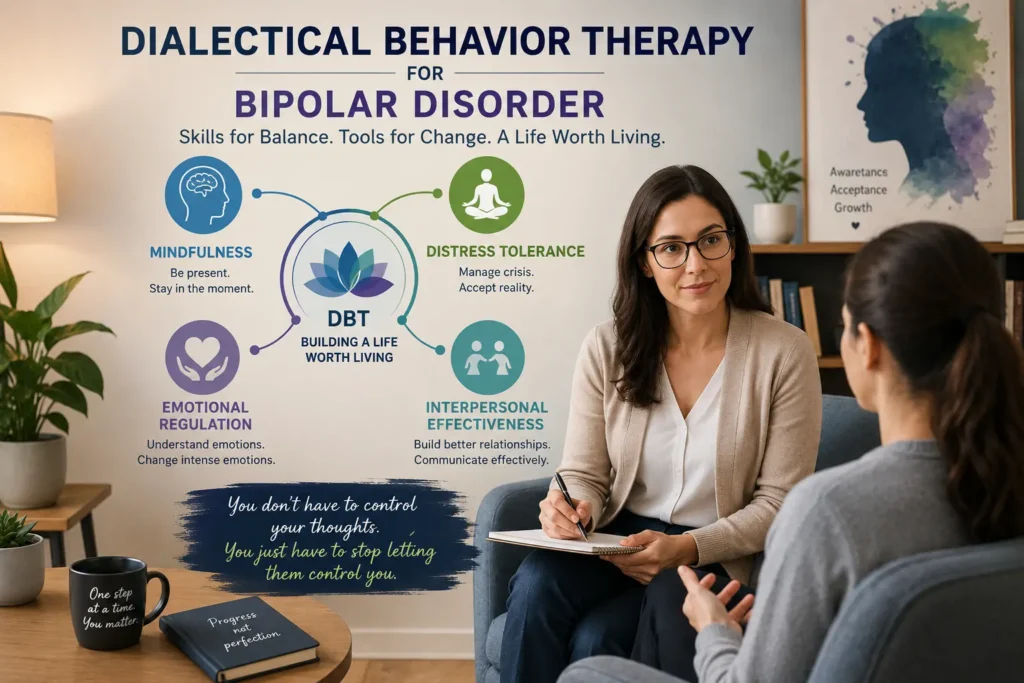
Dialectical Behavior Therapy for Bipolar Disorder: Dialectical behavior therapy (DBT) is a structured, skills-based psychotherapy that helps people with bipolar disorder manage intense emotions, reduce…
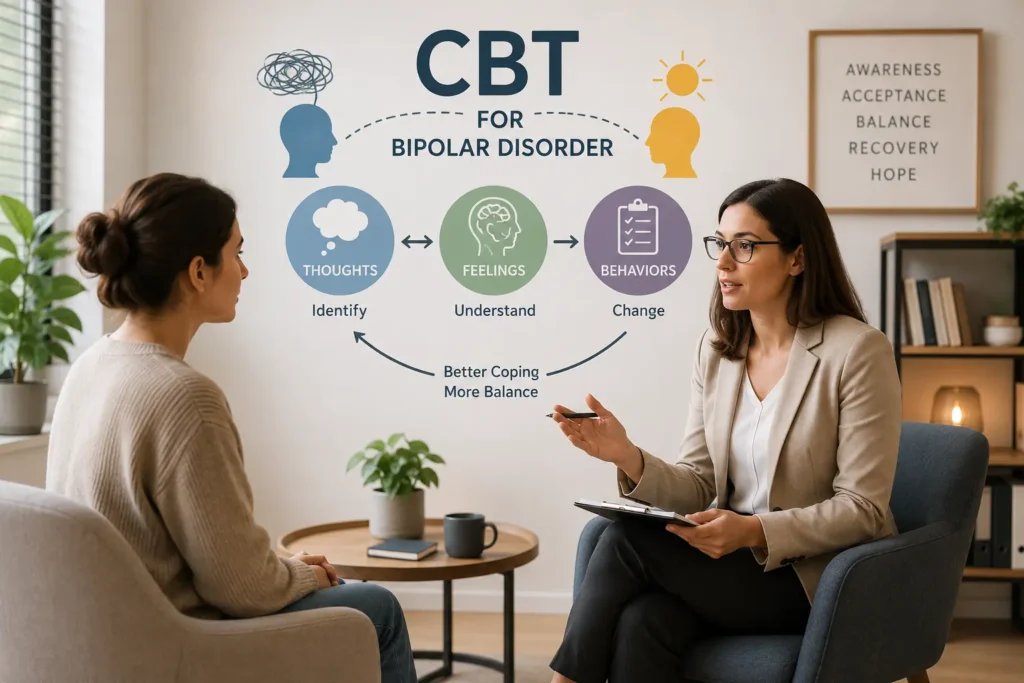
Cognitive behavioral therapy (CBT) for bipolar disorder is a structured, skills-based talk therapy that helps people recognize the thought patterns and behaviors that trigger mood…
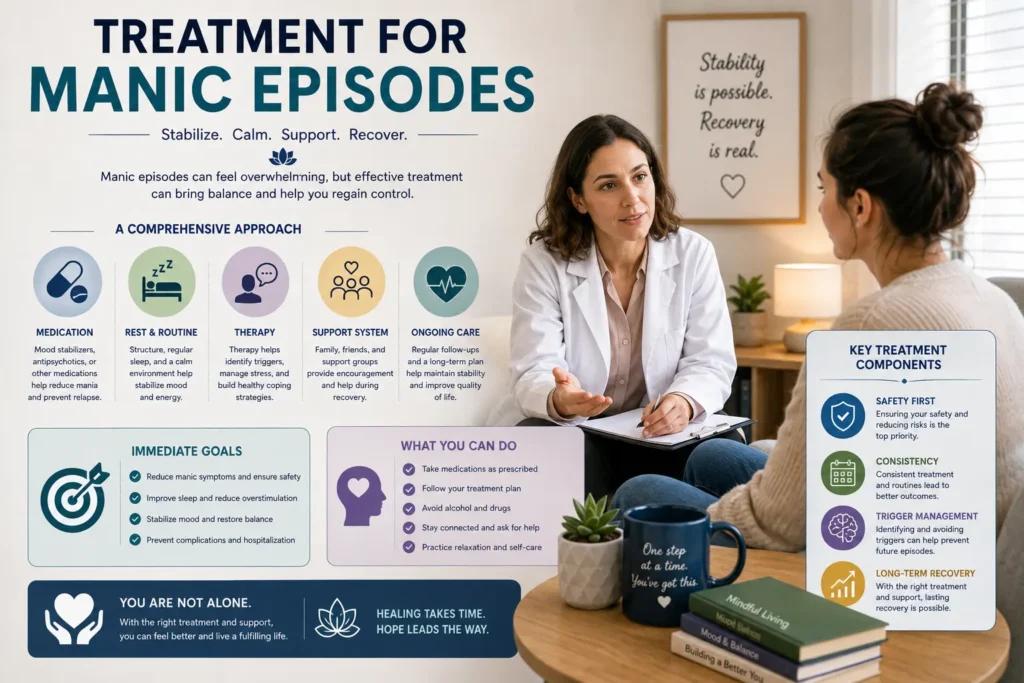
Bipolar treatment usually combines medication — mood stabilizers, atypical antipsychotics, or both — with structured therapy and consistent lifestyle habits like sleep regulation. There’s no…
Bipolar Diagnosis FAQs: Bipolar disorder is diagnosed clinically by a psychiatrist or psychologist through structured interviews and DSM-5 criteria—there’s no blood test, brain scan, or…
Bipolar Diagnosis After Depression: Bipolar diagnosis after depression is common because bipolar disorder frequently begins with a depressive episode, sometimes years before the first manic…