
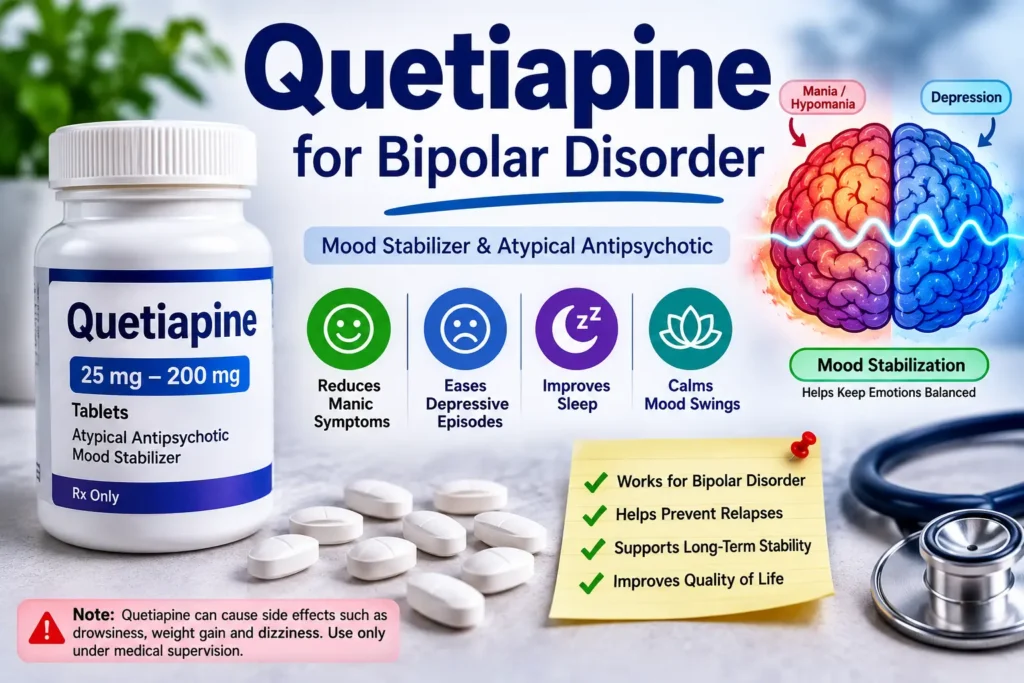
Quetiapine for Bipolar Disorder: Quetiapine (brand name Seroquel) is an atypical antipsychotic that’s FDA-approved for treating bipolar disorder in three different ways: acute manic episodes, bipolar depression, and long-term maintenance treatment. acute manic episodes, acute depressive episodes, and long-term maintenance to prevent relapse. That range is unusual — most bipolar medications only cover one or two of those phases. Quetiapine’s biggest drawbacks are sedation, especially early on, and a real risk of weight gain and metabolic changes with longer-term use, so regular monitoring matters.
That’s the short version. Below, we cover how quetiapine actually works, what doses are used for mania versus depression, what the side effects look like over time, and how it compares with lithium, valproate, and lamotrigine.
Table of Contents
Introduction
Quetiapine is one of the few bipolar medications with FDA approval to cover the entire illness — the manic side, the depressive side, and long-term maintenance in between. That versatility is a big part of why it’s so widely prescribed, but it also means the dosing and side-effect profile look quite different depending on which phase it’s treating.
This guide focuses specifically on quetiapine’s role in bipolar disorder. If you’re still working out the basics of the diagnosis itself, our guides on what bipolar disorder is and bipolar disorder symptoms are a good starting point. For a broader look at treatment options beyond this one medication, see our full bipolar disorder treatment guide.
Key Takeaways
- Quetiapine is FDA-approved for acute mania, acute bipolar depression, and maintenance treatment of bipolar I disorder — a broader approval than most bipolar medications carry.
- Doses differ sharply by use: roughly 400–800 mg/day for mania, but only 300 mg/day for bipolar depression.
- Sedation is extremely common, especially in the first days of treatment, which is part of why it’s usually taken at night.
- Long-term use carries a meaningful risk of weight gain, high blood sugar, and cholesterol changes, so metabolic monitoring is standard practice.
- It comes in immediate-release (Seroquel) and extended-release (Seroquel XR) forms, dosed differently.
- It’s often combined with lithium or valproate, especially for acute mania, rather than used alone.
What Is Quetiapine?
Quetiapine belongs to a class of medications called atypical (or second-generation) antipsychotics. Despite the name, these drugs are used well beyond psychosis — quetiapine in particular has a strong evidence base in mood disorders, including both bipolar I and bipolar II disorder.
It works primarily by blocking dopamine and serotonin receptors in the brain, along with strong activity at histamine receptors, which is largely responsible for its sedating effect. It’s sold under the brand name Seroquel, with a generic version widely available, and comes in two main formulations: immediate-release tablets, typically dosed twice a day, and extended-release (XR) tablets, taken once daily.
Is Quetiapine FDA-Approved for Bipolar Disorder?
Yes — and its approval covers more ground than most bipolar medications. The FDA has approved quetiapine for:
- Acute manic episodes associated with bipolar I disorder, as monotherapy or added on to lithium or valproate
- Acute depressive episodes associated with bipolar I or bipolar II disorder, as monotherapy
- Maintenance treatment of bipolar I disorder, as an add-on to lithium or valproate, to help prevent mood episodes from recurring
That three-part approval is what sets quetiapine apart from something like lithium, which is strong on both mania and maintenance but weaker for depression, or lamotrigine, which only covers maintenance and depression prevention with no effect on mania at all.
How Quetiapine Dosing Differs by Use
This is one of the most misunderstood parts of quetiapine treatment: the target dose is not the same for every phase of bipolar disorder. A dose that works well for depression can be far too low for mania, and vice versa.
| Use | Typical Target Dose Range | Notes |
| Acute mania (monotherapy or adjunct) | 400–800 mg/day | Usually reached over the first several days |
| Acute bipolar depression | 300 mg/day | Higher doses (up to 600 mg) haven’t shown extra benefit in trials |
| Maintenance (adjunct to lithium/valproate) | 400–800 mg/day | Dosed to whatever level controlled the acute episode |
For mania, quetiapine is typically started low and increased quickly over the first four days — commonly in the range of 50 mg, then 100 mg, then 200 mg, then 300 mg, before continuing up toward the target dose — since acute mania often calls for faster symptom control than the slow-and-steady approach used with some other psychiatric medications. Depression treatment usually starts lower and rises more gradually, since the effective dose is lower overall and tolerability, particularly sedation, matters more at the outset.
Extended-release quetiapine (Seroquel XR) is dosed once daily, usually in the evening, and follows a similar overall dose range but with a smoother release profile that some people tolerate better than the immediate-release version’s twice-daily dosing.
How Quetiapine Compares to Other Bipolar Medications
| Medication | Covers Acute Mania? | Covers Acute Depression? | Covers Maintenance? | Main Side Effect Concern |
| Quetiapine (Seroquel) | Yes | Yes | Yes (as adjunct) | Sedation, weight gain, metabolic changes |
| Lithium | Yes | Moderate | Yes | Tremor, thyroid/kidney effects, requires blood monitoring |
| Valproate (Depakote) | Yes | Limited | Yes | Weight gain, liver effects, requires blood monitoring |
| Lamotrigine | No | Yes | Yes (depression-focused) | Rash risk during dose titration |
| Lurasidone (Latuda) | No | Yes | Not established | Nausea, restlessness (akathisia) |
This table is a simplified overview, not a treatment plan. The right medication, or combination of medications, depends on which phase of the illness is the bigger problem for you — frequent mania, frequent depression, or both — something worth mapping out with your prescriber alongside your bipolar disorder diagnosis.
Side Effects of Quetiapine
Quetiapine’s side-effect profile shifts depending on the dose and how long someone has been taking it. Short-term side effects tend to show up fast; metabolic changes tend to build over months.
| Side Effect Category | Examples | Typical Timing |
| Very common, early | Drowsiness/sedation, dry mouth, dizziness | First days to weeks, often most intense during initial titration |
| Common, ongoing | Weight gain, increased appetite, constipation | Weeks to months |
| Metabolic | Elevated blood sugar, elevated cholesterol/triglycerides, insulin resistance | Can develop over months of use |
| Less common | Orthostatic hypotension (dizziness on standing), elevated liver enzymes, changes in thyroid hormone levels | Variable |
| Rare but serious | Neuroleptic malignant syndrome, tardive dyskinesia, significant QT prolongation on ECG | Rare, but require urgent evaluation |
Sedation is so common with quetiapine that it’s a major reason the medication is usually dosed at night. For many people this is actually useful — it can help with the insomnia that often accompanies mood episodes — but it also means daytime drowsiness is a real consideration for driving or operating machinery, especially in the first couple of weeks.
Weight Gain and Metabolic Monitoring
This is the side-effect category that deserves the most attention with long-term quetiapine use. Like other atypical antipsychotics, quetiapine is associated with weight gain, and with changes in blood sugar and cholesterol that can raise the risk of type 2 diabetes and cardiovascular problems over time. Research shows this risk exists even at the lower doses sometimes used off-label for sleep or anxiety, not just at the higher doses used for mania.
Because of this, standard practice includes baseline and ongoing monitoring, generally covering:
| What’s Monitored | How Often (Typical Practice) |
| Weight / BMI | Baseline, then regularly during the first few months, then periodically |
| Fasting blood glucose or HbA1c | Baseline, then periodically |
| Lipid panel (cholesterol, triglycerides) | Baseline, then periodically, especially in year one |
| Blood pressure | Baseline and at follow-up visits |
If you notice rapid weight gain, unusual thirst, frequent urination, or other symptoms that could suggest rising blood sugar, bring it up with your prescriber rather than waiting for the next scheduled check-in. This monitoring routine is a normal, expected part of quetiapine treatment — not a sign that anything has gone wrong.
Does Quetiapine Treat Both Mania and Depression?
Yes, and this dual effect is one of quetiapine’s defining features. Clinical trials have shown it effective for acute manic episodes and, at a lower dose, for acute depressive episodes in both bipolar I and bipolar II disorder. That’s a meaningful advantage for people whose illness swings between both poles, since it can reduce the need to juggle separate medications for each mood state.
That said, “can treat both” doesn’t mean “always used alone.” For acute mania in particular, quetiapine is frequently combined with lithium or valproate, especially when symptoms are severe, since combination treatment has shown stronger and faster results in some trials than quetiapine by itself.
Myths vs. Facts About Quetiapine and Bipolar Disorder
| Myth | Fact |
| “Quetiapine is just a sleeping pill.” | It’s an antipsychotic with genuine mood-stabilizing effects on both mania and depression. Sedation is a side effect, not its main mechanism of action. |
| “The same dose works for mania and depression.” | Depression doses (around 300 mg/day) are typically much lower than mania doses (400–800 mg/day). |
| “Weight gain only happens at high doses.” | Research shows metabolic changes can occur even at lower, off-label doses, not just standard mania or depression doses. |
| “Quetiapine has to be taken alone.” | It’s frequently combined with lithium or valproate, particularly for acute mania. |
| “It works immediately.” | Full antimanic or antidepressant effects usually build over one to two weeks, even though sedation starts right away. |
What to Expect When Starting Quetiapine
Most people notice sedation within the first dose or two, which is often the most immediately obvious effect. The actual mood-stabilizing benefits — reduced manic symptoms or improved depression — generally take longer to become clear, often one to two weeks, in line with most psychiatric medications.
Dose increases in the first days of treatment for mania are typically faster than what you’d see with many other bipolar medications, since acute mania often needs quicker symptom control. For depression, the pace is usually more gradual. Either way, your prescriber will adjust the schedule based on how you’re tolerating it, particularly sedation and blood pressure changes when standing up.
Checklist: Starting Quetiapine Safely
- ✅ Take it in the evening if sedation is a concern, unless your prescriber advises otherwise
- ✅ Avoid driving or operating machinery until you know how it affects your alertness
- ✅ Get baseline weight, blood sugar, and cholesterol checked before starting, if not already done
- ✅ Keep scheduled follow-ups for metabolic monitoring, especially in the first several months
- ✅ Stand up slowly from sitting or lying down, since dizziness on standing is common early on
- ✅ Tell your prescriber about all other medications, since quetiapine has several drug interactions
- ✅ Report any unusual muscle stiffness, high fever, or confusion right away — these can signal a rare but serious reaction
Frequently Asked Questions
Is quetiapine the same as Seroquel? Yes. Seroquel is the brand name for quetiapine. Seroquel XR is the extended-release version of the same medication, dosed once daily instead of twice daily.
How long does it take for quetiapine to work for bipolar disorder? Sedation is usually noticeable right away, but the actual antimanic or antidepressant effects typically build over one to two weeks of consistent use.
Does quetiapine cause weight gain? It can. Weight gain and related metabolic changes, including higher blood sugar and cholesterol, are among the most significant long-term concerns with quetiapine, which is why regular monitoring is standard.
Can quetiapine be used for bipolar II disorder? Yes, it’s FDA-approved for acute depressive episodes in bipolar II disorder, in addition to bipolar I. It’s not specifically approved for maintenance treatment of bipolar II.
Is quetiapine addictive? Quetiapine is not classified as addictive or habit-forming in the way controlled substances are, though stopping it abruptly, especially after long-term use, can cause withdrawal-type symptoms like nausea or insomnia and should be done gradually under medical supervision.
What’s the difference between quetiapine for mania and quetiapine for sleep? Some prescribers use low-dose quetiapine off-label for insomnia, well below the doses used for mania or depression in bipolar disorder. This off-label use is controversial precisely because metabolic side effects can occur even at low doses, without the benefit of treating the underlying mood disorder.
Can quetiapine be combined with lithium or valproate? Yes, this is a common and FDA-approved approach, particularly for acute mania and for maintenance treatment, where quetiapine is added to lithium or valproate rather than replacing it.
Does quetiapine help with anxiety in bipolar disorder? It’s not specifically FDA-approved for anxiety, but its sedating and calming properties mean some people notice anxiety relief as a secondary effect. This should be discussed with a prescriber rather than assumed.
Warning Signs That Need Medical Attention
Contact your prescriber or seek urgent care if you experience:
- High fever, severe muscle stiffness, confusion, or irregular heartbeat (possible signs of neuroleptic malignant syndrome, a rare but serious reaction)
- Uncontrollable, repetitive movements of the face, tongue, or limbs (possible signs of tardive dyskinesia)
- Fainting, a rapid or irregular heartbeat, or severe dizziness (possible signs of a heart rhythm problem)
- Signs of very high blood sugar, such as extreme thirst, frequent urination, or unexplained fatigue
- Yellowing of the skin or eyes (possible signs of liver problems)
These reactions are uncommon, but they’re serious enough to warrant prompt evaluation rather than waiting for a routine appointment.
When to Get Emergency Help
If you or someone taking quetiapine experiences a very high fever with muscle rigidity and confusion, chest pain, fainting, or signs of a severe allergic reaction such as facial swelling or difficulty breathing, treat this as a medical emergency and call emergency services right away.
Separately, if you or someone you know is having thoughts of suicide or is in immediate danger, contact 911 (US) or your local emergency number, or call or text the 988 Suicide & Crisis Lifeline.
Summary
Quetiapine stands out among bipolar medications for covering all three phases of the illness — mania, depression, and maintenance — in a single drug, which makes it one of the more flexible options available. The tradeoff is a side-effect profile centered on sedation and metabolic risk, both of which need ongoing attention rather than a one-time conversation at the start of treatment.
Whether quetiapine is the right fit depends heavily on your specific symptom pattern and history, which is why it’s worth reviewing your own bipolar disorder symptoms and treatment goals directly with a psychiatrist. For a wider view of how medication fits alongside therapy and lifestyle strategies, see our complete guide to bipolar disorder treatment.
This article is for educational purposes only and is not a substitute for professional medical advice. Always talk to a qualified healthcare provider, such as a psychiatrist or your prescribing doctor, before starting, stopping, or adjusting any bipolar medication.
Sources referenced for accuracy include the FDA prescribing information for Seroquel and Seroquel XR, peer-reviewed clinical trial data on quetiapine in bipolar mania, depression, and maintenance, NHS medicines guidance, and metabolic monitoring literature published in peer-reviewed journals.