Bipolar Disorder and School
Students with Bipolar Disorder and Schoolr can succeed academically with the right combination of consistent treatment, protected sleep and routine, and appropriate school accommodations. The…
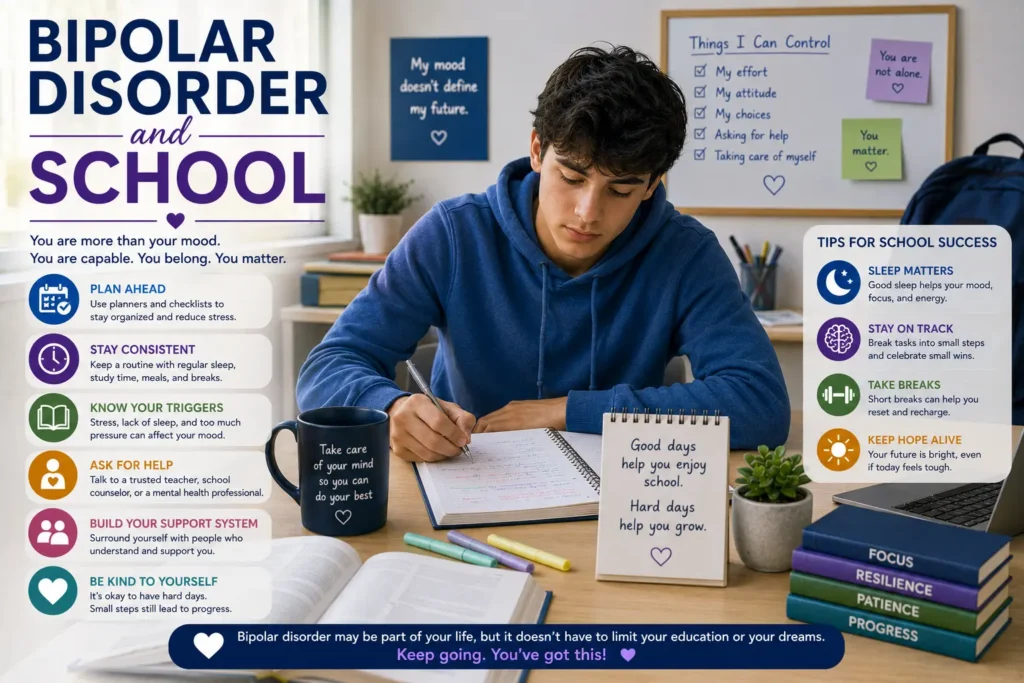
Students with Bipolar Disorder and Schoolr can succeed academically with the right combination of consistent treatment, protected sleep and routine, and appropriate school accommodations. The…
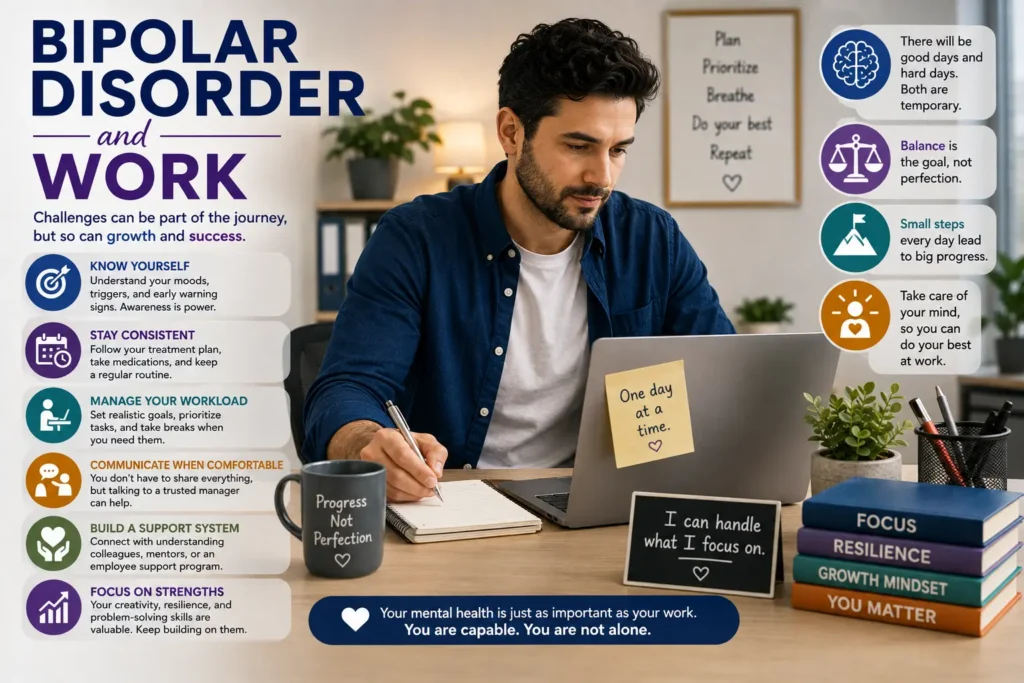
Working with bipolar disorder is manageable for most people, especially with consistent treatment and a few practical workplace strategies. The biggest factors in long-term career…
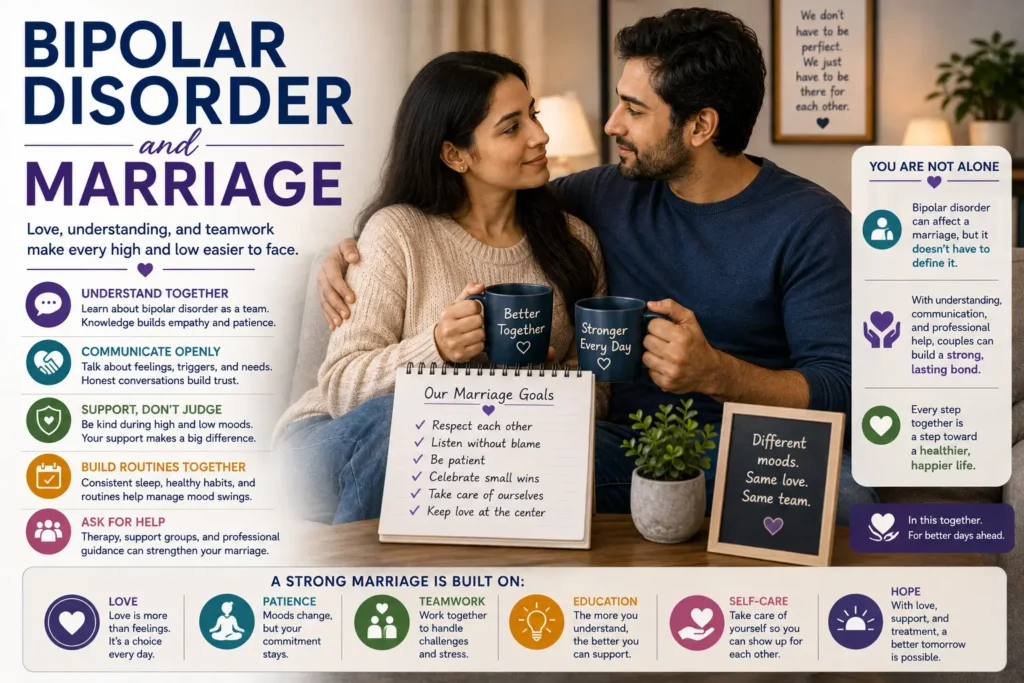
Bipolar Disorder and Marriage can absolutely succeed when one or both spouses have bipolar disorder, but it usually requires more structure than marriages without a…

Bipolar Disorder and Relationships can strain relationships through mood-driven conflict, unpredictability, and communication breakdowns during episodes — but it doesn’t have to define or damage…

How to Live With Bipolar Disordercomes down to four things working together: consistent treatment, a stable daily routine, early recognition of warning signs, and a…
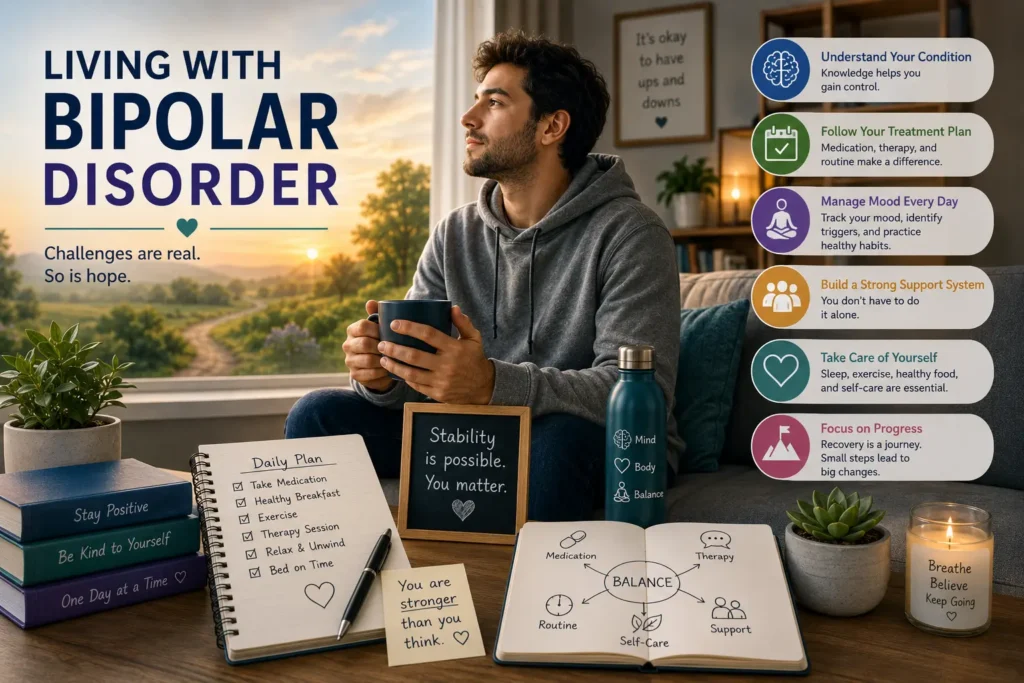
Living with bipolar disorder means learning to manage a lifelong but treatable brain condition through a combination of medication, therapy, routine, and self-awareness. Most people…
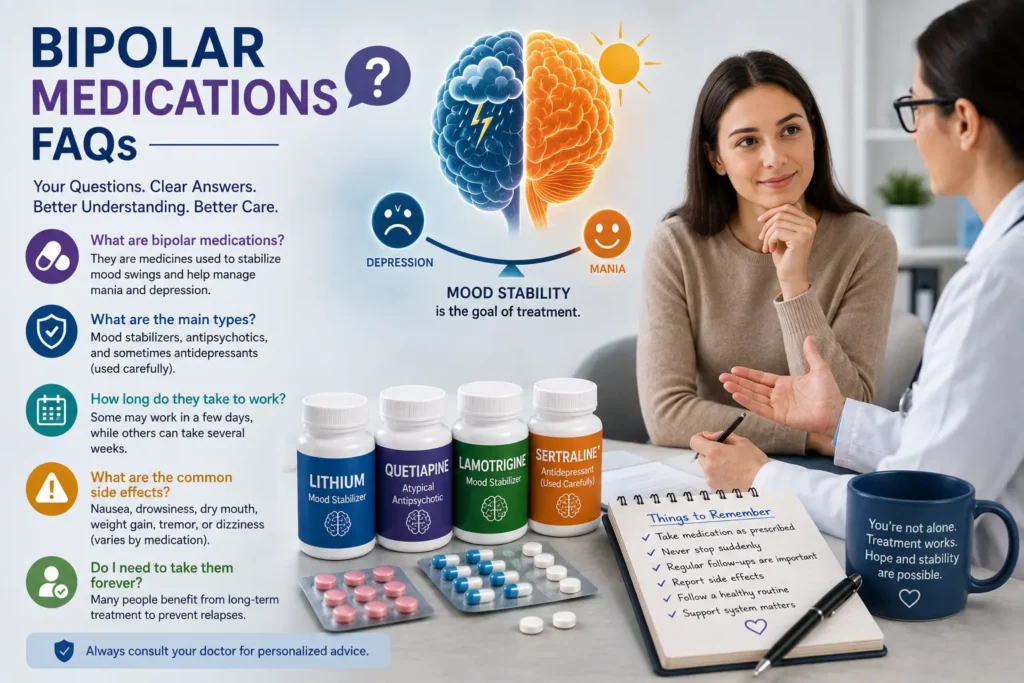
Bipolar Medications FAQs fall into a few main categories — mood stabilizers, atypical antipsychotics, and (occasionally, cautiously) antidepressants — and most people end up on…
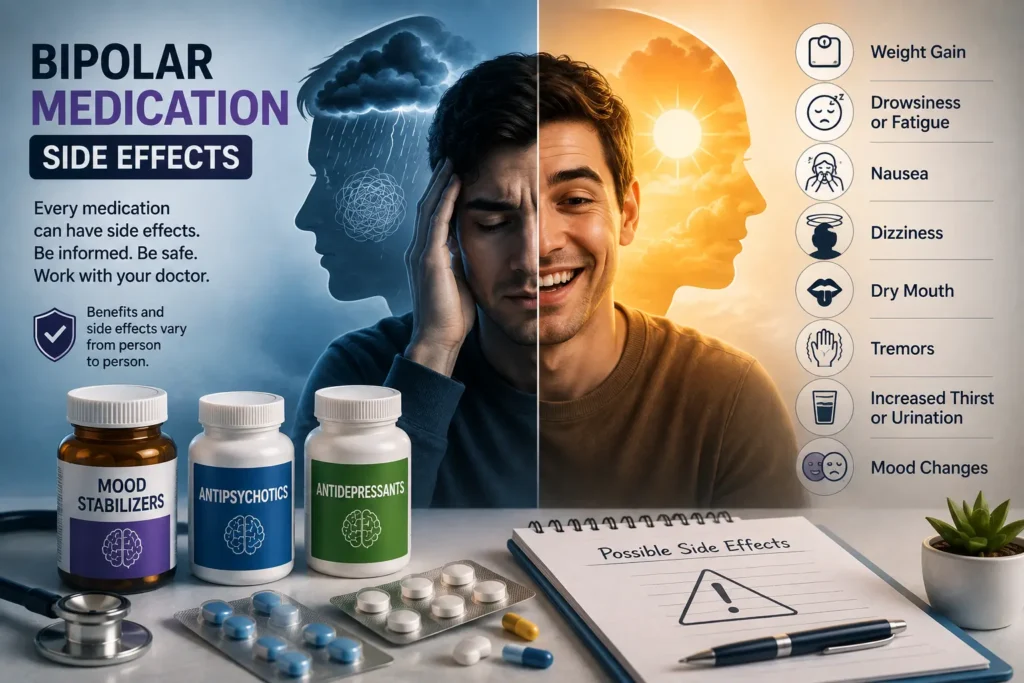
Every class of medication used for bipolar disorder — mood stabilizers, antipsychotics, and antidepressants — carries its own side effect profile, and they don’t overlap…
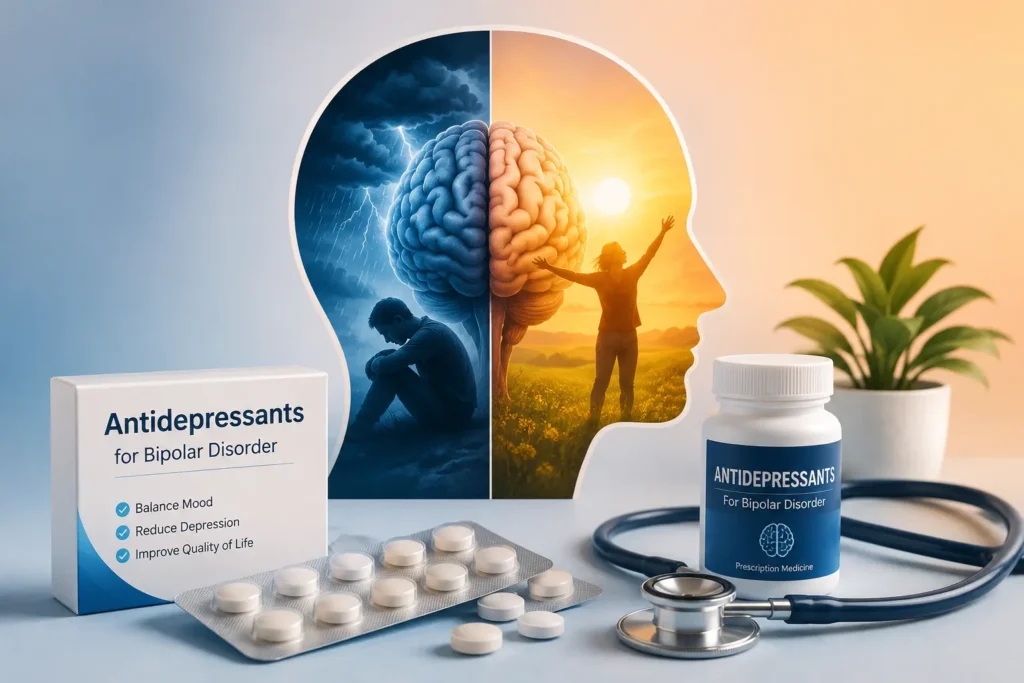
Antidepressants for Bipolar Disorder are not the first choice for treating bipolar depression, and taking one by itself (without a mood stabilizer or antipsychotic) is…
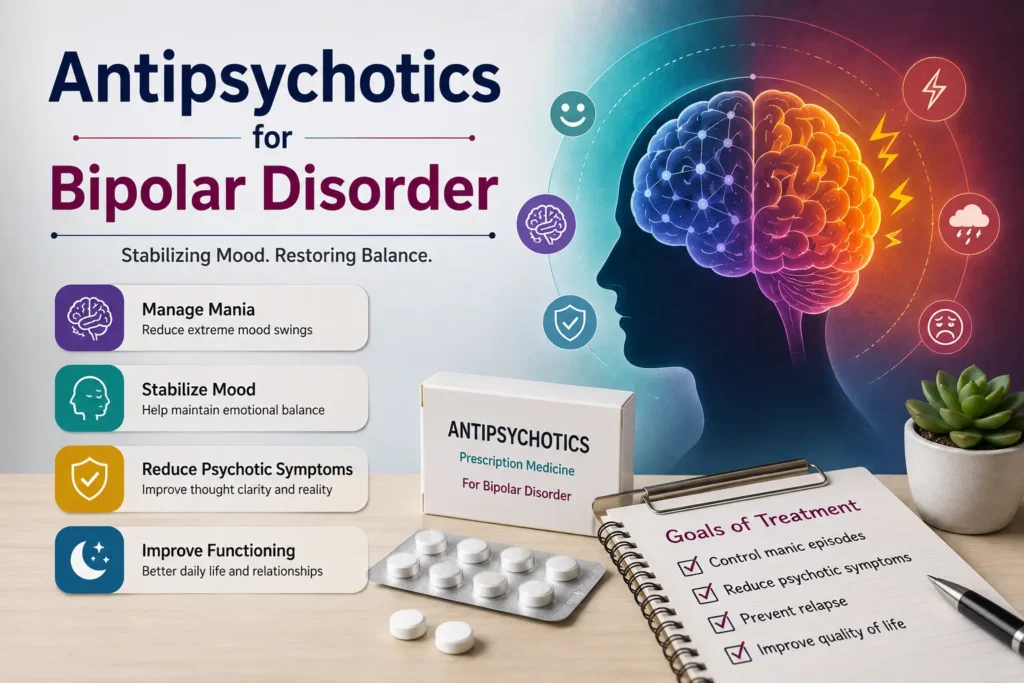
Antipsychotics for Bipolar Disorder: Antipsychotics, specifically the newer “atypical” or second-generation group, are one of the main medication classes used to treat bipolar disorder. Depending…