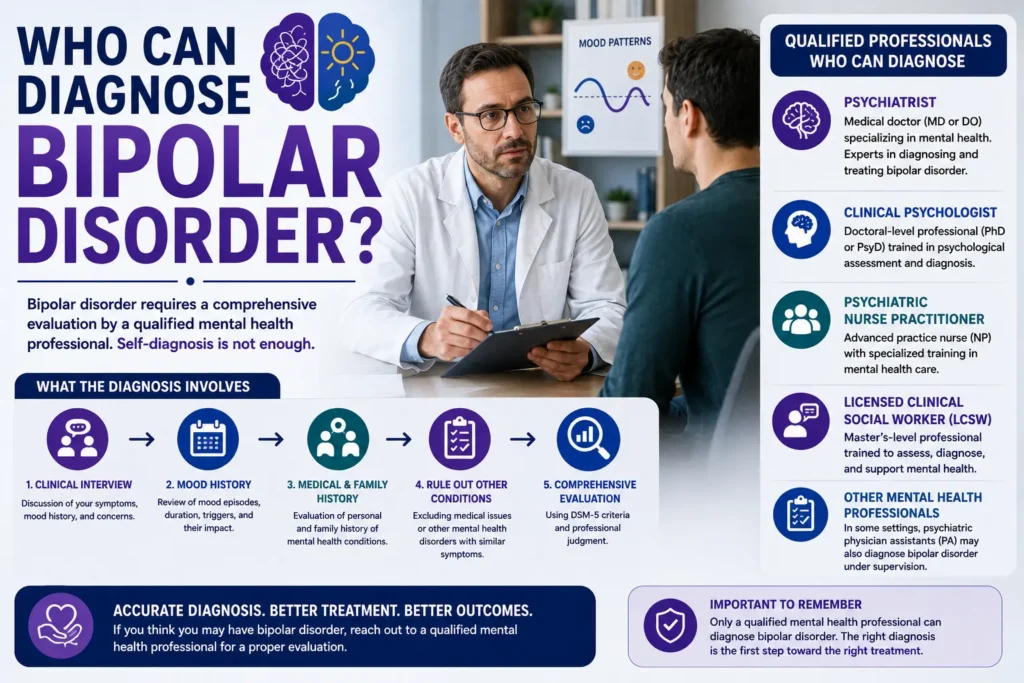
Bipolar disorder is formally diagnosed by a psychiatrist or a licensed clinical psychologist trained in mood disorders. Primary care doctors, nurse practitioners, and therapists can recognize the warning signs and refer you onward, but they typically aren’t the ones who make the final diagnosis. The right professional for you depends on whether you also need medication management, therapy, or both.
Table of Contents
Key Takeaways
- Psychiatrists (medical doctors specializing in mental health) and licensed psychologists are the professionals typically qualified to diagnose bipolar disorder.
- Primary care doctors and nurse practitioners can screen for symptoms and refer you, but usually don’t make the final diagnosis themselves.
- Therapists and counselors who aren’t licensed to diagnose can still play an important role by recognizing symptoms and referring you to the right specialist.
- Credentials, licensing, and specific experience with mood disorders matter more than job title alone.
- Telehealth psychiatry has made diagnosis more accessible, though it isn’t the right fit for every situation.
Why This Question Matters
Bipolar disorder isn’t identified with a lab test — it’s diagnosed through a structured clinical evaluation of your symptoms, history, and functioning. That means the qualifications of the person conducting the evaluation genuinely affect the accuracy of the outcome. For background on the condition itself, see bipolar disorder and what bipolar disorder is. If you want to understand the evaluation process step by step, our guide to how bipolar disorder is diagnosed covers that in detail — this article focuses specifically on who is qualified to carry it out.
The Professionals Who Can Diagnose Bipolar Disorder
Psychiatrists
A psychiatrist is a medical doctor (MD or DO) who completed medical school followed by specialized residency training in mental health. Psychiatrists are licensed to diagnose mental health conditions and prescribe medication, which makes them the most common starting point for a bipolar diagnosis, especially if medication may be part of treatment.
Psychologists
A licensed clinical psychologist holds a doctoral degree (PhD or PsyD) in psychology and is trained in psychological assessment, diagnosis, and therapy. Psychologists can diagnose bipolar disorder and often use structured testing to support the clinical interview, but in most places they cannot prescribe medication and will refer you to a psychiatrist or a prescribing provider if medication is needed.
Psychiatric Nurse Practitioners (PMHNPs)
Psychiatric-mental health nurse practitioners are advanced-practice nurses with specialized psychiatric training. Depending on the country and state, they may be able to diagnose and prescribe medication independently or under a supervising physician. They’re an increasingly common and accessible option for both diagnosis and ongoing treatment.
Primary Care Doctors
Your regular doctor can screen for bipolar disorder symptoms, run basic tests to rule out physical causes like thyroid problems, and refer you to a specialist. Some primary care doctors are comfortable managing straightforward cases after a specialist’s initial diagnosis, but the diagnosis itself typically comes from a mental health specialist.
Therapists and Counselors (Non-Prescribing)
Licensed therapists, clinical social workers, and counselors are trained to recognize symptoms and patterns that suggest bipolar disorder, and many can provide an informal or provisional impression. However, depending on their license type and jurisdiction, they may not be authorized to give a formal diagnosis, and they typically refer clients to a psychiatrist or psychologist to confirm it.
Comparison: Who Does What
| Professional | Can Diagnose? | Can Prescribe Medication? | Typical Role |
| Psychiatrist (MD/DO) | Yes | Yes | Full evaluation, diagnosis, medication management |
| Clinical psychologist (PhD/PsyD) | Yes | Usually no | Full evaluation, diagnosis, therapy, psychological testing |
| Psychiatric nurse practitioner | Often yes (varies by location) | Often yes | Evaluation, diagnosis, medication management |
| Primary care doctor | Limited/rarely final diagnosis | Yes, but often refers for psychiatric medication | Initial screening, rules out physical causes, referral |
| Licensed therapist/counselor | Usually not a formal diagnosis | No | Symptom recognition, referral, ongoing therapy |
How to Decide Who to See First
If you’re not sure where to start, this general order tends to work well for most people:
- See your primary care doctor first if you want physical causes ruled out and a referral. This is often the fastest way into the system, especially if you don’t already have a mental health provider.
- Go directly to a psychiatrist if you suspect medication may be needed, or if your symptoms include risk factors like psychosis, severe mood episodes, or thoughts of self-harm.
- See a psychologist if you want a thorough diagnostic evaluation with structured testing and are not immediately seeking medication, or if you’re also looking for therapy.
- Start with a therapist if you’re unsure whether what you’re experiencing fits a mood disorder pattern at all, and want an initial, lower-commitment conversation before pursuing formal testing.
Whichever path you take, the goal is the same: a full evaluation of your mood history, not just your current symptoms. If you want to reflect on your own symptom pattern before your first appointment, our guide on how to know if you have bipolar can help you organize your thoughts.
What to Look for in a Provider
- Specific experience with mood disorders, not just general mental health practice
- Willingness to take a full history, including past periods of elevated mood, not just current depression
- A clear explanation of their diagnostic process, including whether they use structured tools alongside the interview
- Openness to involving family or close friends, with your consent, if that would help build an accurate picture
- A plan for follow-up, since one appointment is rarely enough to finalize a diagnosis
Because bipolar disorder is commonly misdiagnosed — often mistaken for depression, ADHD, or borderline personality disorder — a provider’s specific familiarity with mood disorders matters more than their job title alone.
Credentials and Licensing: What the Letters Mean
| Credential | What It Means |
| MD / DO | Medical doctor; if specialized in psychiatry, licensed to diagnose and prescribe |
| PhD / PsyD | Doctoral-level psychologist; licensed to diagnose and provide therapy, not medication in most regions |
| PMHNP | Psychiatric-mental health nurse practitioner; scope varies by location |
| LCSW / LMFT / LPC | Licensed clinical social worker, marriage and family therapist, or professional counselor; scope of diagnosis varies by license and jurisdiction |
Licensing requirements differ between countries and, in the US, between states, so it’s reasonable to ask a prospective provider directly about their license type and scope of practice.
Telehealth and Online Diagnosis
Psychiatric evaluations conducted over video call have become increasingly common and, for many people, work well — particularly for follow-up care and medication management. For an initial bipolar diagnosis, telehealth can still involve a full clinical interview and history review, though some providers prefer at least one in-person visit for complex cases, especially where psychosis or safety concerns are present. If considering telehealth, confirm that the provider is licensed in your state or country and has genuine experience with mood disorders, not just general telehealth intake.
Myths vs. Facts
| Myth | Fact |
| “Only a psychiatrist can diagnose bipolar disorder.” | Licensed psychologists can also diagnose it, though they generally can’t prescribe medication. |
| “My regular doctor can fully diagnose me in one visit.” | Primary care doctors typically screen and refer rather than finalize a bipolar diagnosis themselves. |
| “A therapist’s opinion counts as an official diagnosis.” | This depends on license type; many therapists refer out for a formal diagnosis. |
| “Any mental health professional is equally qualified to diagnose bipolar disorder.” | Specific experience with mood disorders significantly affects diagnostic accuracy, given how often bipolar disorder is misdiagnosed. |
| “Online psychiatry can’t diagnose bipolar disorder.” | Telehealth providers can conduct full evaluations, though complex cases sometimes benefit from in-person assessment. |
Do You Need a Referral?
This depends on your location and insurance or health system. In some countries, like the UK through the NHS, you typically need a referral from a GP to see a psychiatrist. In others, especially in private-pay or many US insurance plans, you may be able to book directly with a psychiatrist or psychologist. It’s worth checking with your insurance provider or national health service directly, since rules vary widely.
Warning Signs That Need Prompt Attention
Regardless of which professional you’re planning to see, don’t wait for a scheduled appointment if you notice:
- Days without sleep and no sense of tiredness
- Impulsive spending, risky sexual behavior, or reckless driving that’s out of character
- Hearing or seeing things others don’t
- Hopelessness lasting more than two weeks
- Any thoughts of self-harm or suicide
Emergency Help
If you or someone you know is having thoughts of suicide or self-harm, treat it as a medical emergency rather than waiting for a routine appointment. In the US, call or text 988 (Suicide & Crisis Lifeline). In the UK, call 111 or the Samaritans at 116 123. Elsewhere, contact your local emergency number or nearest emergency department. You don’t need a diagnosis first to get help.
After You’ve Found the Right Provider
Once you’ve been evaluated and diagnosed, treatment usually involves some combination of medication, therapy, and lifestyle strategies. Our guide to bipolar disorder treatment explains what that typically looks like, and bipolar disorder prognosis covers what accurate, ongoing care can mean for the road ahead.
Frequently Asked Questions
Can a general practitioner diagnose bipolar disorder? They can screen for symptoms and rule out physical causes, but a formal diagnosis typically comes from a psychiatrist or psychologist with mental health training.
Do I need a referral to see a psychiatrist? It depends on your country and health system. Some require a GP referral; others allow you to book directly. Check with your insurance provider or national health service.
Can a psychologist prescribe medication for bipolar disorder? In most places, no. Psychologists typically diagnose and provide therapy, then refer you to a psychiatrist or another prescribing provider if medication is needed.
Is it okay to get diagnosed through telehealth? Yes, for many people telehealth psychiatry provides a full, legitimate evaluation. More complex situations, particularly involving psychosis or safety concerns, may benefit from in-person assessment.
What’s the difference between a psychiatrist and a psychiatric nurse practitioner? Both can diagnose and often prescribe medication, but a psychiatrist is a medical doctor while a nurse practitioner has advanced nursing training with psychiatric specialization. Scope of practice for nurse practitioners varies by location.
Can a therapist tell me if I have bipolar disorder? A therapist can recognize symptoms suggestive of bipolar disorder and share that impression, but depending on their license, a formal diagnosis usually requires referral to a psychiatrist or psychologist.
How do I find a psychiatrist who specializes in mood disorders? Ask your primary care doctor for a referral, check with your insurance provider’s directory, or contact professional bodies like the American Psychiatric Association for provider resources in your area.
Summary
Diagnosing bipolar disorder accurately requires a professional trained specifically in evaluating mood disorders — most often a psychiatrist or a licensed psychologist, sometimes a psychiatric nurse practitioner. Primary care doctors and therapists play an important supporting role by recognizing symptoms and making the right referral, even if they’re not the ones finalizing the diagnosis. Whoever you see, prioritize someone with genuine experience in mood disorders and a willingness to review your complete history — that combination is what leads to an accurate diagnosis and, ultimately, effective treatment.